Text to imageProductStyle guide
One Terrazzo Tray · Flush Aggregate
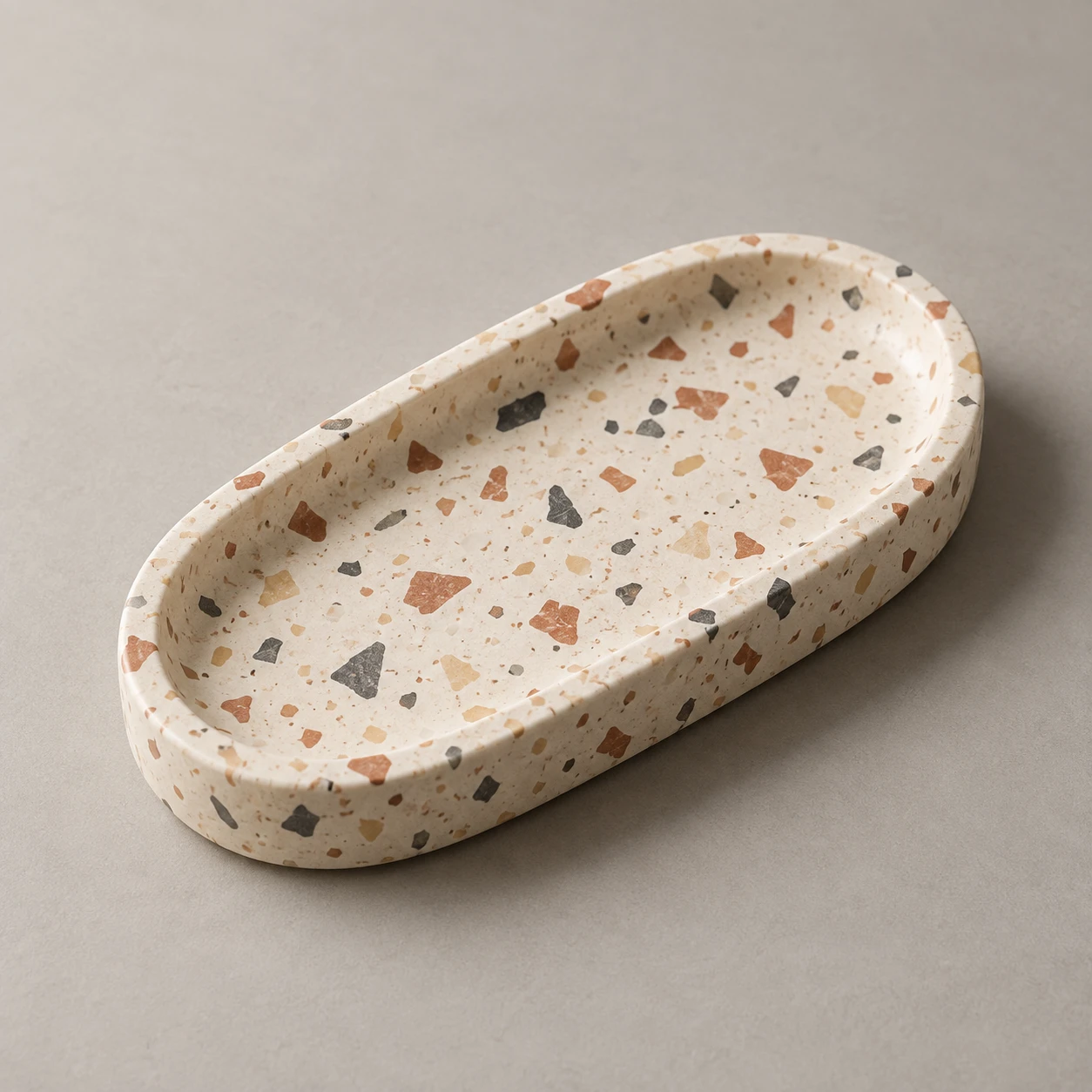
Render colored chips flush with a small terrazzo tray to distinguish embedded aggregate from attached decoration.
One Terrazzo Tray · Flush Aggregate
- Shape & line
- Build the tray with a continuous oval outline, a gently concave basin, and a rounded rim of visibly consistent thickness; use soft plane transitions to separate the basin from the front outer wall.
- Color & light
- Place a broad soft light above image upper-left so the ivory surface brightens on that side and darkens gradually toward image lower-right; carry the same gentle illumination across both the binder and the colored chips.
- Texture & material
- Scatter irregular angular chips in varied, clearly visible sizes with ivory gaps between them. Keep every chip flush with the satin surface, without individual raised edges or cast shadows; crop some chips naturally at the tray silhouette to show that the pattern belongs to the material.
- Composition
- Center the tray with generous tabletop space around it and keep the entire object sharp. Let the front wall conceal the lower edge of the basin, and place a soft contact shadow directly beneath the tray that extends toward image lower-right.
Priority
Make the chips read as embedded material sharing one continuous surface.
What to avoid & what to check
Avoid raised mosaic pieces, repeated decorative motifs, and glossy plastic shading.
Check that chips remain flush across the basin and rim while the tray retains clear depth.
Exact prompt for this example
SUBJECT
One small ivory terrazzo tray with a shallow oval basin and a low, rounded rim. Muted terracotta, charcoal, and pale ochre stone chips are embedded in the same solid material across the basin and rim.

COMPOSITION
Show the entire tray from an elevated three-quarter view, with its long axis running from image lower-left to upper-right. Reveal the basin, rounded rim, and front outer wall against a plain warm-gray tabletop.

STYLE GUIDE
1. Shape & line
Build the tray with a continuous oval outline, a gently concave basin, and a rounded rim of visibly consistent thickness; use soft plane transitions to separate the basin from the front outer wall.

2. Color & light
Place a broad soft light above image upper-left so the ivory surface brightens on that side and darkens gradually toward image lower-right; carry the same gentle illumination across both the binder and the colored chips.

3. Texture & material
Scatter irregular angular chips in varied, clearly visible sizes with ivory gaps between them. Keep every chip flush with the satin surface, without individual raised edges or cast shadows; crop some chips naturally at the tray silhouette to show that the pattern belongs to the material.

4. Composition
Center the tray with generous tabletop space around it and keep the entire object sharp. Let the front wall conceal the lower edge of the basin, and place a soft contact shadow directly beneath the tray that extends toward image lower-right.

PRIORITY
Preserve the requested identity, count, action, composition and output settings. Apply the style rules within those constraints; a style reference must not replace the subject or layout. Within the style: Make the chips read as embedded material sharing one continuous surface.

AVOID
Avoid raised mosaic pieces, repeated decorative motifs, and glossy plastic shading.

OUTPUT
Create one square image in a realistic studio product-photography style, with no text, labels, logos, or watermarks.

SELF-CHECK
Check that chips remain flush across the basin and rim while the tray retains clear depth.
Model information comes from image provenance. The same prompt may produce a different result.