Text to imageArt stylesStyle guide
One Pear · Scraped-Light Mezzotint
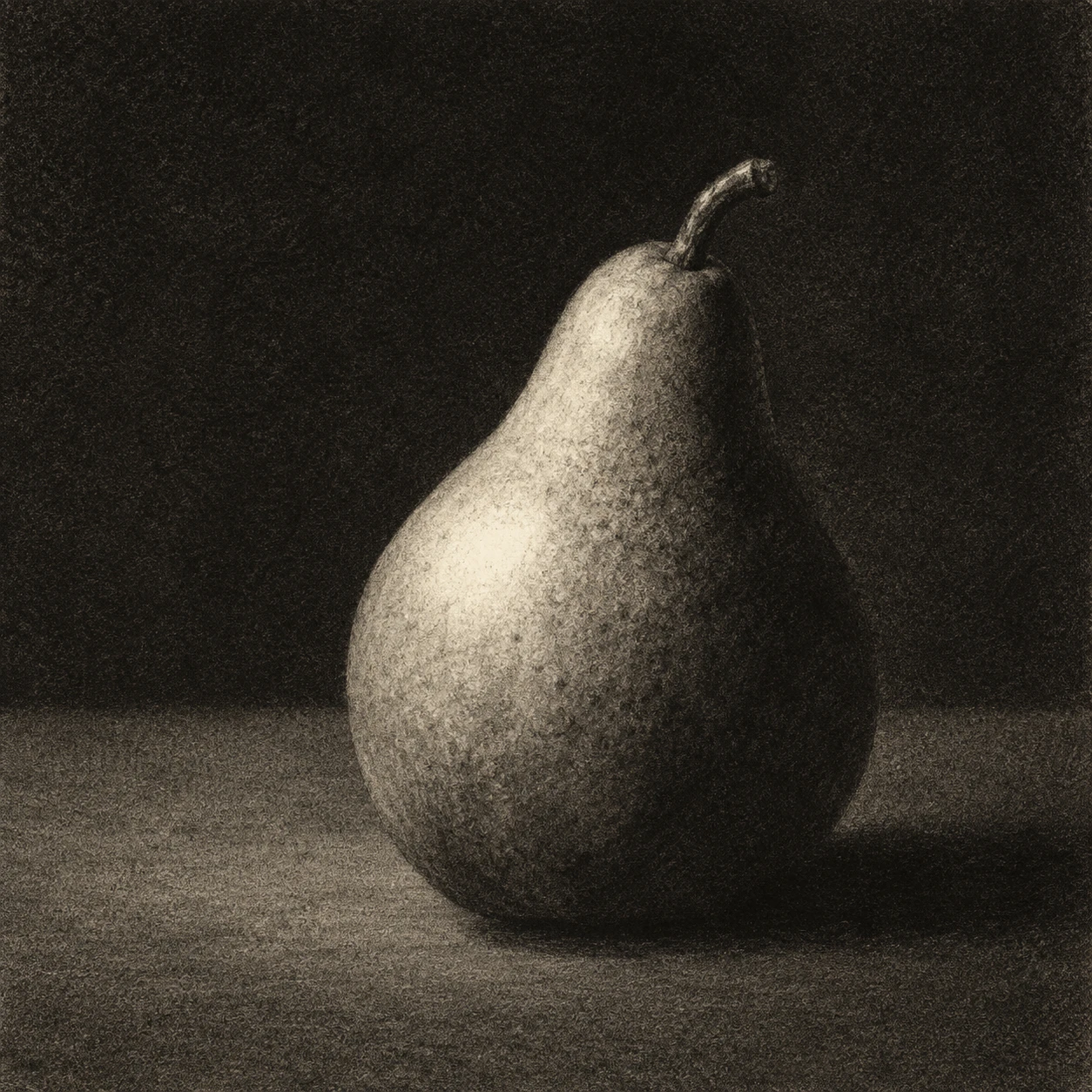
A mezzotint print that reveals a pear’s rounded volume through light scraped from a dark, granular ground.
One Pear · Scraped-Light Mezzotint
- Shape & line
- Build the pear with a broad rounded base and a gently leaning neck; define its silhouette through changes in tone rather than an enclosing outline, and give the short stem a clear curved profile.
- Color & light
- Use warm paper white and deep ink black. Light the pear from the upper image-left, opening a broad pale patch on its upper-left bulge; deepen the image-right flank and carry its cast shadow across the tabletop toward image-right.
- Texture & material
- Make the dark ground densely granular, then suggest scraping and burnishing by progressively thinning that grain through the pear’s middle tones into nearly smooth highlights; keep faint grain in the brightest patch and avoid directional hatch marks.
- Composition
- Keep the pear large enough for the grain-to-light transition to read clearly, leaving generous space above the stem. Reveal the tabletop with a subdued horizontal tonal shift and a small dense contact shadow directly beneath the pear.
Priority
Prioritize the gradual removal of dark grain as the source of the pear’s light and volume.
What to avoid & what to check
Avoid glossy photographic shading, contour outlines, and uniformly applied grain.
Check that the upper-left highlight visibly loses grain while the right flank and contact shadow retain dense black texture.
Exact prompt for this example
SUBJECT
One upright pear with a short curved stem resting on a plain tabletop; its broad lower body narrows into an asymmetric neck.

COMPOSITION
A close, slightly elevated three-quarter view shows the entire pear and its contact with the tabletop. Place the pear just right of center, with open dark space around its silhouette.

STYLE GUIDE
1. Shape & line
Build the pear with a broad rounded base and a gently leaning neck; define its silhouette through changes in tone rather than an enclosing outline, and give the short stem a clear curved profile.

2. Color & light
Use warm paper white and deep ink black. Light the pear from the upper image-left, opening a broad pale patch on its upper-left bulge; deepen the image-right flank and carry its cast shadow across the tabletop toward image-right.

3. Texture & material
Make the dark ground densely granular, then suggest scraping and burnishing by progressively thinning that grain through the pear’s middle tones into nearly smooth highlights; keep faint grain in the brightest patch and avoid directional hatch marks.

4. Composition
Keep the pear large enough for the grain-to-light transition to read clearly, leaving generous space above the stem. Reveal the tabletop with a subdued horizontal tonal shift and a small dense contact shadow directly beneath the pear.

PRIORITY
Preserve the requested identity, count, action, composition and output settings. Apply the style rules within those constraints; a style reference must not replace the subject or layout. Within the style: Prioritize the gradual removal of dark grain as the source of the pear’s light and volume.

AVOID
Avoid glossy photographic shading, contour outlines, and uniformly applied grain.

OUTPUT
One square image of a monochrome mezzotint print, with no lettering, captions, border, or watermark.

SELF-CHECK
Check that the upper-left highlight visibly loses grain while the right flank and contact shadow retain dense black texture.
Model information comes from image provenance. The same prompt may produce a different result.