Text to imagePortraitStyle guide
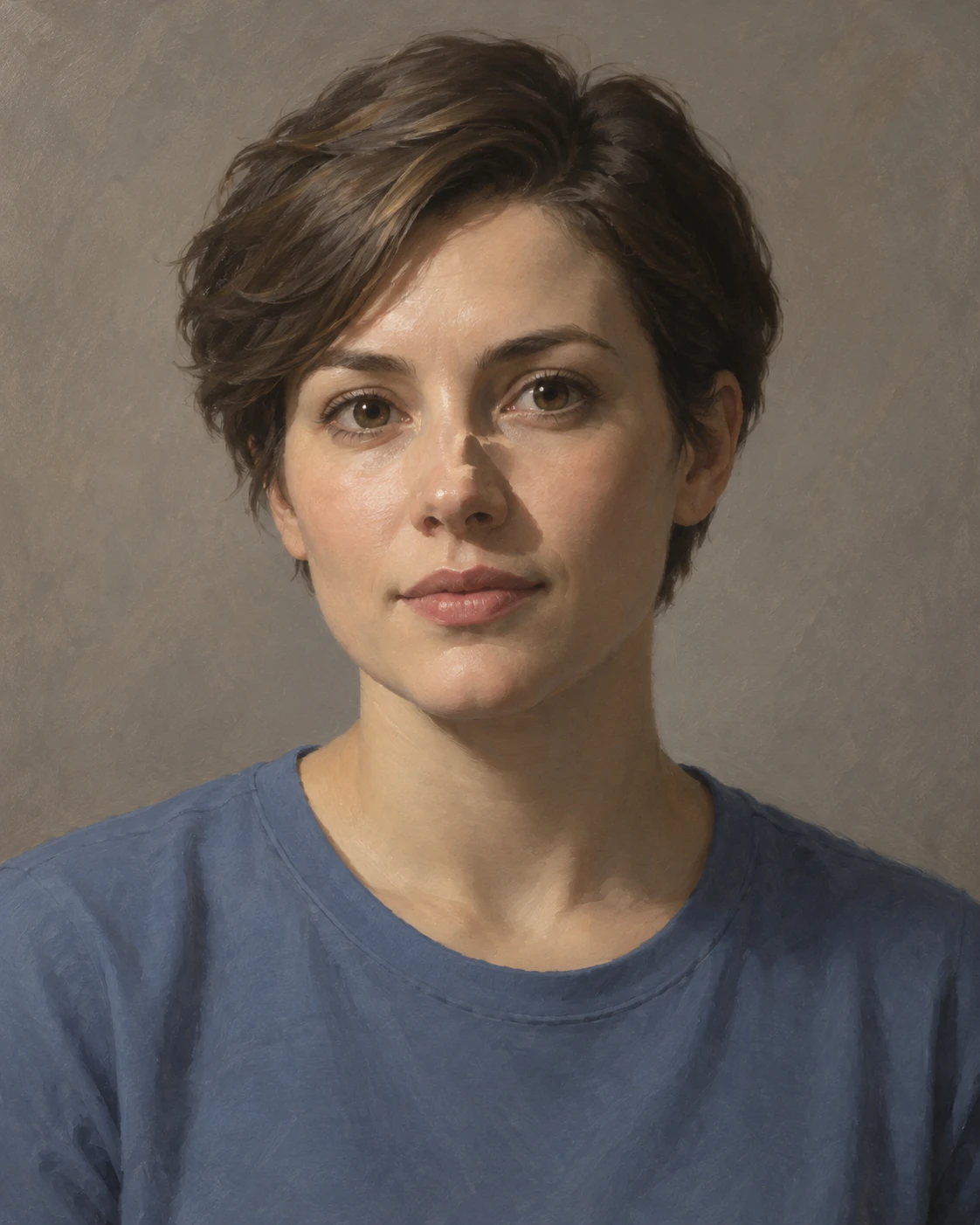
Side-Swept Adult · Loop Lighting
A simple portrait demonstrating loop lighting through a short nose shadow that stays separate from the cheek shadow.
Side-Swept Adult · Loop Lighting
- Shape & line
- Paint the head with natural proportions and broad, connected facial planes; describe the nose bridge and cheek turns through value changes, reserving the clearest edges for the upper eyelids, nostrils, and closed mouth.
- Color & light
- Place the key light above the face on image-left. Let the nose cast a short, softly edged shadow downward toward image-right; leave a visible strip of lit skin between that shadow and the darker image-right cheek, while keeping both eyes readable.
- Texture & material
- Use an opaque painted finish with restrained brush texture: blend the skin's broad transitions softly, group the hair into a few directional masses, and render the shirt as matte cloth with only a few large folds.
- Composition
- Keep the face nearly frontal and the shoulders level so both cheeks remain visible. Make the face the largest area of contrast, lower the contrast of the shirt and background, and preserve clear space beside the image-right nose shadow for its separated loop shape to read.
Priority
Prioritize the short nose shadow and the lit gap separating it from the cheek shadow.
What to avoid & what to check
Avoid joining the nose shadow to the cheek shadow or placing it directly beneath the nose.
Check that the image-left light produces a short image-right nose shadow with a clearly visible lit gap.
Exact prompt for this example
SUBJECT
One adult with short side-swept hair, wearing a plain muted blue shirt, with a relaxed closed mouth and eyes looking toward the viewer. Keep the forehead and both cheeks exposed so the nose shadow is clearly readable.

COMPOSITION
Use an eye-level, nearly frontal head-and-shoulders portrait in a vertical frame. Place the face slightly above center, include the entire hair silhouette, and leave comfortable space around the shoulders against a plain warm-gray background.

STYLE GUIDE
1. Shape & line
Paint the head with natural proportions and broad, connected facial planes; describe the nose bridge and cheek turns through value changes, reserving the clearest edges for the upper eyelids, nostrils, and closed mouth.

2. Color & light
Place the key light above the face on image-left. Let the nose cast a short, softly edged shadow downward toward image-right; leave a visible strip of lit skin between that shadow and the darker image-right cheek, while keeping both eyes readable.

3. Texture & material
Use an opaque painted finish with restrained brush texture: blend the skin's broad transitions softly, group the hair into a few directional masses, and render the shirt as matte cloth with only a few large folds.

4. Composition
Keep the face nearly frontal and the shoulders level so both cheeks remain visible. Make the face the largest area of contrast, lower the contrast of the shirt and background, and preserve clear space beside the image-right nose shadow for its separated loop shape to read.

PRIORITY
Preserve the requested identity, count, action, composition and output settings. Apply the style rules within those constraints; a style reference must not replace the subject or layout. Within the style: Prioritize the short nose shadow and the lit gap separating it from the cheek shadow.

AVOID
Avoid joining the nose shadow to the cheek shadow or placing it directly beneath the nose.

OUTPUT
Create one portrait image in a 4:5 aspect ratio, with no lettering, captions, logos, or watermark.

SELF-CHECK
Check that the image-left light produces a short image-right nose shadow with a clearly visible lit gap.
Model information comes from image provenance. The same prompt may produce a different result.