Text to imageLandscapeStyle guide
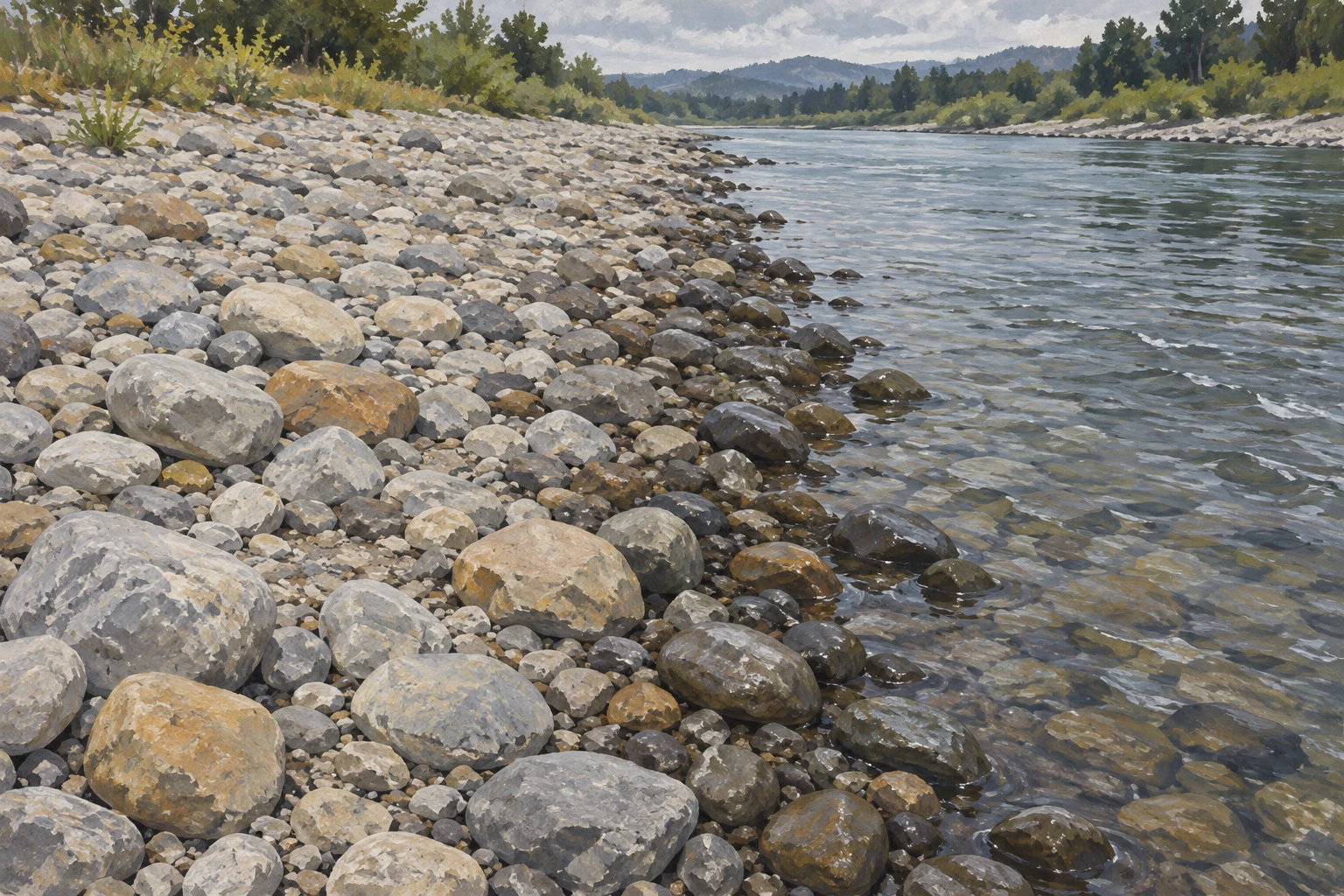
Gravel Bank · Wet–Dry Value Boundary
Reveal a stream’s shoreline through the value and sheen differences between wet and dry gravel.
Gravel Bank · Wet–Dry Value Boundary
- Shape & line
- Build the bank from overlapping rounded stone shapes with varied sizes and flattened resting faces. Continue comparable stone shapes across the wet–dry boundary, and make that boundary weave around individual stones rather than forming a straight painted stripe.
- Color & light
- Under broad overcast light, paint dry stones on image-left in pale gray and muted ochre, then deepen those same colors in the wet strip beside the water on image-right. Keep the transition uneven, with a few dark damp patches reaching uphill into the lighter bank.
- Texture & material
- Give dry stones matte, broken brush marks and softly mottled surfaces. Give wet stones smoother dark surfaces with sparse pale sky reflections on upward-facing facets; reserve small connected glints for the water touching their lower edges.
- Composition
- Place the clearest wet–dry comparison in the lower-middle foreground, where neighboring stones of similar size sit on opposite sides of the boundary. Simplify the distant gravel into grouped marks and keep stream ripples subdued so the shoreline remains the main visual path.
Priority
Make moisture visibly change the same stone palette and surface finish.
What to avoid & what to check
Avoid a uniform dark shoreline stripe or glossy highlights on every stone.
Check that darker, smoother stones meet the water on image-right while lighter matte stones continue uphill on image-left.
Exact prompt for this example
SUBJECT
One gently sloping gravel bank beside one shallow stream. The same mixture of rounded gray and ochre stones extends from the dry bank on image-left into a visibly wet strip touching the stream on image-right; moisture, rather than a change of stone type, defines the shoreline.

COMPOSITION
Use a slightly elevated oblique view in a horizontal frame. Let the bank occupy the left two-thirds and the stream the right third, with their irregular boundary running diagonally from the lower-right foreground toward the upper-center distance. Include a narrow far bank and a small strip of pale sky so the scene reads as a landscape.

STYLE GUIDE
1. Shape & line
Build the bank from overlapping rounded stone shapes with varied sizes and flattened resting faces. Continue comparable stone shapes across the wet–dry boundary, and make that boundary weave around individual stones rather than forming a straight painted stripe.

2. Color & light
Under broad overcast light, paint dry stones on image-left in pale gray and muted ochre, then deepen those same colors in the wet strip beside the water on image-right. Keep the transition uneven, with a few dark damp patches reaching uphill into the lighter bank.

3. Texture & material
Give dry stones matte, broken brush marks and softly mottled surfaces. Give wet stones smoother dark surfaces with sparse pale sky reflections on upward-facing facets; reserve small connected glints for the water touching their lower edges.

4. Composition
Place the clearest wet–dry comparison in the lower-middle foreground, where neighboring stones of similar size sit on opposite sides of the boundary. Simplify the distant gravel into grouped marks and keep stream ripples subdued so the shoreline remains the main visual path.

PRIORITY
Preserve the requested identity, count, action, composition and output settings. Apply the style rules within those constraints; a style reference must not replace the subject or layout. Within the style: Make moisture visibly change the same stone palette and surface finish.

AVOID
Avoid a uniform dark shoreline stripe or glossy highlights on every stone.

OUTPUT
One landscape image in a 3:2 aspect ratio, rendered as a naturalistic opaque-gouache study, with no text, labels, border, or watermark.

SELF-CHECK
Check that darker, smoother stones meet the water on image-right while lighter matte stones continue uphill on image-left.
Model information comes from image provenance. The same prompt may produce a different result.