Text to imagePortraitStyle guide
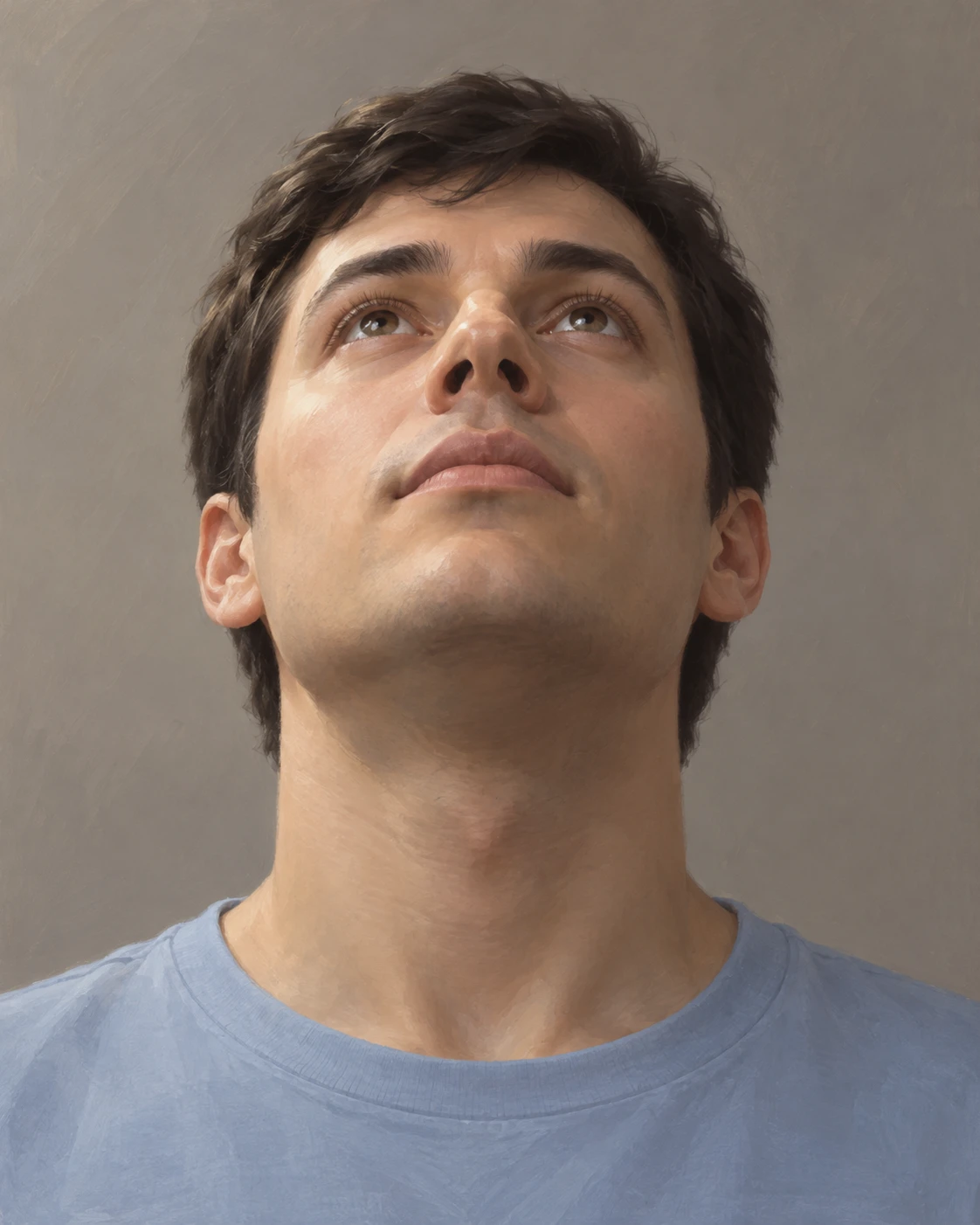
Upward-Looking Adult · Low-Angle Facial Foreshortening
A portrait that reveals the undersides of the nose and chin while compressing the forehead to convey an upward-tilted face from below.
Upward-Looking Adult · Low-Angle Facial Foreshortening
- Shape & line
- Construct the tilted face with shortened vertical spacing across the forehead and upper face, while exposing the underside of the nose and a broad plane beneath the chin. Let the chin overlap the top of the neck, and draw the nostrils as small recessed openings within the nose underside rather than separate surface dots.
- Color & light
- Place a broad soft key light above the face on image-left. Make the image-left forehead and cheek lighter, let the image-right cheek turn gradually darker, and keep the nose underside and under-chin plane darker than the upward-facing skin so the tilt reads through connected light and shadow.
- Texture & material
- Render the skin with soft matte brush transitions and a few restrained highlights on the nose tip and cheek tops. Paint the hair as compact dark masses with occasional directional strokes, and give the shirt a quiet woven surface so texture supports the facial planes without competing with them.
- Composition
- Keep the camera below the chin and the head tilt moderate enough to retain both eyes. Preserve clear background space beside the jaw and show the chin-to-neck overlap unobstructed; use the shoulder line as a calm horizontal base beneath the upward-directed face.
Priority
Prioritize the exposed underside planes and compressed upper-face spacing that make the low viewpoint readable.
What to avoid & what to check
Avoid stretching the face vertically or replacing the upward tilt with raised pupils alone.
Check that both eyes remain visible, the forehead appears shortened, and the chin clearly overlaps the neck.
Exact prompt for this example
SUBJECT
One adult with short straight hair and a plain pale-blue shirt, gently tipping their head backward and looking above the camera. Keep the face almost frontal so both sides remain readable; the raised chin projects in front of the neck.

COMPOSITION
Use a vertical head-and-shoulders framing viewed from slightly below chin level. Center the face with open space above the hair, show the entire chin and upper neck, and place the shoulders across the lower frame against a plain warm-gray background.

STYLE GUIDE
1. Shape & line
Construct the tilted face with shortened vertical spacing across the forehead and upper face, while exposing the underside of the nose and a broad plane beneath the chin. Let the chin overlap the top of the neck, and draw the nostrils as small recessed openings within the nose underside rather than separate surface dots.

2. Color & light
Place a broad soft key light above the face on image-left. Make the image-left forehead and cheek lighter, let the image-right cheek turn gradually darker, and keep the nose underside and under-chin plane darker than the upward-facing skin so the tilt reads through connected light and shadow.

3. Texture & material
Render the skin with soft matte brush transitions and a few restrained highlights on the nose tip and cheek tops. Paint the hair as compact dark masses with occasional directional strokes, and give the shirt a quiet woven surface so texture supports the facial planes without competing with them.

4. Composition
Keep the camera below the chin and the head tilt moderate enough to retain both eyes. Preserve clear background space beside the jaw and show the chin-to-neck overlap unobstructed; use the shoulder line as a calm horizontal base beneath the upward-directed face.

PRIORITY
Preserve the requested identity, count, action, composition and output settings. Apply the style rules within those constraints; a style reference must not replace the subject or layout. Within the style: Prioritize the exposed underside planes and compressed upper-face spacing that make the low viewpoint readable.

AVOID
Avoid stretching the face vertically or replacing the upward tilt with raised pupils alone.

OUTPUT
Create one finished digital painted portrait in a 4:5 aspect ratio, with no lettering, captions, logos, or watermark.

SELF-CHECK
Check that both eyes remain visible, the forehead appears shortened, and the chin clearly overlaps the neck.
Model information comes from image provenance. The same prompt may produce a different result.