Text to imagePortraitStyle guide
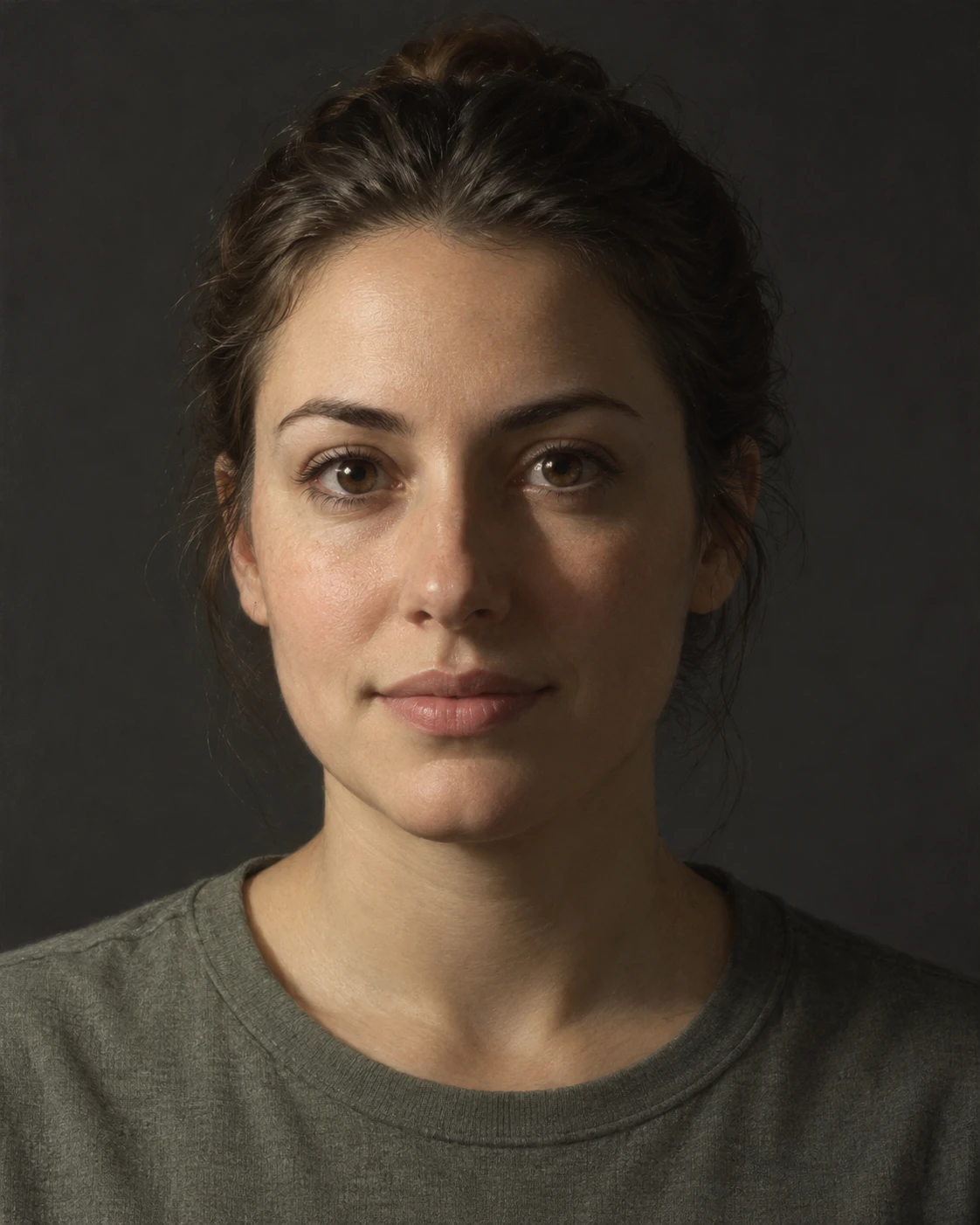
Adult with Tied Hair · Rembrandt Light Triangle
A portrait that connects the nose and cheek shadows while preserving a small triangle of light on the shadowed cheek to reveal facial volume.
Adult with Tied Hair · Rembrandt Light Triangle
- Shape & line
- Build the face from gently modeled forehead, nose, cheek, and jaw forms; keep both cheeks readable in the nearly frontal pose, and describe the nose and lips with tonal edges rather than heavy outlines.
- Color & light
- Place a moderately soft key light above and to image-left: illuminate the image-left cheek and cast the nose shadow diagonally down toward image-right until it joins the image-right cheek shadow. Leave a small triangle of light directly beneath the image-right eye, enclosed by the surrounding shadows and narrower than that eye.
- Texture & material
- Render skin with restrained matte brushwork and subtle natural variation; group the tied hair into broad dark locks with a few soft highlights, and give the shirt a quiet woven texture so surface detail supports the facial lighting.
- Composition
- Keep the background uniform and darker than the illuminated skin; place the light triangle clearly inside the image-right cheek rather than on its outer contour, and retain enough shadow detail to read the eye above it and the cheek around it.
Priority
Make the connected nose-and-cheek shadow and enclosed cheek-light triangle the clearest lighting features.
What to avoid & what to check
Avoid a detached nose shadow or a bright triangle that spreads across the entire shadowed cheek.
Confirm that the image-left key light produces a connected shadow on image-right and leaves a readable light triangle beneath that eye.
Exact prompt for this example
SUBJECT
One adult with hair tied back, wearing a plain muted shirt and holding a relaxed, closed-mouth expression. Both eyes and both cheeks are visible; the unobstructed face demonstrates a connected nose-and-cheek shadow with a light triangle beneath one eye.

COMPOSITION
An eye-level, nearly frontal head-and-shoulders portrait on a plain dark gray background. Center the face with comfortable space above the hair and include the upper shoulders; keep the head upright and the gaze toward the viewer.

STYLE GUIDE
1. Shape & line
Build the face from gently modeled forehead, nose, cheek, and jaw forms; keep both cheeks readable in the nearly frontal pose, and describe the nose and lips with tonal edges rather than heavy outlines.

2. Color & light
Place a moderately soft key light above and to image-left: illuminate the image-left cheek and cast the nose shadow diagonally down toward image-right until it joins the image-right cheek shadow. Leave a small triangle of light directly beneath the image-right eye, enclosed by the surrounding shadows and narrower than that eye.

3. Texture & material
Render skin with restrained matte brushwork and subtle natural variation; group the tied hair into broad dark locks with a few soft highlights, and give the shirt a quiet woven texture so surface detail supports the facial lighting.

4. Composition
Keep the background uniform and darker than the illuminated skin; place the light triangle clearly inside the image-right cheek rather than on its outer contour, and retain enough shadow detail to read the eye above it and the cheek around it.

PRIORITY
Preserve the requested identity, count, action, composition and output settings. Apply the style rules within those constraints; a style reference must not replace the subject or layout. Within the style: Make the connected nose-and-cheek shadow and enclosed cheek-light triangle the clearest lighting features.

AVOID
Avoid a detached nose shadow or a bright triangle that spreads across the entire shadowed cheek.

OUTPUT
One realistic painted portrait image in a vertical 4:5 aspect ratio, with no lettering, captions, logos, or watermark.

SELF-CHECK
Confirm that the image-left key light produces a connected shadow on image-right and leaves a readable light triangle beneath that eye.
Model information comes from image provenance. The same prompt may produce a different result.