Text to imageLandscapeStyle guide
Low Sun over a Marsh · Broken Reflection Path
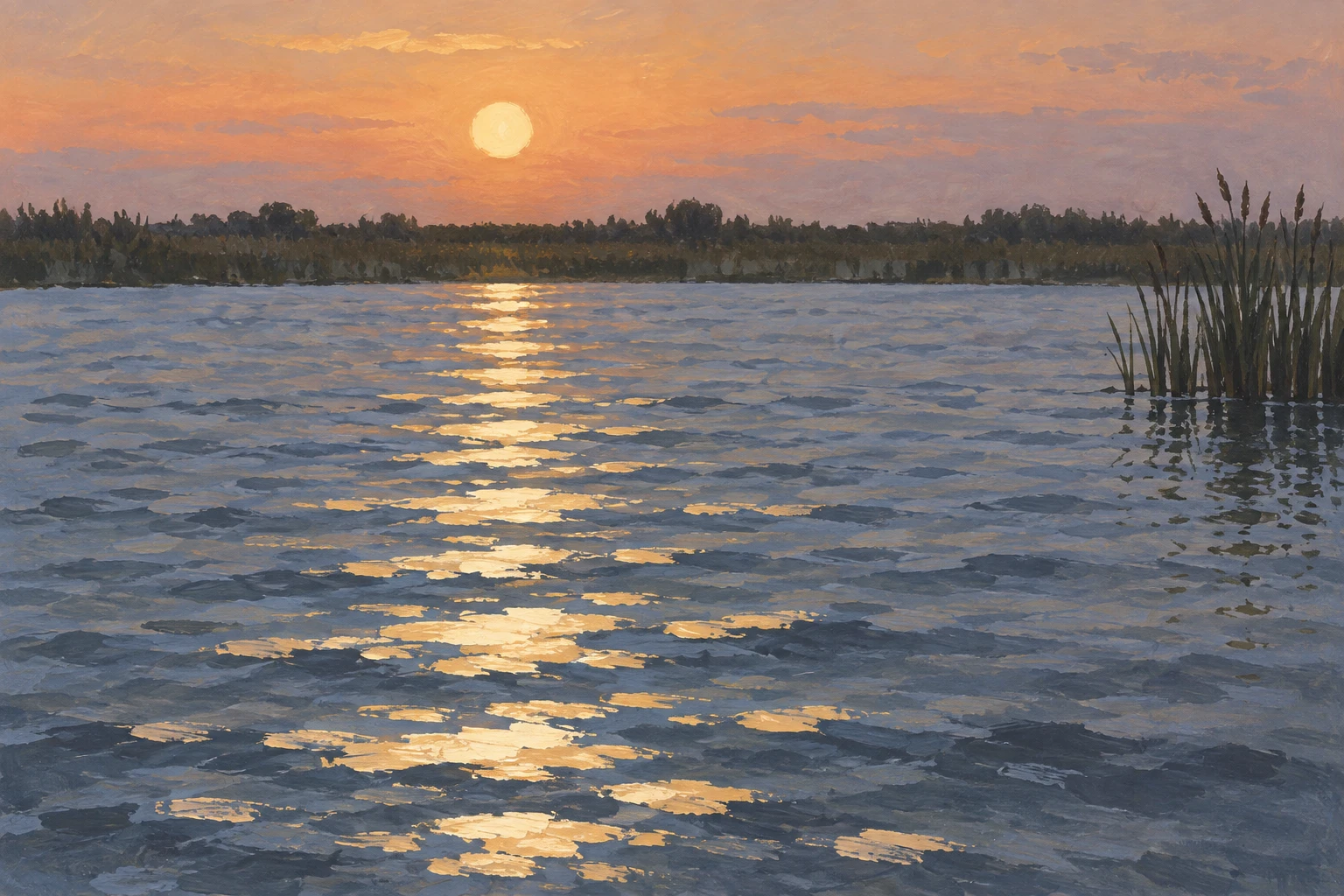
A marsh landscape where broken bright bands across ripples carry a low sun’s reflection toward the viewer.
Low Sun over a Marsh · Broken Reflection Path
- Shape & line
- Draw the reed bank as a low, uneven silhouette and the image-right clump as a few tapering upright strokes. Construct the reflection from separate horizontal dashes whose centers stay beneath the sun, widening broadly toward the bottom edge.
- Color & light
- Set a pale warm sun against a muted peach sky and cool blue-gray water. Put cream and soft gold highlights only along the reflection path; retain visible blue-gray gaps between them so the light reads as interrupted by ripples rather than a solid stripe.
- Texture & material
- Use matte, opaque gouache with broad quiet paint fields. Apply the bright dashes with lightly dragged, broken brush edges, making foreground marks broader and more distinct while distant marks become smaller and closer together; keep the sky smooth.
- Composition
- Keep the brightest reflection vertically aligned with the sun, beginning at the far waterline and spreading toward the viewer. Leave subdued open water on both image-plane sides of this path, and keep the right reed clump compact so the light remains the main visual route.
Priority
Prioritize a clearly aligned reflection path made of visibly separated horizontal highlights.
What to avoid & what to check
Avoid a solid vertical light stripe, mirror-smooth water, and glossy digital gradients.
Check that the broken highlights begin beneath the sun and widen toward the foreground.
Exact prompt for this example
SUBJECT
One shallow marsh pool beneath one low sun, with a continuous distant reed bank and one small reed clump at the pool’s image-right edge. A broken sunlight reflection extends from directly beneath the sun toward the foreground water.

COMPOSITION
Use a wide, eye-level view with the horizon in the upper third. Place the sun slightly left of center and let open water fill the lower two-thirds. Keep the image-right reed clump beside the reflection path so its dark silhouette makes the bright water easy to read.

STYLE GUIDE
1. Shape & line
Draw the reed bank as a low, uneven silhouette and the image-right clump as a few tapering upright strokes. Construct the reflection from separate horizontal dashes whose centers stay beneath the sun, widening broadly toward the bottom edge.

2. Color & light
Set a pale warm sun against a muted peach sky and cool blue-gray water. Put cream and soft gold highlights only along the reflection path; retain visible blue-gray gaps between them so the light reads as interrupted by ripples rather than a solid stripe.

3. Texture & material
Use matte, opaque gouache with broad quiet paint fields. Apply the bright dashes with lightly dragged, broken brush edges, making foreground marks broader and more distinct while distant marks become smaller and closer together; keep the sky smooth.

4. Composition
Keep the brightest reflection vertically aligned with the sun, beginning at the far waterline and spreading toward the viewer. Leave subdued open water on both image-plane sides of this path, and keep the right reed clump compact so the light remains the main visual route.

PRIORITY
Preserve the requested identity, count, action, composition and output settings. Apply the style rules within those constraints; a style reference must not replace the subject or layout. Within the style: Prioritize a clearly aligned reflection path made of visibly separated horizontal highlights.

AVOID
Avoid a solid vertical light stripe, mirror-smooth water, and glossy digital gradients.

OUTPUT
Create one landscape image in a 3:2 aspect ratio as an opaque gouache painting, with no lettering, captions, borders, or watermark.

SELF-CHECK
Check that the broken highlights begin beneath the sun and widen toward the foreground.
Model information comes from image provenance. The same prompt may produce a different result.