Text to imageSpace & architectureStyle guide
Small Basement · Light Volume Revealed by Dust
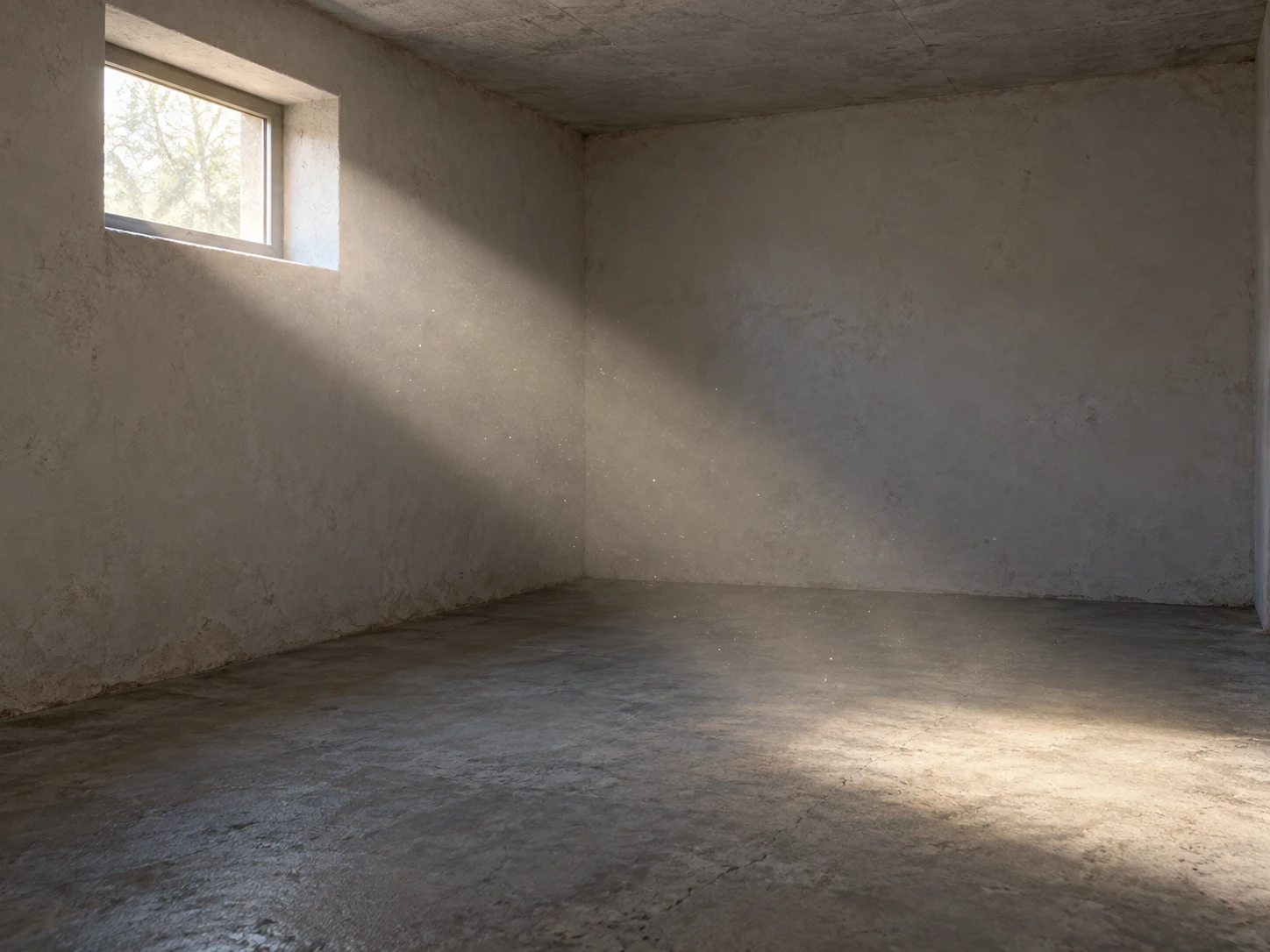
A spatial study of a high window illuminating faint dust so the path of daylight becomes visible inside a small basement.
Small Basement · Light Volume Revealed by Dust
- Shape & line
- Build the room from broad rectangular planes with straight wall junctions and upright verticals. Give the high image-left window a visibly thick reveal, and make the beam widen from that opening toward the lower image-right floor, with softly defined sides rather than solid outlined edges.
- Color & light
- Use pale neutral walls and a muted gray floor under cool, subdued ambient light. Send slightly warm daylight diagonally from upper image-left to lower image-right; brighten the dust inside that path and the floor where it lands, while keeping the surrounding room darker and readable.
- Texture & material
- Render plaster and concrete as matte surfaces with restrained unevenness. Show the airborne dust mainly as a thin luminous haze within the beam, adding only a few subtle specks; let the walls remain visible through it so the light feels suspended in air rather than painted onto a surface.
- Composition
- Keep the window in the upper-left portion and the illuminated floor patch in the lower-right portion, connecting them with one uninterrupted visible beam. Leave darker space on both sides of the beam and keep the rear wall corner exposed so its diagonal passage through the room is easy to understand.
Priority
Prioritize the visible connection between the window, illuminated airborne dust, and the floor receiving the light.
What to avoid & what to check
Avoid opaque fog, hard graphic beam outlines, and an evenly glowing room.
Check that one translucent beam runs from the upper-left window to the lower-right floor and reveals spatial depth.
Exact prompt for this example
SUBJECT
One small empty basement room with pale plaster walls, a gray concrete floor, and one high rectangular window on the image-left wall. Daylight enters through this window, passes through faint suspended dust, and reaches the floor toward image-right.

COMPOSITION
View from a low standing position toward the rear corner, showing the image-left window, both adjoining walls, and enough floor to trace the complete diagonal beam to its illuminated landing area at lower image-right. Keep architectural verticals upright.

STYLE GUIDE
1. Shape & line
Build the room from broad rectangular planes with straight wall junctions and upright verticals. Give the high image-left window a visibly thick reveal, and make the beam widen from that opening toward the lower image-right floor, with softly defined sides rather than solid outlined edges.

2. Color & light
Use pale neutral walls and a muted gray floor under cool, subdued ambient light. Send slightly warm daylight diagonally from upper image-left to lower image-right; brighten the dust inside that path and the floor where it lands, while keeping the surrounding room darker and readable.

3. Texture & material
Render plaster and concrete as matte surfaces with restrained unevenness. Show the airborne dust mainly as a thin luminous haze within the beam, adding only a few subtle specks; let the walls remain visible through it so the light feels suspended in air rather than painted onto a surface.

4. Composition
Keep the window in the upper-left portion and the illuminated floor patch in the lower-right portion, connecting them with one uninterrupted visible beam. Leave darker space on both sides of the beam and keep the rear wall corner exposed so its diagonal passage through the room is easy to understand.

PRIORITY
Preserve the requested identity, count, action, composition and output settings. Apply the style rules within those constraints; a style reference must not replace the subject or layout. Within the style: Prioritize the visible connection between the window, illuminated airborne dust, and the floor receiving the light.

AVOID
Avoid opaque fog, hard graphic beam outlines, and an evenly glowing room.

OUTPUT
One realistic architectural study image in a landscape 4:3 aspect ratio, with no text, labels, logos, or watermark.

SELF-CHECK
Check that one translucent beam runs from the upper-left window to the lower-right floor and reveals spatial depth.
Model information comes from image provenance. The same prompt may produce a different result.