Text to imageArt stylesStyle guide
One Avocado Half · Torn-Paper Collage
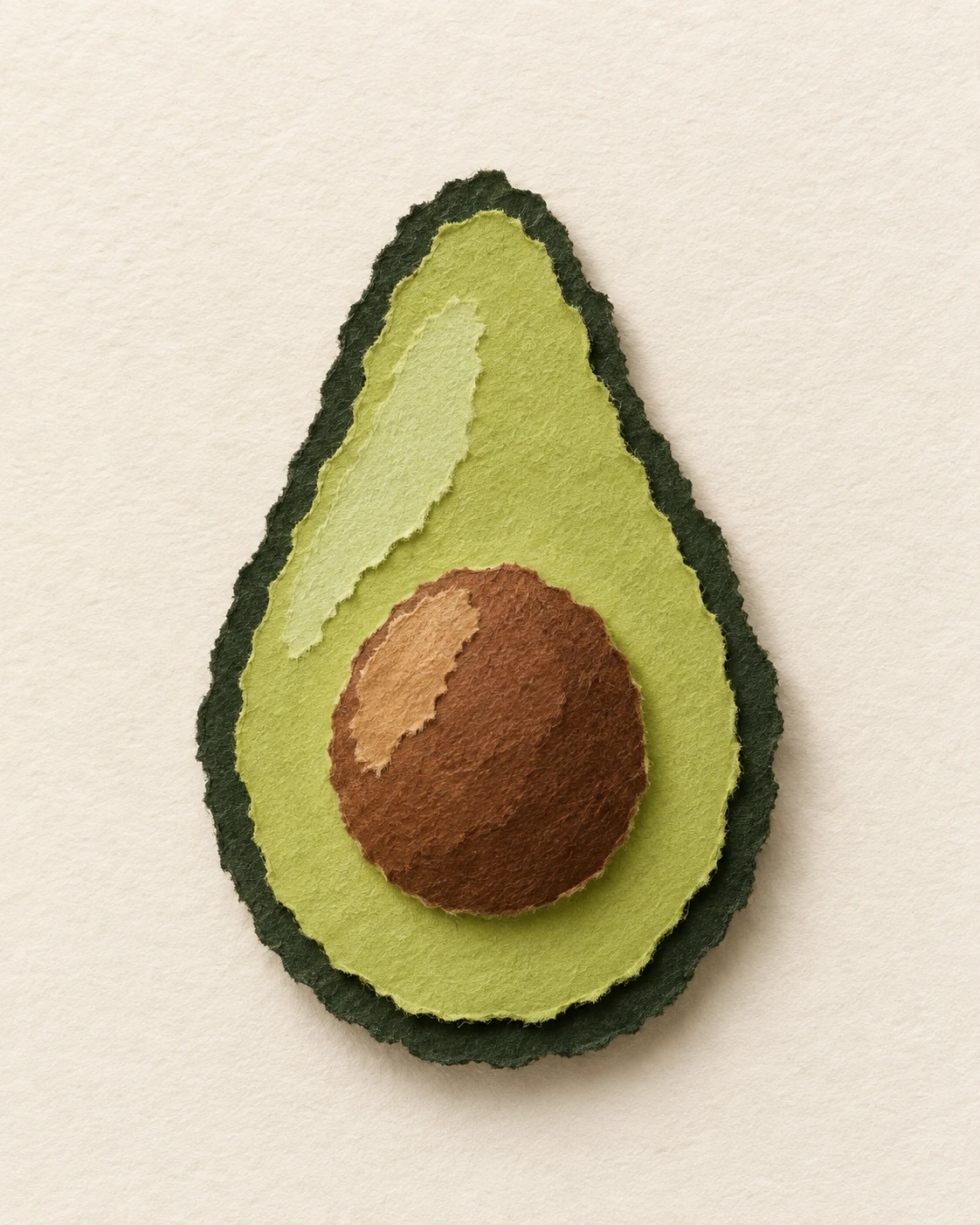
A collage reference that separates an avocado half’s skin, flesh, and pit through torn edges and overlapping paper shapes.
One Avocado Half · Torn-Paper Collage
- Shape & line
- Build the avocado from nested, hand-torn paper silhouettes: a dark pear-shaped backing for the skin, a smaller green layer for the flesh, and a rounded brown piece for the pit. Let small uneven notches interrupt the contours while preserving the tapered top and broad lower body.
- Color & light
- Use opaque forest green for the skin, muted yellow-green for the flesh, and warm brown for the pit against cream paper. Add a smaller pale-green torn patch inside the flesh and a warm tan patch on the pit’s image-left upper area; keep these as distinct paper shapes rather than blended gradients.
- Texture & material
- Make the surface read as matte fibrous paper, with visible fuzzy tear edges and restrained grain across each piece. Light the assembled collage from the image’s upper left so raised paper edges cast short soft shadows toward the lower right onto the layer directly beneath them.
- Composition
- Keep the three main layers clearly nested and the pit fully inside the flesh, leaving a readable green margin around it. Use a single continuous avocado silhouette and ample cream negative space so the torn contours and shallow overlaps remain the main visual event.
Priority
Prioritize readable torn-paper layers and the clear skin–flesh–pit relationship.
What to avoid & what to check
Avoid smooth vector edges, glossy fruit rendering, and a tiled mosaic surface.
Check that one avocado half contains one pit and that torn edges cast visible shadows onto adjacent paper layers.
Exact prompt for this example
SUBJECT
Show exactly one avocado half with its cut face toward the viewer, its tapered end pointing upward, and one round brown pit seated inside the lower, wider portion. Keep the dark skin visible as a narrow outer rim around the green flesh.

COMPOSITION
Use a straight-on view of the cut face in a portrait frame. Place the avocado slightly below center, occupying roughly two-thirds of the image height, with generous uninterrupted paper background around its silhouette.

STYLE GUIDE
1. Shape & line
Build the avocado from nested, hand-torn paper silhouettes: a dark pear-shaped backing for the skin, a smaller green layer for the flesh, and a rounded brown piece for the pit. Let small uneven notches interrupt the contours while preserving the tapered top and broad lower body.

2. Color & light
Use opaque forest green for the skin, muted yellow-green for the flesh, and warm brown for the pit against cream paper. Add a smaller pale-green torn patch inside the flesh and a warm tan patch on the pit’s image-left upper area; keep these as distinct paper shapes rather than blended gradients.

3. Texture & material
Make the surface read as matte fibrous paper, with visible fuzzy tear edges and restrained grain across each piece. Light the assembled collage from the image’s upper left so raised paper edges cast short soft shadows toward the lower right onto the layer directly beneath them.

4. Composition
Keep the three main layers clearly nested and the pit fully inside the flesh, leaving a readable green margin around it. Use a single continuous avocado silhouette and ample cream negative space so the torn contours and shallow overlaps remain the main visual event.

PRIORITY
Preserve the requested identity, count, action, composition and output settings. Apply the style rules within those constraints; a style reference must not replace the subject or layout. Within the style: Prioritize readable torn-paper layers and the clear skin–flesh–pit relationship.

AVOID
Avoid smooth vector edges, glossy fruit rendering, and a tiled mosaic surface.

OUTPUT
Create one image in a 4:5 portrait aspect ratio, with no lettering, labels, border, or watermark.

SELF-CHECK
Check that one avocado half contains one pit and that torn edges cast visible shadows onto adjacent paper layers.
Model information comes from image provenance. The same prompt may produce a different result.