Text to imageArt stylesStyle guide
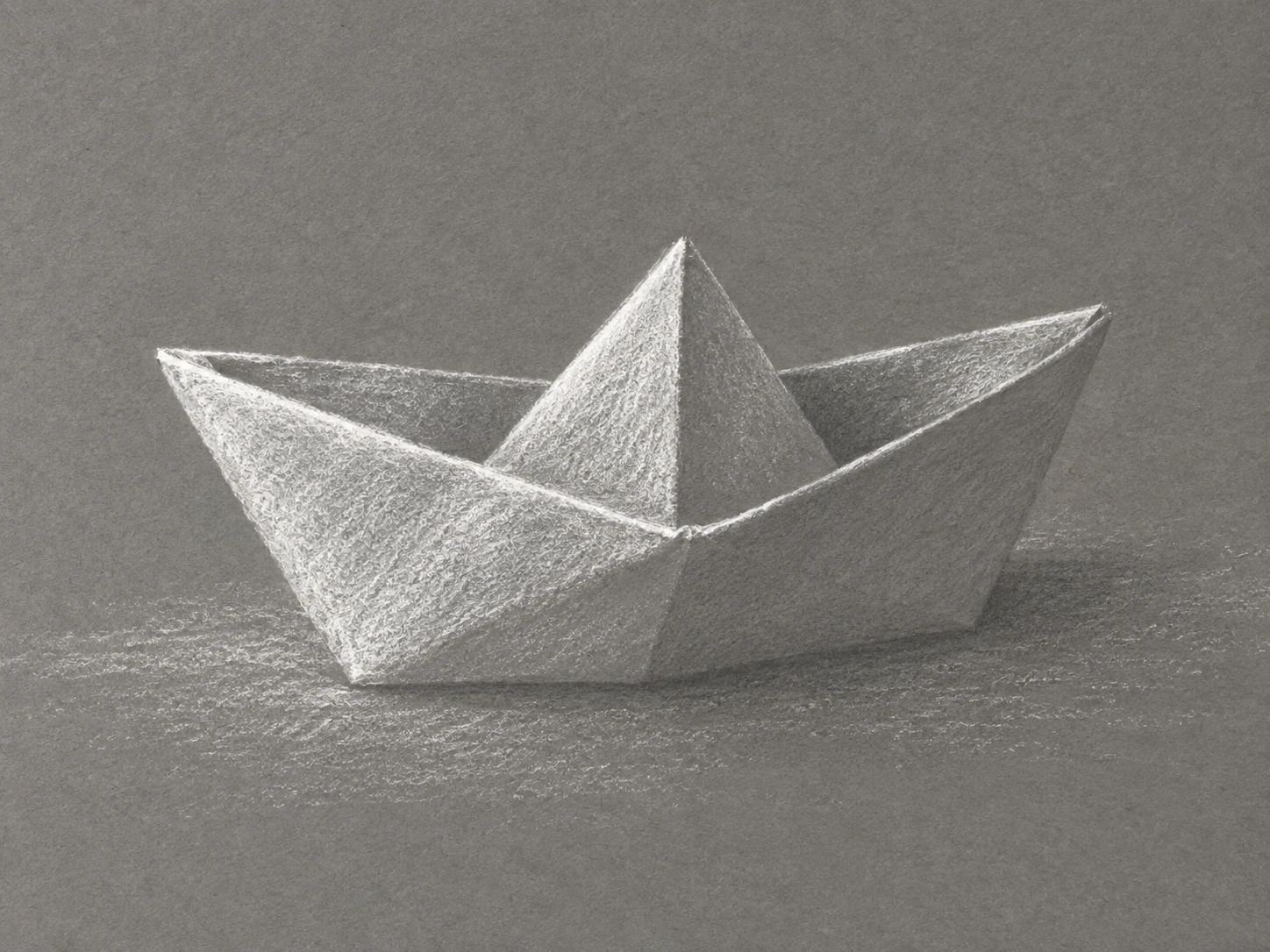
One Paper Boat · White Chalk on Midtone Paper
An additive white-chalk drawing that leaves gray paper as the midtone and builds the bright planes and crisp ridges of a folded paper boat.
One Paper Boat · White Chalk on Midtone Paper
- Shape & line
- Construct the boat from straight fold edges and broad angular planes. Draw the illuminated upper rim and central ridge with firm, narrow white-chalk strokes, then let the lower hull contour soften into the gray ground instead of enclosing every plane with an outline.
- Color & light
- Use the gray sheet as the middle value and white chalk as the only added color. Light from image-upper-left: build the brightest chalk on the upper-left-facing folds, leave the right-facing hull mostly bare gray, and reserve the unmarked gray inside the opening as the darkest large area.
- Texture & material
- Lay broad planes with the side of the chalk so the paper tooth breaks the white into a visible grain. Blend lightly within a few bright planes, but retain powdery gaps near their edges; use denser chalk only along selected fold crests so the material still reads as dry chalk on textured paper.
- Composition
- Place the boat slightly below center and keep its silhouette clear against untouched gray paper. Suggest the supporting surface with a sparse horizontal chalk scuff beside the boat, while leaving a narrow gray contact strip directly beneath the hull; keep background marks quieter than the bright central peak.
Priority
Prioritize readable folded planes built by adding white to a visible gray ground.
What to avoid & what to check
Avoid black outlines, colored accents, and smooth digital gradients that conceal the chalk grain.
Check that one boat reads clearly and that bare gray paper supplies its shadow planes.
Exact prompt for this example
SUBJECT
One small boat folded from plain white paper, with a central triangular peak rising between two folded hull sides, resting on a flat surface.

COMPOSITION
Show the entire boat in a slightly elevated three-quarter view, with its bow pointing toward image-left and its long hull extending toward image-right. Keep the opening and central peak readable, with generous gray-paper space around the subject.

STYLE GUIDE
1. Shape & line
Construct the boat from straight fold edges and broad angular planes. Draw the illuminated upper rim and central ridge with firm, narrow white-chalk strokes, then let the lower hull contour soften into the gray ground instead of enclosing every plane with an outline.

2. Color & light
Use the gray sheet as the middle value and white chalk as the only added color. Light from image-upper-left: build the brightest chalk on the upper-left-facing folds, leave the right-facing hull mostly bare gray, and reserve the unmarked gray inside the opening as the darkest large area.

3. Texture & material
Lay broad planes with the side of the chalk so the paper tooth breaks the white into a visible grain. Blend lightly within a few bright planes, but retain powdery gaps near their edges; use denser chalk only along selected fold crests so the material still reads as dry chalk on textured paper.

4. Composition
Place the boat slightly below center and keep its silhouette clear against untouched gray paper. Suggest the supporting surface with a sparse horizontal chalk scuff beside the boat, while leaving a narrow gray contact strip directly beneath the hull; keep background marks quieter than the bright central peak.

PRIORITY
Preserve the requested identity, count, action, composition and output settings. Apply the style rules within those constraints; a style reference must not replace the subject or layout. Within the style: Prioritize readable folded planes built by adding white to a visible gray ground.

AVOID
Avoid black outlines, colored accents, and smooth digital gradients that conceal the chalk grain.

OUTPUT
One image in a 4:3 landscape aspect ratio, presented as a finished chalk drawing on gray paper, without text, labels, signatures, or borders.

SELF-CHECK
Check that one boat reads clearly and that bare gray paper supplies its shadow planes.
Model information comes from image provenance. The same prompt may produce a different result.