Text to imagePortraitStyle guide
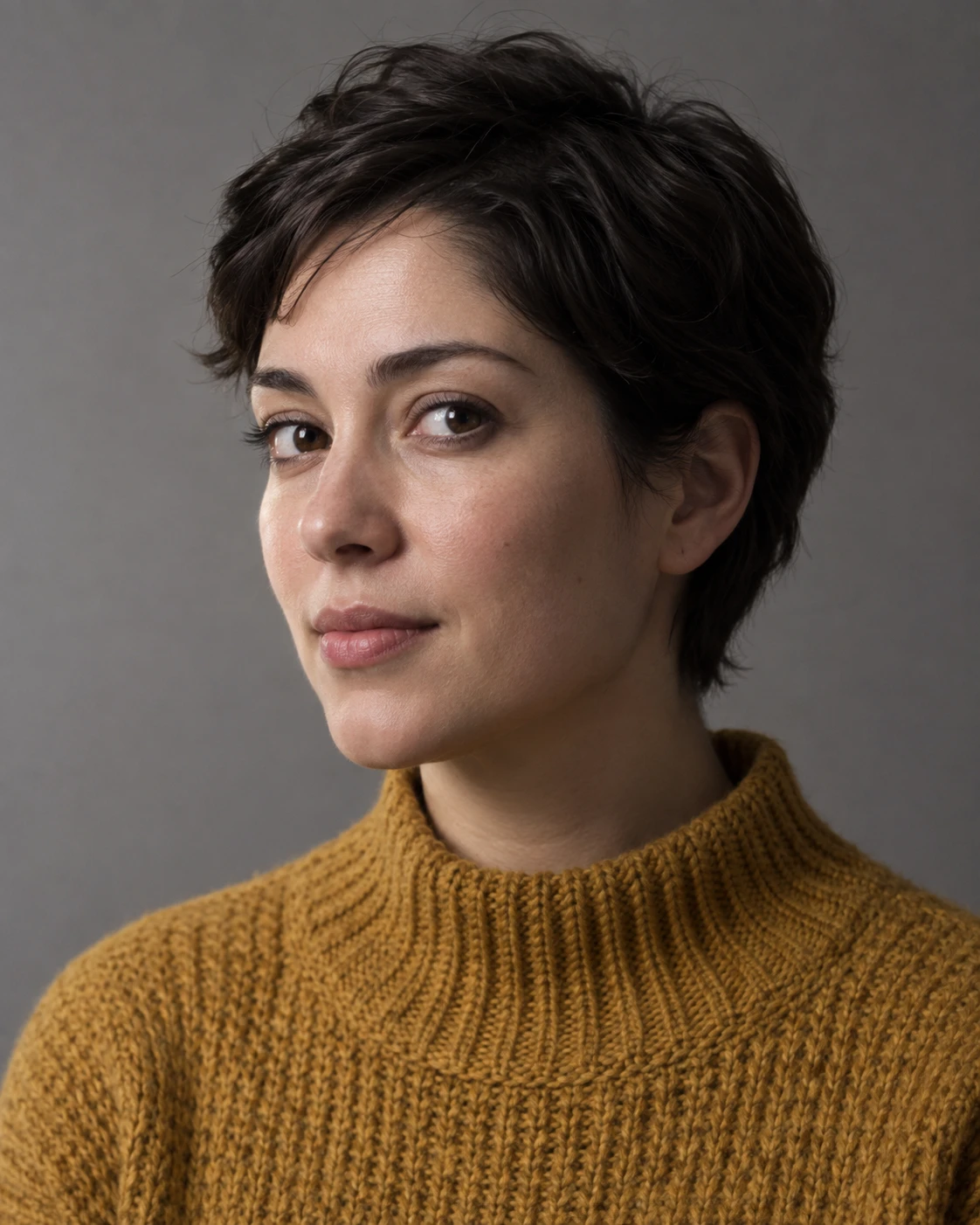
Short-Haired Adult · Short Lighting
A photographic portrait that lights the narrow image-left cheek of an adult turned toward image left, while grouping the broad image-right cheek in shadow to reveal facial volume.
Short-Haired Adult · Short Lighting
- Shape & line
- Turn the head moderately toward image left so the nose points left of center, the image-left cheek appears narrow, and the image-right cheek appears broad. Preserve the continuous forehead–nose–mouth–chin alignment of this turn, with relaxed shoulders beneath the head.
- Color & light
- Place a soft key light on image left, slightly above eye level, to illuminate the narrow image-left cheek and left-facing nose plane. Let the nose shadow extend toward image right and join the broad image-right cheek shadow; retain faint detail there without creating an isolated bright cheek triangle.
- Texture & material
- Render skin with restrained pores and soft matte transitions, keeping small highlights on the lit nose and cheek below a glossy sheen. Show the sweater as visibly knitted loops that soften in shadow, and group the short hair into natural dark masses with a few readable strands.
- Composition
- Keep the face large enough for both cheek widths and their lighting difference to read immediately. Set the background to a quiet middle gray that separates the shadowed image-right jaw, and keep the eyes clearly resolved while the sweater and background remain less prominent.
Priority
Make the illuminated narrow image-left cheek and shadowed broad image-right cheek the clearest relationship.
What to avoid & what to check
Avoid reversing the cheek lighting, flattening the face with frontal fill, or smoothing away the skin texture.
Confirm that the face turns toward image left and the image-left key light illuminates the narrower cheek.
Exact prompt for this example
SUBJECT
One adult with short dark hair wearing a mustard knitted high-collar sweater, with a relaxed closed mouth. Their face turns toward image left while their eyes look toward the camera; the narrow image-left cheek faces the key light, and the broad image-right cheek faces the viewer.

COMPOSITION
An eye-level, vertical head-and-shoulders portrait with the whole hair silhouette visible, modest space above the head, and slightly more breathing room toward image left. Use a plain muted gray background.

STYLE GUIDE
1. Shape & line
Turn the head moderately toward image left so the nose points left of center, the image-left cheek appears narrow, and the image-right cheek appears broad. Preserve the continuous forehead–nose–mouth–chin alignment of this turn, with relaxed shoulders beneath the head.

2. Color & light
Place a soft key light on image left, slightly above eye level, to illuminate the narrow image-left cheek and left-facing nose plane. Let the nose shadow extend toward image right and join the broad image-right cheek shadow; retain faint detail there without creating an isolated bright cheek triangle.

3. Texture & material
Render skin with restrained pores and soft matte transitions, keeping small highlights on the lit nose and cheek below a glossy sheen. Show the sweater as visibly knitted loops that soften in shadow, and group the short hair into natural dark masses with a few readable strands.

4. Composition
Keep the face large enough for both cheek widths and their lighting difference to read immediately. Set the background to a quiet middle gray that separates the shadowed image-right jaw, and keep the eyes clearly resolved while the sweater and background remain less prominent.

PRIORITY
Preserve the requested identity, count, action, composition and output settings. Apply the style rules within those constraints; a style reference must not replace the subject or layout. Within the style: Make the illuminated narrow image-left cheek and shadowed broad image-right cheek the clearest relationship.

AVOID
Avoid reversing the cheek lighting, flattening the face with frontal fill, or smoothing away the skin texture.

OUTPUT
One photographic portrait image in a 4:5 aspect ratio, without text, logos, borders, or watermarks.

SELF-CHECK
Confirm that the face turns toward image left and the image-left key light illuminates the narrower cheek.
Model information comes from image provenance. The same prompt may produce a different result.