Text to imageProductStyle guide
Wooden Memo Holder · End and Side Grain
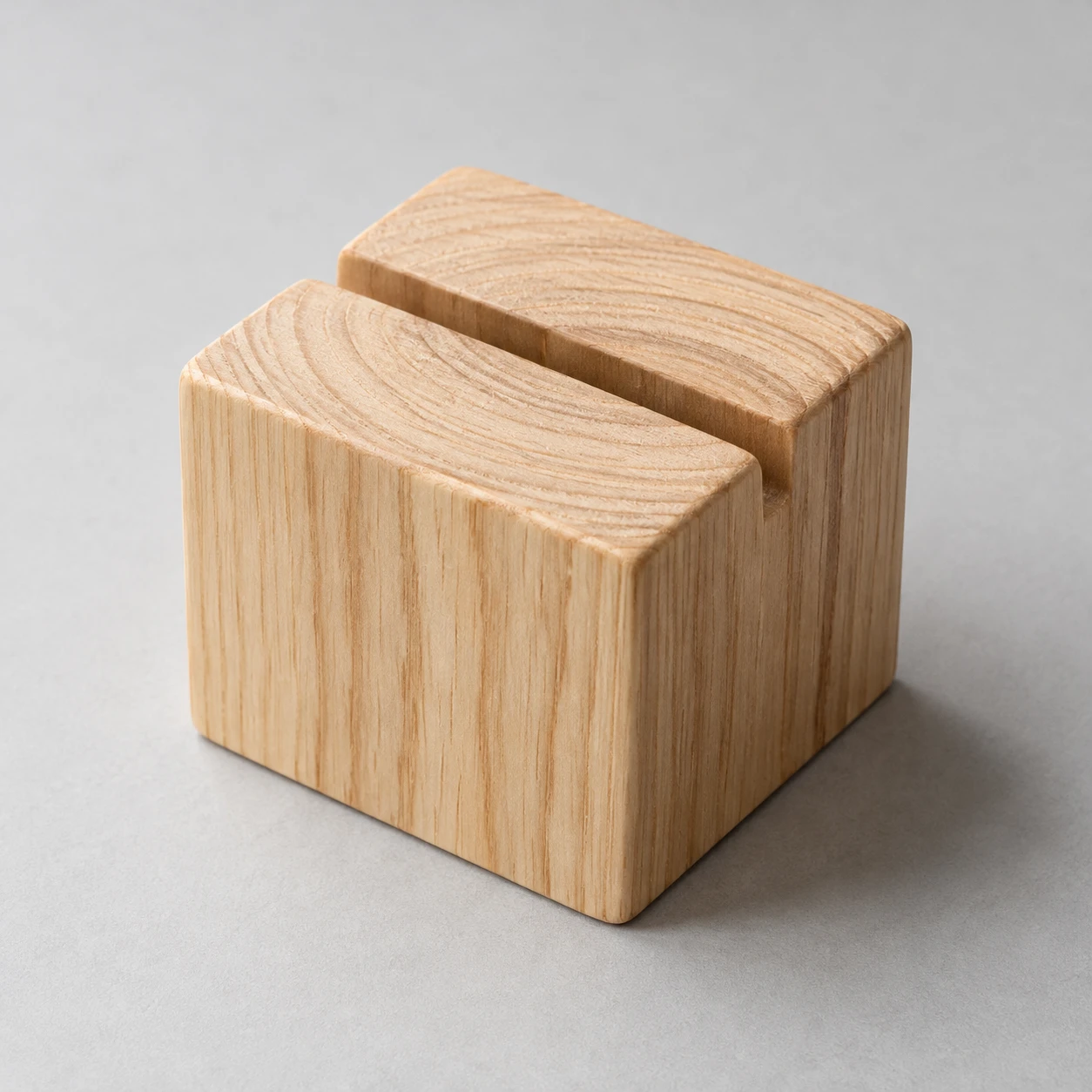
One slotted wooden memo holder reveals wood direction through curved growth rings on its top and long grain traces on its sides.
Wooden Memo Holder · End and Side Grain
- Shape & line
- Build a squat block with straight edges and gently softened corners; cut one straight slot across the top from image-left toward image-right, showing its recessed dark interior between two clean wooden lips.
- Color & light
- Use pale honey-colored wood under a broad light from the upper image-left; keep the top brightest, the image-left face moderately lit, and the image-right face darker, with a soft cast shadow extending toward the lower image-right.
- Texture & material
- Draw irregular nested growth-ring arcs on the top and elongated, mostly vertical grain traces on both side faces; where top arcs meet an upper edge, continue their darker traces down the adjoining face. Keep the sanded surface matte and the grain embedded in the wood.
- Composition
- Frame the holder large enough to compare the top arcs with the side streaks at a glance; leave visible tabletop around every edge and keep the slot clear of the strongest grain marks so its depth remains easy to read.
Priority
Prioritize the visible change from top end grain to vertical side grain.
What to avoid & what to check
Avoid identical grain patterns on every face or raised grain that resembles carved grooves.
Check that the top arcs connect plausibly to side traces and that the empty slot reads as a recess.
Exact prompt for this example
SUBJECT
One unpainted solid-wood memo holder shaped as a squat square block, with one narrow empty slot across its top. The wood fibers run vertically through the block, exposing end grain on top and longitudinal grain on the two visible sides.

COMPOSITION
Use an elevated three-quarter view showing the top, image-left face, and image-right face. Center the entire holder on a plain pale-gray tabletop with generous surrounding space; keep the empty slot and the grain transitions across the upper edges clearly readable.

STYLE GUIDE
1. Shape & line
Build a squat block with straight edges and gently softened corners; cut one straight slot across the top from image-left toward image-right, showing its recessed dark interior between two clean wooden lips.

2. Color & light
Use pale honey-colored wood under a broad light from the upper image-left; keep the top brightest, the image-left face moderately lit, and the image-right face darker, with a soft cast shadow extending toward the lower image-right.

3. Texture & material
Draw irregular nested growth-ring arcs on the top and elongated, mostly vertical grain traces on both side faces; where top arcs meet an upper edge, continue their darker traces down the adjoining face. Keep the sanded surface matte and the grain embedded in the wood.

4. Composition
Frame the holder large enough to compare the top arcs with the side streaks at a glance; leave visible tabletop around every edge and keep the slot clear of the strongest grain marks so its depth remains easy to read.

PRIORITY
Preserve the requested identity, count, action, composition and output settings. Apply the style rules within those constraints; a style reference must not replace the subject or layout. Within the style: Prioritize the visible change from top end grain to vertical side grain.

AVOID
Avoid identical grain patterns on every face or raised grain that resembles carved grooves.

OUTPUT
Create one square product-reference image in a realistic studio-photography medium, with no lettering, labels, logos, or watermark.

SELF-CHECK
Check that the top arcs connect plausibly to side traces and that the empty slot reads as a recess.
Model information comes from image provenance. The same prompt may produce a different result.