Text to imageProductStyle guide
One Glass Paperweight · Focused Caustics
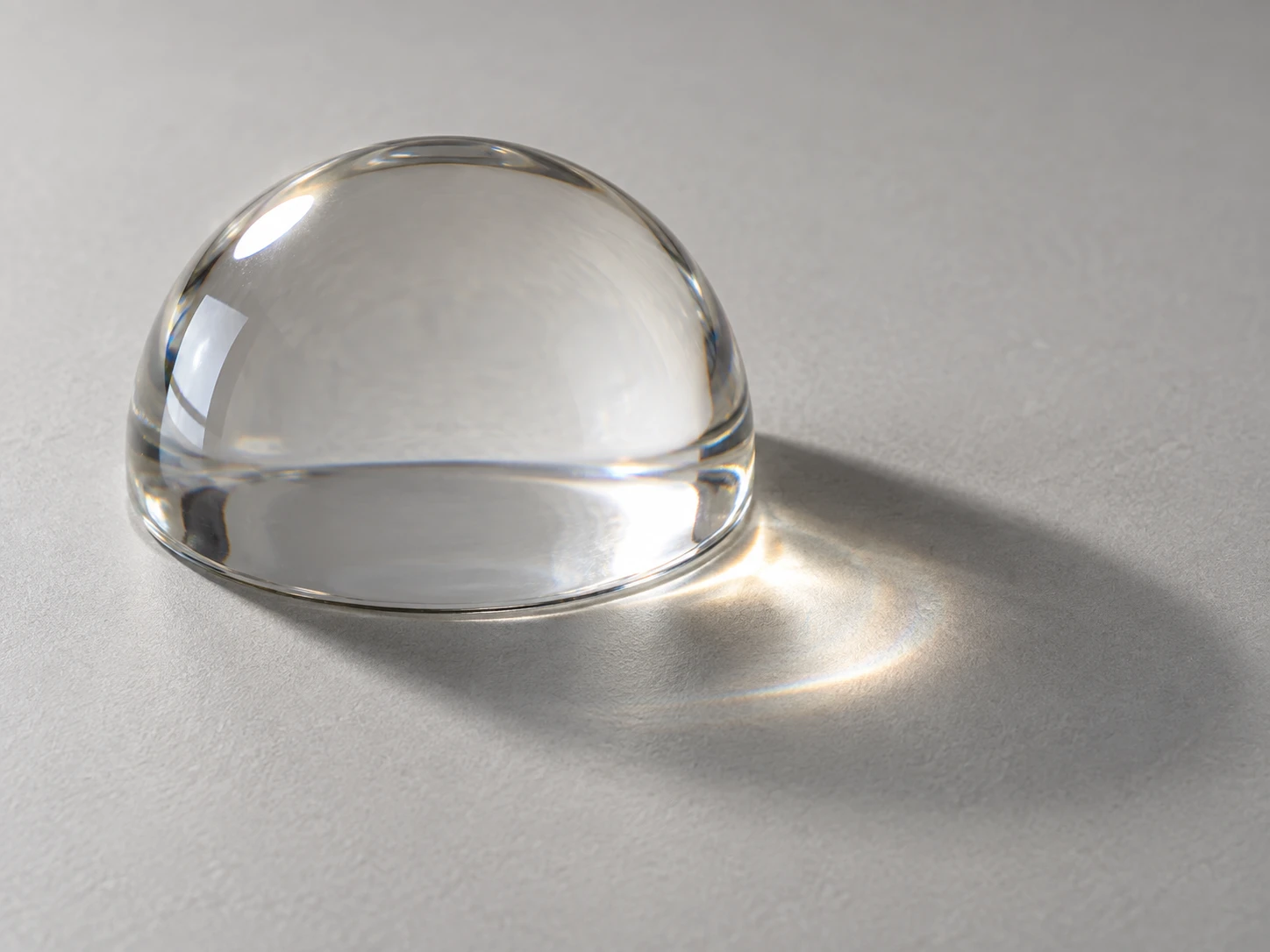
A product photograph using a bright caustic cast by a clear hemispherical paperweight to reveal glass curvature and transmission.
One Glass Paperweight · Focused Caustics
- Shape & line
- Give the dome one continuous rounded silhouette and a shallow elliptical base in perspective. Define the clear boundary through restrained highlights and slight background distortion, keeping the tabletop visible through the glass.
- Color & light
- Direct a small white key light from the upper image-left toward the paperweight. Show light passing through the dome and gathering into an irregular bright crescent on the tabletop immediately beyond its image-right base, bordered by a softer gray shadow.
- Texture & material
- Render the glass as smooth and polished, with a compact white highlight on its upper-left curve and subtle refractive bending near the base. Keep the tabletop matte so the caustic reads as concentrated illumination rather than a mirror reflection.
- Composition
- Keep both the paperweight and its image-right caustic sharply readable in the same frame. Preserve a narrow contact shadow beneath the base, and surround the bright crescent with enough unlit tabletop to make its concentrated shape easy to compare.
Priority
Prioritize the visible connection between transmitted light, the curved glass, and the bright tabletop caustic.
What to avoid & what to check
Avoid an opaque dome, self-glowing glass, or a detached decorative light pattern.
Check that upper-left lighting produces a readable caustic beside the image-right base while the glass remains transparent.
Exact prompt for this example
SUBJECT
Show exactly one clear, colorless glass paperweight shaped as a smooth hemisphere with a flat circular base resting directly on a matte pale-gray tabletop. Its transmitted light forms a concentrated bright patch on the tabletop toward image-right.

COMPOSITION
Use a slightly elevated three-quarter view that reveals the domed top, base contact, and tabletop light pattern. Place the paperweight just left of center and leave open space on image-right for the complete caustic and surrounding shadow.

STYLE GUIDE
1. Shape & line
Give the dome one continuous rounded silhouette and a shallow elliptical base in perspective. Define the clear boundary through restrained highlights and slight background distortion, keeping the tabletop visible through the glass.

2. Color & light
Direct a small white key light from the upper image-left toward the paperweight. Show light passing through the dome and gathering into an irregular bright crescent on the tabletop immediately beyond its image-right base, bordered by a softer gray shadow.

3. Texture & material
Render the glass as smooth and polished, with a compact white highlight on its upper-left curve and subtle refractive bending near the base. Keep the tabletop matte so the caustic reads as concentrated illumination rather than a mirror reflection.

4. Composition
Keep both the paperweight and its image-right caustic sharply readable in the same frame. Preserve a narrow contact shadow beneath the base, and surround the bright crescent with enough unlit tabletop to make its concentrated shape easy to compare.

PRIORITY
Preserve the requested identity, count, action, composition and output settings. Apply the style rules within those constraints; a style reference must not replace the subject or layout. Within the style: Prioritize the visible connection between transmitted light, the curved glass, and the bright tabletop caustic.

AVOID
Avoid an opaque dome, self-glowing glass, or a detached decorative light pattern.

OUTPUT
Produce one realistic studio product photograph in a 4:3 landscape aspect ratio, with no text, labels, logos, or watermark.

SELF-CHECK
Check that upper-left lighting produces a readable caustic beside the image-right base while the glass remains transparent.
Model information comes from image provenance. The same prompt may produce a different result.