Text to imageArt stylesStyle guide
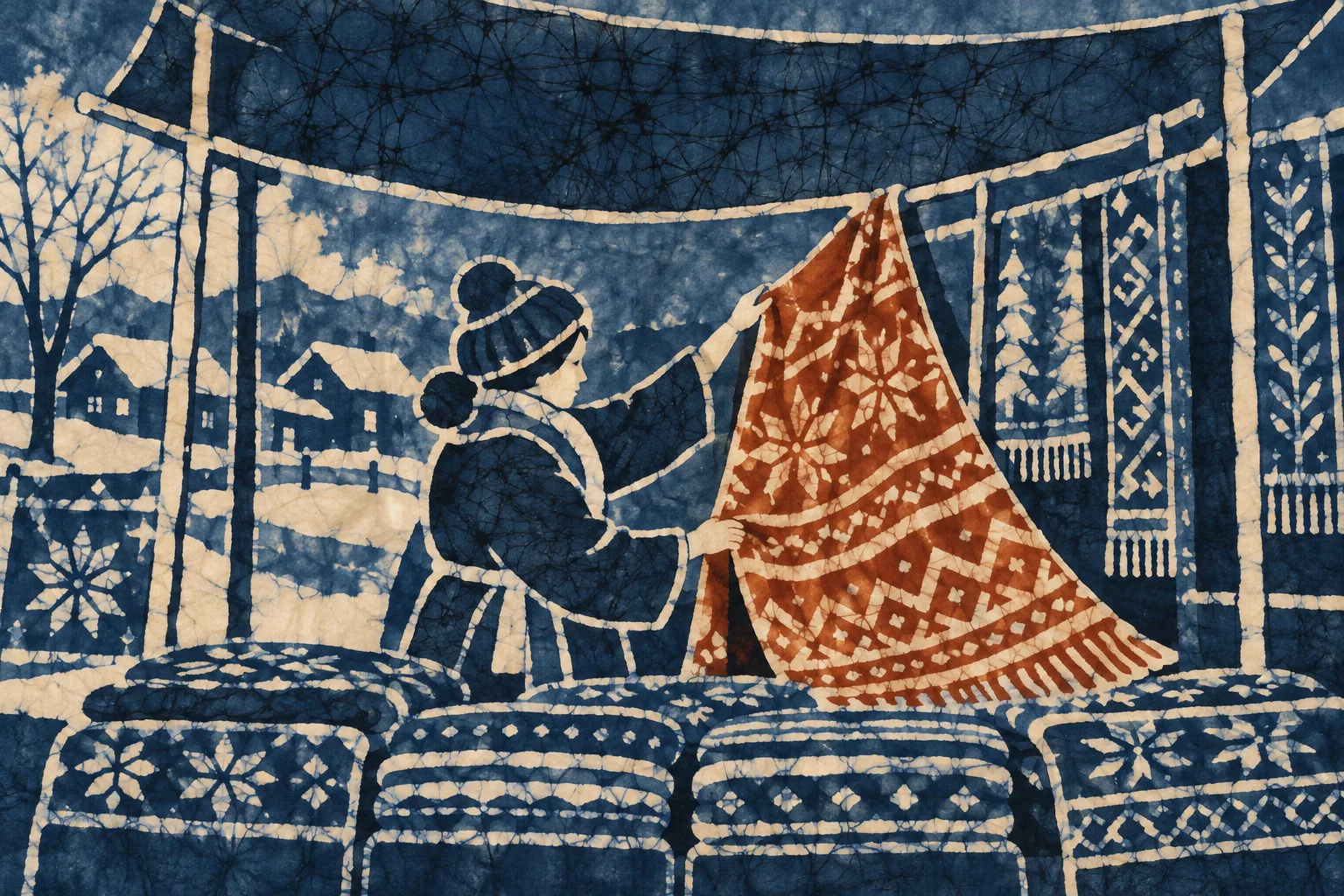
Winter Textile Stall · Batik Wax-Resist Cracks
Use wax-resist boundaries and dye-filled cracks to organize a scene and its surface texture.
Winter Textile Stall · Batik Wax-Resist Cracks
- 1
- Define major silhouettes with broad, irregular wax-resist boundaries.
- 2
- Let dye density vary within each open shape instead of using uniform digital fills.
- 3
- Concentrate fine wax cracks in broad dark areas so key actions remain legible.
- 4
- Limit the secondary dye pass to the lifted blanket and a few balancing accents.
Priority
Preserve the four style rules when changing subject or composition.
What to avoid & what to check
Avoid unwanted lettering, logos and watermarks.
Check silhouette and composition at thumbnail size.
Build assets in this style
Shared style locked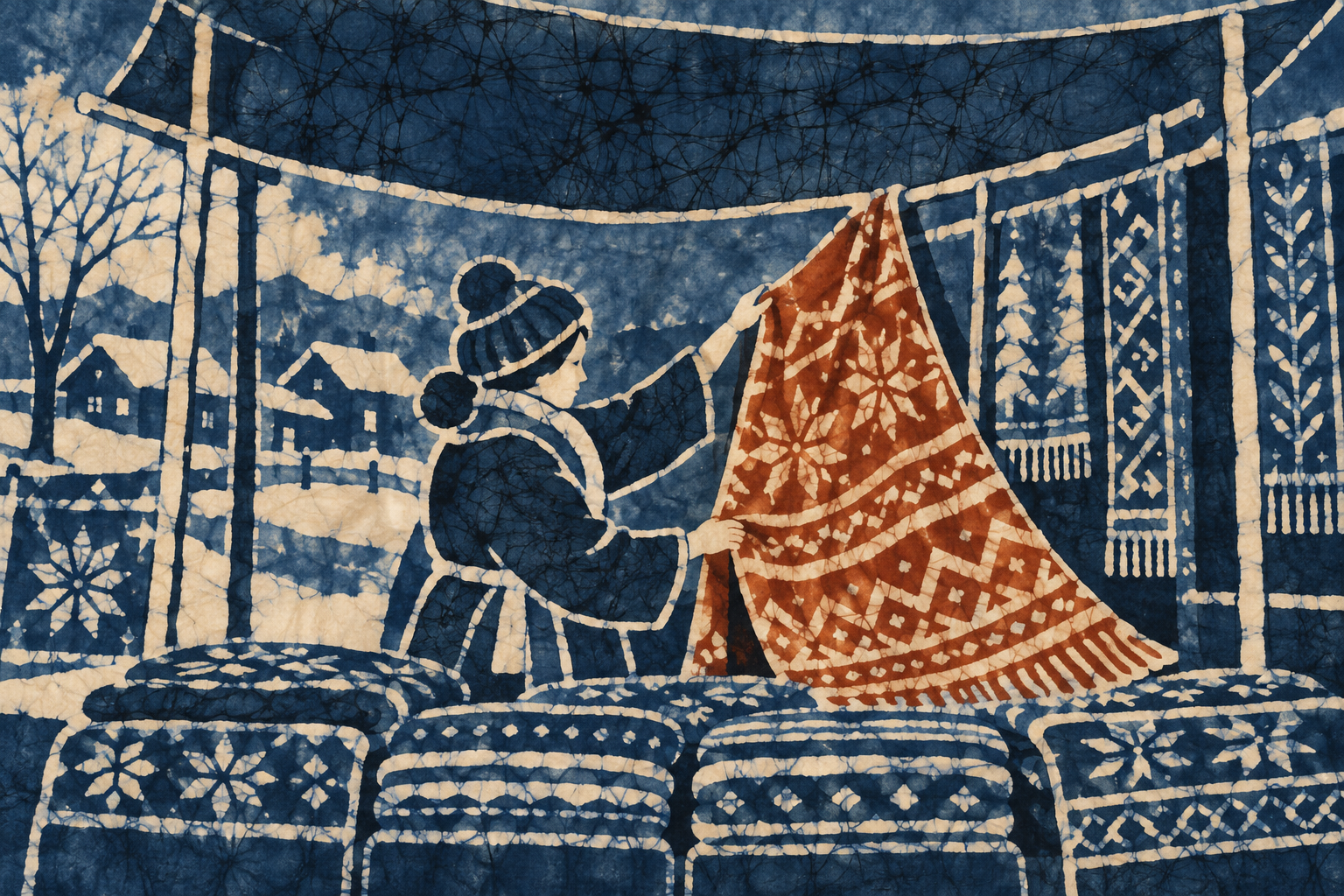
Exact prompt for this example
Exact prompt · Original
Illustrate an original winter textile stall as a hand-dyed batik cloth panel. A vendor lifts one patterned blanket beneath a simple canopy while folded fabrics form a low foreground rhythm. Construct the canopy poles, blanket edges, and vendor silhouette with broad pale wax-resist lines. Let deep blue dye bloom unevenly into the unwaxed areas, and concentrate fine crackle marks in the large dark canopy and ground shapes rather than across the face. Add one warm rust-colored dye pass to separate the lifted blanket from the rest of the stall. Preserve the slight irregularity of handmade cloth and a flat, graphic composition. No lettering, unrelated logos, or watermarks.
Model information comes from image provenance. The same prompt may produce a different result.