Text to imagePortraitStyle guide
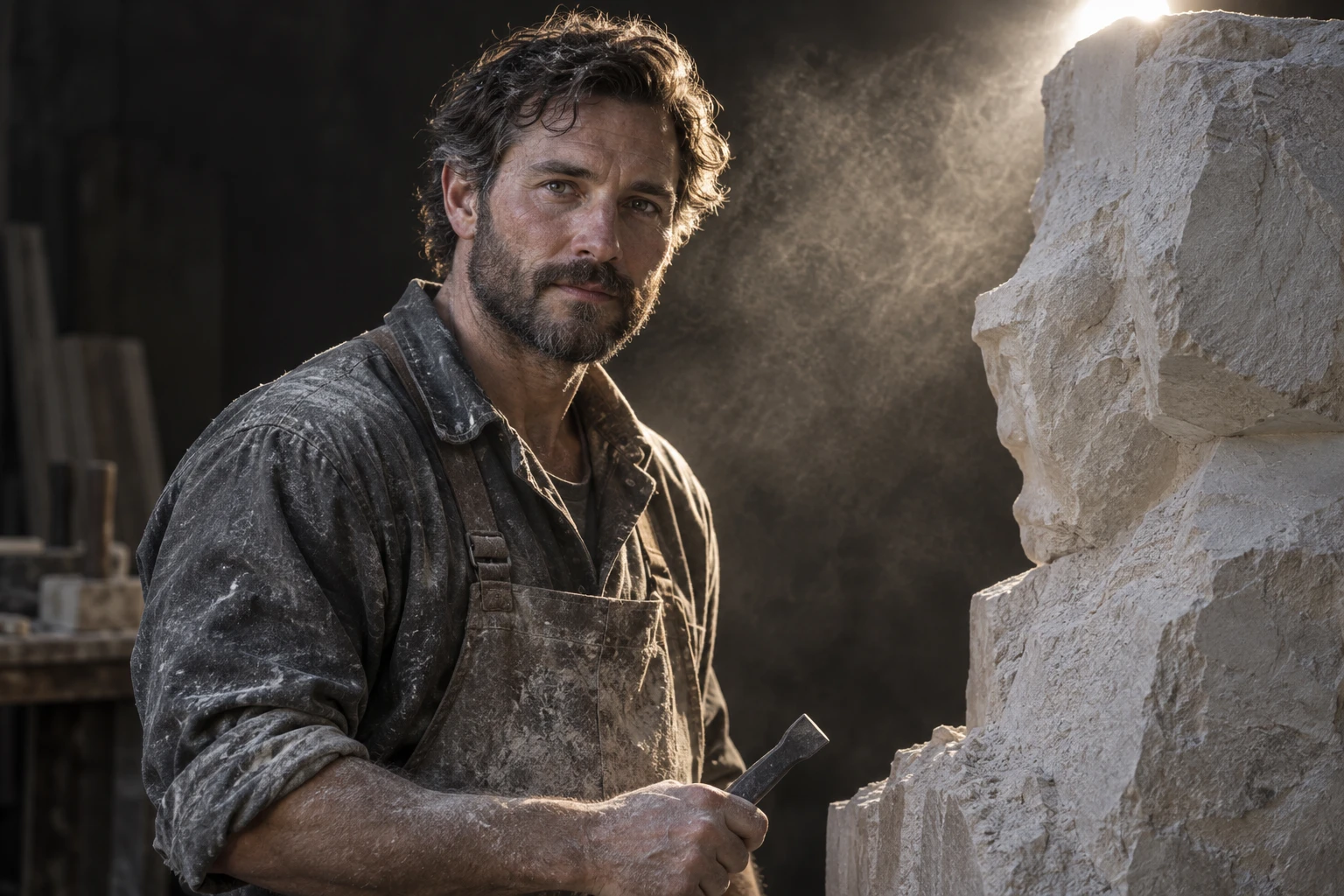
Stone Carver · Dust-Revealing Backlight
A photographic portrait using backlit dust and restrained face fill.
Remix this referenceStone Carver · Dust-Revealing Backlight
- Shape & line
- Preserve natural facial anatomy, direct gaze and plausible low-held chisel contact.
- Color & light
- Use one hard backlight above the block to rim dust, cheek and shoulder, with weak broad neutral fill revealing eyes.
- Texture & material
- Show pale dust on work shirt and hairline, realistic skin, limestone and fabric texture.
- Composition
- Keep the dust behind the expression rather than obscuring it, with a readable waist-up subject and quiet dark background.
Priority
Preserve the distinctive construction and medium first, readable spatial hierarchy second, subtle surface details third.
What to avoid & what to check
Avoid extra subjects, inconsistent repeated geometry, hidden key details, crowded overlaps, unwanted text and watermarks.
Check each style rule against the finished image: visible shape construction, color and light, material treatment, and composition. Preserve the exact subject count and scene requirements.
Exact prompt for this example
SUBJECT
Make a waist-up photographic portrait of one original stone carver pausing beside a partially carved limestone block. The subject holds a chisel low and looks directly toward the viewer, with fine pale dust on the work shirt and along the hairline. A single hard light behind and above the block catches a narrow cloud of freshly disturbed dust and draws a rim along one cheek and shoulder. A broad, weak neutral fill reveals the eyes without flattening the face. Keep the background dark and simple, and position the dust cloud behind the face so it never hides the expression. Realistic skin, stone, and fabric texture. No lettering, logos, or watermarks.

COMPOSITION
Waist-up stone carver with chisel held low beside limestone block, looking at viewer. Narrow dust cloud behind face, dark simple background.

STYLE GUIDE
1. Shape & line
Preserve natural facial anatomy, direct gaze and plausible low-held chisel contact.

2. Color & light
Use one hard backlight above the block to rim dust, cheek and shoulder, with weak broad neutral fill revealing eyes.

3. Texture & material
Show pale dust on work shirt and hairline, realistic skin, limestone and fabric texture.

4. Composition
Keep the dust behind the expression rather than obscuring it, with a readable waist-up subject and quiet dark background.

PRIORITY
Preserve the requested identity, count, action, composition and output settings. Apply the style rules within those constraints; a style reference must not replace the subject or layout. Within the style: Preserve the distinctive construction and medium first, readable spatial hierarchy second, subtle surface details third.

AVOID
Avoid extra subjects, inconsistent repeated geometry, hidden key details, crowded overlaps, unwanted text and watermarks.

OUTPUT
One finished landscape image, aspect ratio 3:2. No lettering, captions, dimensions, unrelated logos, watermark, border or interface.

SELF-CHECK
Check each style rule against the finished image: visible shape construction, color and light, material treatment, and composition. Preserve the exact subject count and scene requirements.
Model information comes from image provenance. The same prompt may produce a different result.