Text to imageProductStyle guide
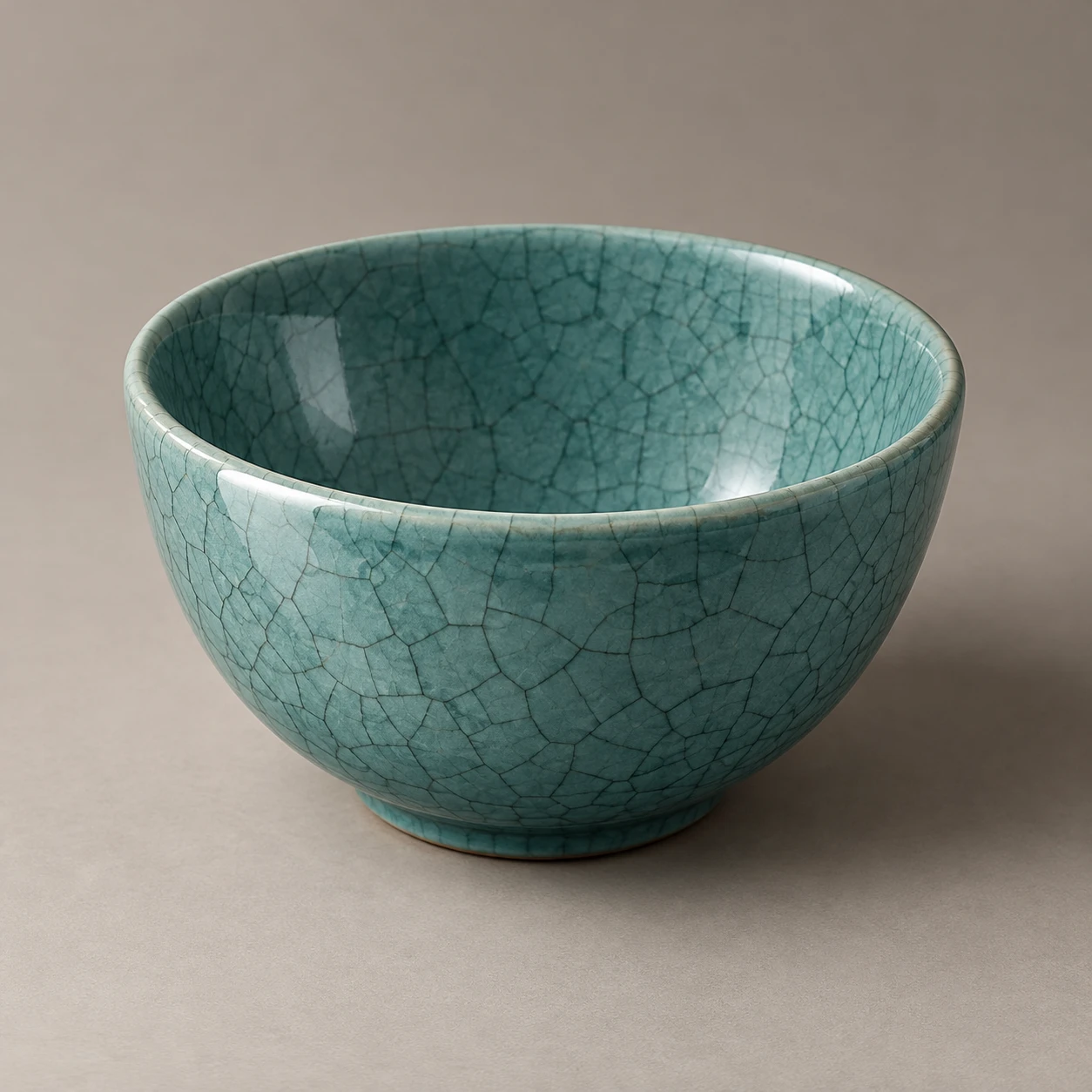
Teal Ceramic Bowl · Crackle Glaze
A small ceramic bowl demonstrating crackle glaze through an irregular network that compresses around its curves beneath continuous gloss.
Teal Ceramic Bowl · Crackle Glaze
- Shape & line
- Build the bowl with a clean elliptical opening and a smoothly rounded wall; draw fine, irregular branching cracks as connected polygonal cells, bending their paths around the body and compressing the cells toward the image-left and image-right silhouette edges.
- Color & light
- Use a muted teal glaze with darker teal cracks. Place a broad soft light above image-left so the upper-left rim and left wall brighten while the right wall darkens gradually; let a pale reflected highlight cross several cracks without breaking at each line.
- Texture & material
- Render the crack network beneath a smooth glassy glaze: vary cell sizes and branching angles, keep the lines slender, and preserve an unbroken surface sheen so the pattern reads as glaze crazing rather than separated ceramic pieces.
- Composition
- Keep the bowl large enough for individual crack cells to remain readable, with the front wall unobstructed. Ground its base with a compact contact shadow and a soft cast shadow extending toward image-right; keep the background quiet so the crack network and continuous highlight remain the focal features.
Priority
Prioritize a curvature-following crack network beneath continuous glossy reflections.
What to avoid & what to check
Avoid chipped edges, open structural fractures, and uniformly repeated crack cells.
Check that the crack cells narrow toward both side edges and the highlight continues across them.
Exact prompt for this example
SUBJECT
One small, empty teal ceramic bowl with a rounded body, a gently flared rim, and an intact glossy crackle glaze covering its interior and exterior.

COMPOSITION
Show the entire bowl in an elevated three-quarter view, centered on a warm gray tabletop against a plain matching background. Reveal the interior and the front exterior wall with generous surrounding space.

STYLE GUIDE
1. Shape & line
Build the bowl with a clean elliptical opening and a smoothly rounded wall; draw fine, irregular branching cracks as connected polygonal cells, bending their paths around the body and compressing the cells toward the image-left and image-right silhouette edges.

2. Color & light
Use a muted teal glaze with darker teal cracks. Place a broad soft light above image-left so the upper-left rim and left wall brighten while the right wall darkens gradually; let a pale reflected highlight cross several cracks without breaking at each line.

3. Texture & material
Render the crack network beneath a smooth glassy glaze: vary cell sizes and branching angles, keep the lines slender, and preserve an unbroken surface sheen so the pattern reads as glaze crazing rather than separated ceramic pieces.

4. Composition
Keep the bowl large enough for individual crack cells to remain readable, with the front wall unobstructed. Ground its base with a compact contact shadow and a soft cast shadow extending toward image-right; keep the background quiet so the crack network and continuous highlight remain the focal features.

PRIORITY
Preserve the requested identity, count, action, composition and output settings. Apply the style rules within those constraints; a style reference must not replace the subject or layout. Within the style: Prioritize a curvature-following crack network beneath continuous glossy reflections.

AVOID
Avoid chipped edges, open structural fractures, and uniformly repeated crack cells.

OUTPUT
Create one square product-reference image with realistic studio rendering and no text, labels, logos, or watermark.

SELF-CHECK
Check that the crack cells narrow toward both side edges and the highlight continues across them.
Model information comes from image provenance. The same prompt may produce a different result.