Text to imageArt stylesStyle guide
One Blue Rain Boot · Salt-Bloom Watercolor
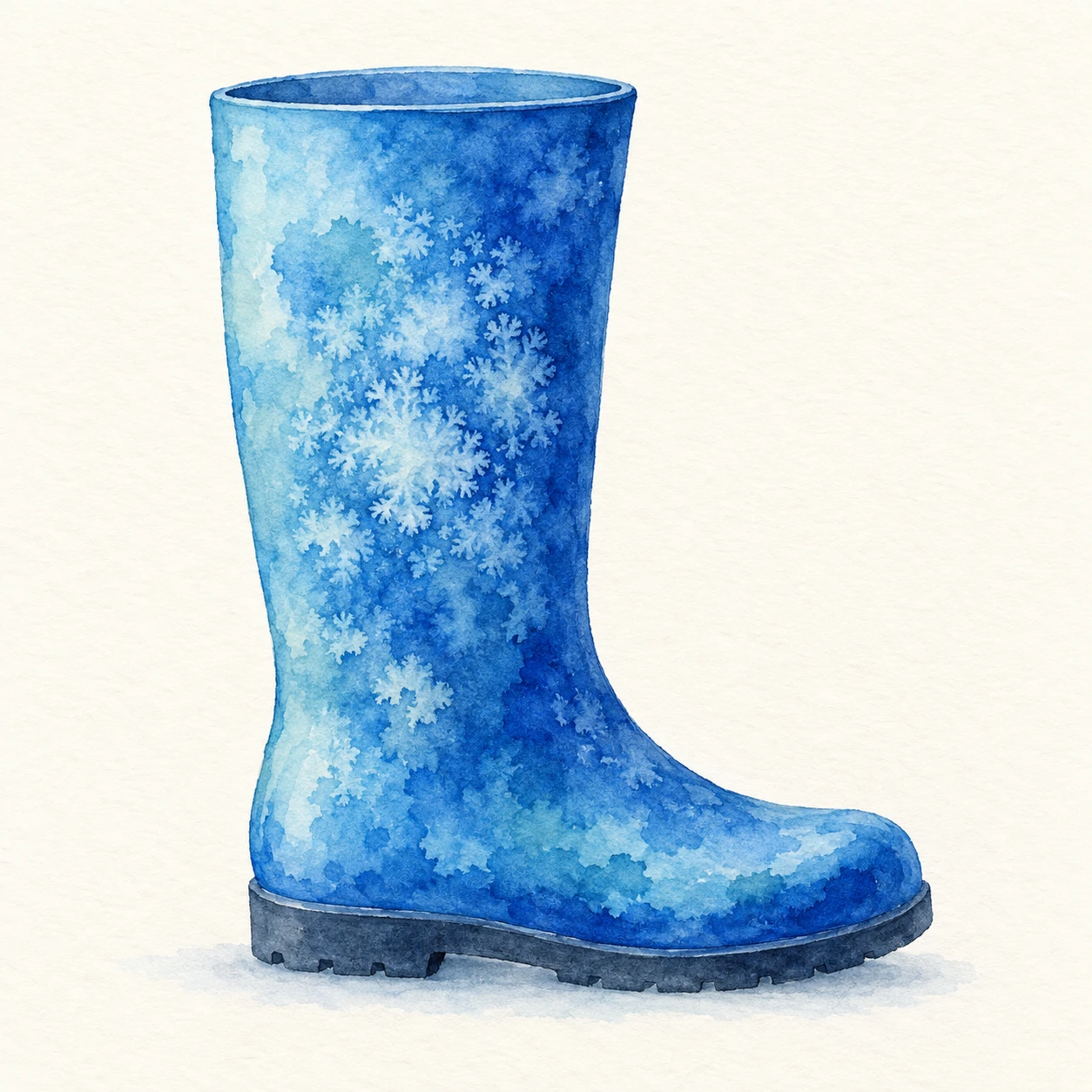
A blue rain boot painted in transparent watercolor, contrasting a clear silhouette with irregular pale salt blooms within the wash.
One Blue Rain Boot · Salt-Bloom Watercolor
- Shape & line
- Build the boot from a tall, gently tapered shaft flowing into a rounded toe on image-right; define the silhouette with clean painted edges and use only a few fine blue strokes to describe the cuff opening and sole.
- Color & light
- Layer transparent cobalt and soft turquoise washes, leaving the image-left edge of the shaft lighter and deepening the image-right edge and underside of the foot; let ivory paper show through the lightest areas instead of adding opaque white.
- Texture & material
- Give the broad shaft wash the appearance of salt sprinkled into wet watercolor: form scattered pale, irregular blooms with softly branching edges and darker pigment gathered around them. Vary their size and spacing, preserve quiet wash between clusters, and show the resulting pigment pattern without visible salt grains.
- Composition
- Keep the single boot comfortably inside the square frame and concentrate the strongest blooms in the middle of its shaft, leaving the cuff, toe and outer contour easy to read; ground it with one faint blue-gray wash directly beneath the sole.
Priority
Prioritize visible salt-bloom pigment patterns within a clearly readable watercolor boot.
What to avoid & what to check
Avoid evenly spaced dots, hard white speckles and glossy photographic rendering.
Check that one complete boot points image-right and that the pale blooms remain inside its blue wash.
Exact prompt for this example
SUBJECT
Exactly one blue rain boot with an upright shaft, an open cuff and a rounded toe pointing toward image-right. The shaft and foot form one continuous silhouette above a simple dark sole.

COMPOSITION
Show the complete boot in side profile, centered on an ivory paper field with generous margins. Keep the cuff opening slightly visible and the sole nearly horizontal; use an eye-level view without dramatic perspective.

STYLE GUIDE
1. Shape & line
Build the boot from a tall, gently tapered shaft flowing into a rounded toe on image-right; define the silhouette with clean painted edges and use only a few fine blue strokes to describe the cuff opening and sole.

2. Color & light
Layer transparent cobalt and soft turquoise washes, leaving the image-left edge of the shaft lighter and deepening the image-right edge and underside of the foot; let ivory paper show through the lightest areas instead of adding opaque white.

3. Texture & material
Give the broad shaft wash the appearance of salt sprinkled into wet watercolor: form scattered pale, irregular blooms with softly branching edges and darker pigment gathered around them. Vary their size and spacing, preserve quiet wash between clusters, and show the resulting pigment pattern without visible salt grains.

4. Composition
Keep the single boot comfortably inside the square frame and concentrate the strongest blooms in the middle of its shaft, leaving the cuff, toe and outer contour easy to read; ground it with one faint blue-gray wash directly beneath the sole.

PRIORITY
Preserve the requested identity, count, action, composition and output settings. Apply the style rules within those constraints; a style reference must not replace the subject or layout. Within the style: Prioritize visible salt-bloom pigment patterns within a clearly readable watercolor boot.

AVOID
Avoid evenly spaced dots, hard white speckles and glossy photographic rendering.

OUTPUT
One square image showing a watercolor painting on paper, with no text, lettering, border or watermark.

SELF-CHECK
Check that one complete boot points image-right and that the pale blooms remain inside its blue wash.
Model information comes from image provenance. The same prompt may produce a different result.