Text to imagePortraitStyle guide
Center-Parted Adult · Butterfly Lighting
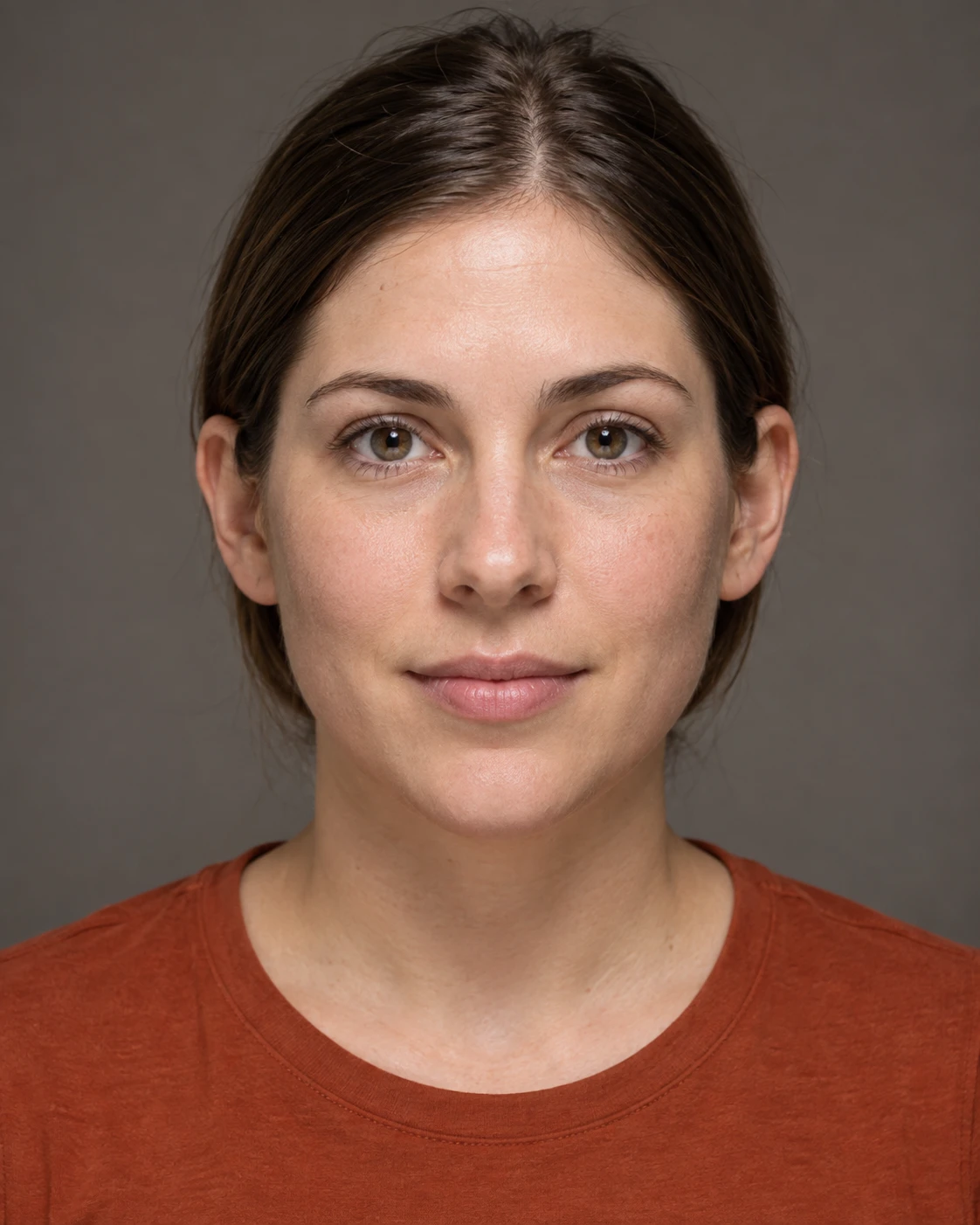
A frontal photographic portrait that models the face with a short, symmetrical shadow directly beneath the nose.
Center-Parted Adult · Butterfly Lighting
- Shape & line
- Keep the facial centerline vertical and the nose pointing toward the camera; describe the cheeks with rounded tonal transitions and preserve the clear curves of the nostrils and upper lip without outlining the face.
- Color & light
- Place a soft key light above the camera on the image's vertical centerline, angled down toward the face. Form a small butterfly-shaped shadow directly below the nose, balanced across image-left and image-right; keep it detached from the upper lip and illuminate both upper cheeks evenly.
- Texture & material
- Retain natural skin texture with subtle pores and gentle lip creases, while keeping skin highlights broad and soft. Render the hair as coherent strands within larger masses and the shirt as matte fabric so neither competes with the nose shadow.
- Composition
- Arrange the head and shoulders symmetrically in the frame, with both eyes sharp and equal space beside the ears. Keep the background softly out of focus and slightly darker than the lit cheeks so the central nose shadow remains easy to read.
Priority
Prioritize the short, centered nose shadow and balanced illumination of both cheeks.
What to avoid & what to check
Avoid a sideways nose shadow, a shadow touching the upper lip, or glossy skin smoothing.
Confirm that the nose shadow sits directly beneath the nose and both upper cheeks receive similar light.
Exact prompt for this example
SUBJECT
One adult with center-parted hair tucked behind both ears, wearing a plain rust-colored shirt. The face looks straight toward the camera with a relaxed mouth, level eyes, and an upright head.

COMPOSITION
Use a vertical head-and-shoulders framing at eye level. Center the face, show both ears and the full chin, and leave a small margin above the hair. Place the shoulders along the lower frame against a plain warm-gray background.

STYLE GUIDE
1. Shape & line
Keep the facial centerline vertical and the nose pointing toward the camera; describe the cheeks with rounded tonal transitions and preserve the clear curves of the nostrils and upper lip without outlining the face.

2. Color & light
Place a soft key light above the camera on the image's vertical centerline, angled down toward the face. Form a small butterfly-shaped shadow directly below the nose, balanced across image-left and image-right; keep it detached from the upper lip and illuminate both upper cheeks evenly.

3. Texture & material
Retain natural skin texture with subtle pores and gentle lip creases, while keeping skin highlights broad and soft. Render the hair as coherent strands within larger masses and the shirt as matte fabric so neither competes with the nose shadow.

4. Composition
Arrange the head and shoulders symmetrically in the frame, with both eyes sharp and equal space beside the ears. Keep the background softly out of focus and slightly darker than the lit cheeks so the central nose shadow remains easy to read.

PRIORITY
Preserve the requested identity, count, action, composition and output settings. Apply the style rules within those constraints; a style reference must not replace the subject or layout. Within the style: Prioritize the short, centered nose shadow and balanced illumination of both cheeks.

AVOID
Avoid a sideways nose shadow, a shadow touching the upper lip, or glossy skin smoothing.

OUTPUT
One photographic reference image in a 4:5 aspect ratio, with no text, labels, logos, or watermark.

SELF-CHECK
Confirm that the nose shadow sits directly beneath the nose and both upper cheeks receive similar light.
Model information comes from image provenance. The same prompt may produce a different result.