Text to imageCharacterStyle guide
Reaching Mole · Foreshortened Forearm
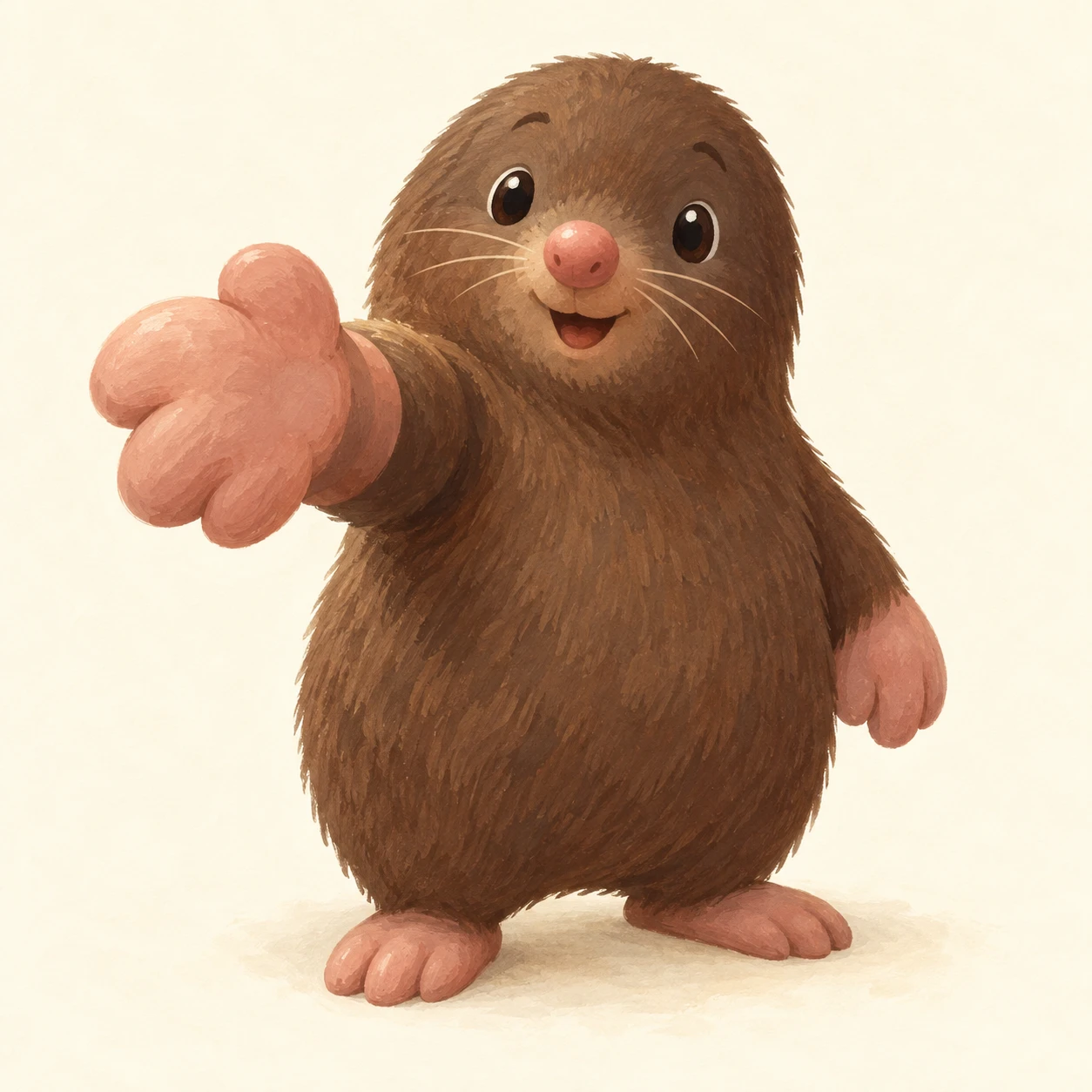
An enlarged near paw and compressed, overlapping arm shapes make a mole’s reach toward the viewer readable.
Reaching Mole · Foreshortened Forearm
- Shape & line
- Build the reaching limb from a large rounded paw on image-left, a short visible forearm, and a smaller upper-arm shape leading back to the shoulder. Let the paw overlap the forearm and the forearm overlap the upper arm, using interrupted contours to show depth while preserving a continuous arm connection.
- Color & light
- Use warm brown for the body and muted rose for both paws and the nose. Light the character softly from upper image-left, placing a broad pale highlight on the near paw and a restrained darker patch where that paw overlaps the forearm; keep the face bright enough to read.
- Texture & material
- Render the mole with matte, opaque gouache patches and a few short fur strokes along the body edges. Keep the pink paws smoother than the fur, and keep brush texture quiet around the overlapping arm contours so the shortened limb remains legible.
- Composition
- Make the near paw visibly larger than the resting paw on image-right and keep the reaching arm directed into depth rather than stretched sideways. Leave an ivory gap between the near paw and the face, with both eyes and the nose unobstructed, so the reach and expression remain readable together.
Priority
Prioritize the enlarged near paw and nested overlaps that make the arm point toward the viewer.
What to avoid & what to check
Avoid a long sideways arm or an enlarged paw that appears detached from the shoulder.
Check that the near paw reads as closer, the arm connects clearly, and the face remains visible.
Exact prompt for this example
SUBJECT
One original upright mole character with a rounded brown body, a small pink nose, and two simple mitten-shaped forepaws. Its right arm reaches toward the viewer, placing the near paw on image-left; the other paw rests beside the body on image-right.

COMPOSITION
Show the entire character at eye level in a three-quarter view, centered against a plain warm ivory background. Position the reaching paw left of the face and slightly below the nose, with its connection to the shoulder readable. Leave comfortable space around the silhouette.

STYLE GUIDE
1. Shape & line
Build the reaching limb from a large rounded paw on image-left, a short visible forearm, and a smaller upper-arm shape leading back to the shoulder. Let the paw overlap the forearm and the forearm overlap the upper arm, using interrupted contours to show depth while preserving a continuous arm connection.

2. Color & light
Use warm brown for the body and muted rose for both paws and the nose. Light the character softly from upper image-left, placing a broad pale highlight on the near paw and a restrained darker patch where that paw overlaps the forearm; keep the face bright enough to read.

3. Texture & material
Render the mole with matte, opaque gouache patches and a few short fur strokes along the body edges. Keep the pink paws smoother than the fur, and keep brush texture quiet around the overlapping arm contours so the shortened limb remains legible.

4. Composition
Make the near paw visibly larger than the resting paw on image-right and keep the reaching arm directed into depth rather than stretched sideways. Leave an ivory gap between the near paw and the face, with both eyes and the nose unobstructed, so the reach and expression remain readable together.

PRIORITY
Preserve the requested identity, count, action, composition and output settings. Apply the style rules within those constraints; a style reference must not replace the subject or layout. Within the style: Prioritize the enlarged near paw and nested overlaps that make the arm point toward the viewer.

AVOID
Avoid a long sideways arm or an enlarged paw that appears detached from the shoulder.

OUTPUT
One square image, presented as a clean gouache-style character illustration with no lettering, captions, logos, or watermark.

SELF-CHECK
Check that the near paw reads as closer, the arm connects clearly, and the face remains visible.
Model information comes from image provenance. The same prompt may produce a different result.