Text to imageIllustrationStyle guide
One Ginkgo Leaf · Forking Fan Veins
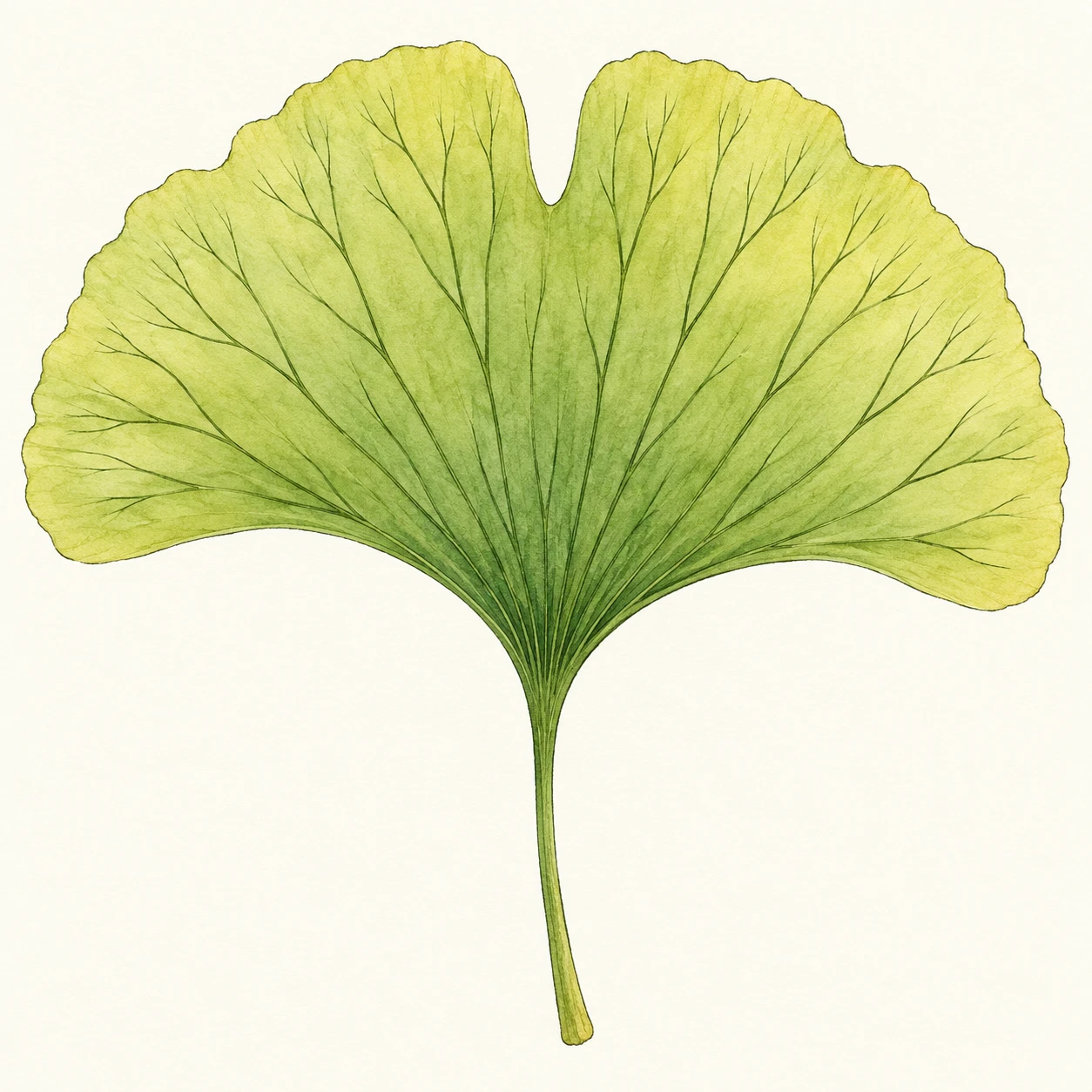
A botanical illustration showing a ginkgo leaf’s fan structure through veins that spread from the stalk and fork into pairs.
One Ginkgo Leaf · Forking Fan Veins
- Shape & line
- Draw a gently scalloped fan outline with a shallow notch at the top center. From the bottom stalk junction, draw slender veins radiating upward and outward; split selected veins into two finer branches that continue toward the rim without crossing or joining into a net.
- Color & light
- Lay a transparent yellow-green wash across the blade, deepening it to muted green near the stalk junction. Keep the veins slightly darker than the surrounding wash and preserve a light outer rim so the branching remains visible without heavy shading.
- Texture & material
- Let a subtle paper grain show through the thin watercolor, with a few soft pigment variations between vein paths. Render the leaf as a thin, supple surface with restrained ink marks; keep the wash translucent enough to preserve every main fork.
- Composition
- Place the stalk junction below the image center and spread the blade across the upper half, leaving clear ivory space around the entire silhouette. Keep both sides of the fan visible and avoid perspective compression so viewers can trace the veins from their shared origin to the rim.
Priority
Make the outward, repeated vein forks the clearest structural feature.
What to avoid & what to check
Avoid a dominant central midrib, netted veins, and opaque paint that conceals the branching.
Confirm that the veins visibly fork from the stalk junction toward the fan edge without forming a mesh.
Exact prompt for this example
SUBJECT
Exactly one fresh green ginkgo leaf with one attached slender stalk. Its broad fan-shaped blade has a shallow central notch; fine veins emerge at the stalk–blade junction, spread outward, and repeatedly fork toward the curved outer edge.

COMPOSITION
Show the entire leaf face-on, centered on a plain ivory field, with the stalk pointing toward the bottom of the image and the fan opening upward. Keep the blade broad enough that the branching veins remain readable.

STYLE GUIDE
1. Shape & line
Draw a gently scalloped fan outline with a shallow notch at the top center. From the bottom stalk junction, draw slender veins radiating upward and outward; split selected veins into two finer branches that continue toward the rim without crossing or joining into a net.

2. Color & light
Lay a transparent yellow-green wash across the blade, deepening it to muted green near the stalk junction. Keep the veins slightly darker than the surrounding wash and preserve a light outer rim so the branching remains visible without heavy shading.

3. Texture & material
Let a subtle paper grain show through the thin watercolor, with a few soft pigment variations between vein paths. Render the leaf as a thin, supple surface with restrained ink marks; keep the wash translucent enough to preserve every main fork.

4. Composition
Place the stalk junction below the image center and spread the blade across the upper half, leaving clear ivory space around the entire silhouette. Keep both sides of the fan visible and avoid perspective compression so viewers can trace the veins from their shared origin to the rim.

PRIORITY
Preserve the requested identity, count, action, composition and output settings. Apply the style rules within those constraints; a style reference must not replace the subject or layout. Within the style: Make the outward, repeated vein forks the clearest structural feature.

AVOID
Avoid a dominant central midrib, netted veins, and opaque paint that conceals the branching.

OUTPUT
One square botanical illustration in fine ink and transparent watercolor, with no text, labels, border, or watermark.

SELF-CHECK
Confirm that the veins visibly fork from the stalk junction toward the fan edge without forming a mesh.
Model information comes from image provenance. The same prompt may produce a different result.