Text to imagePortraitStyle guide
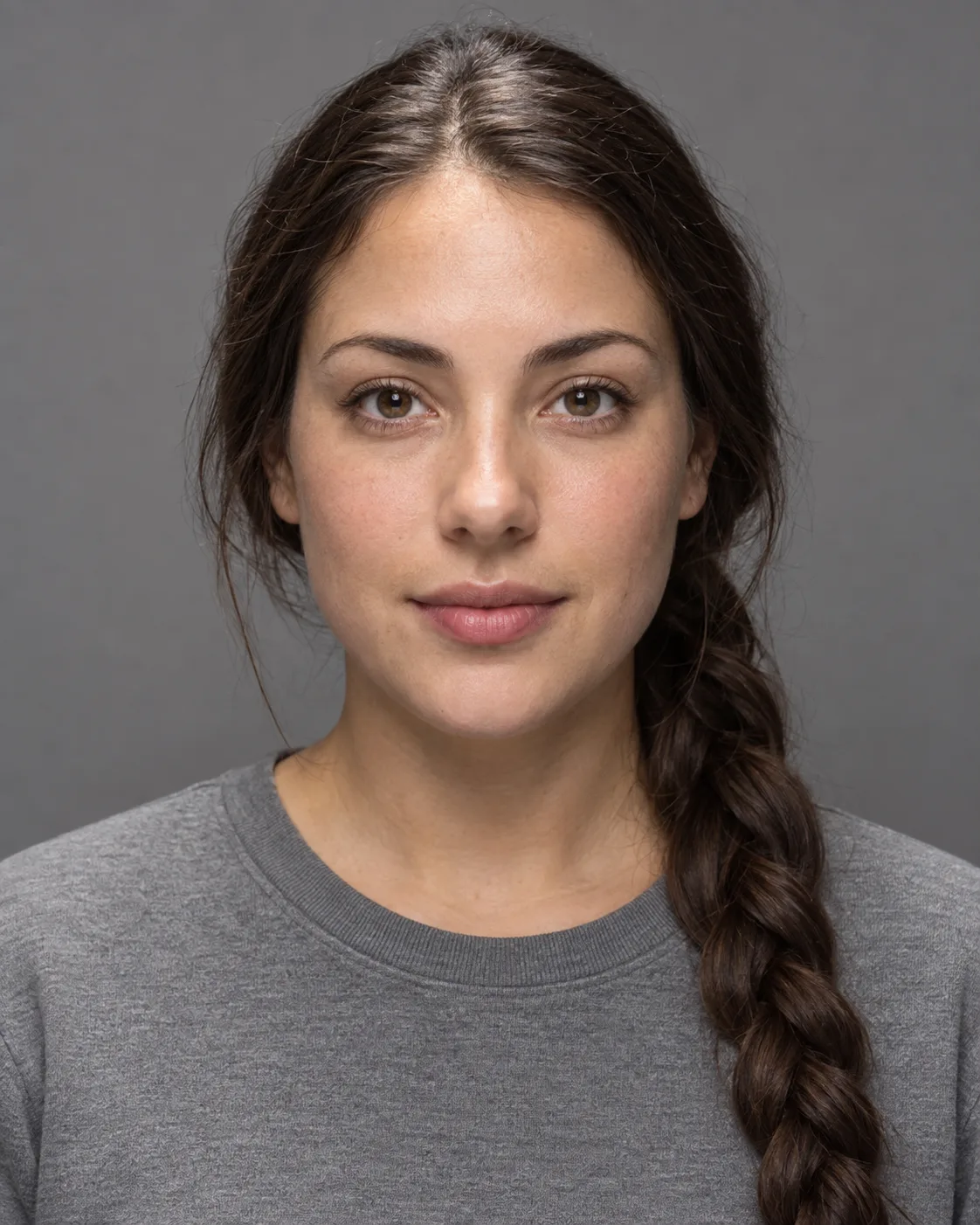
Braided Adult · Butterfly Lighting
A frontal portrait demonstrating how a centered overhead key light models the face through a short, symmetrical shadow beneath the nose.
Braided Adult · Butterfly Lighting
- Shape & line
- Keep the nose aligned with the center of the mouth and show both cheeks at similar widths. Describe the jaw with gently changing contours, and gather the hair into one readable braid whose broad interlocking sections remain distinct from the neck.
- Color & light
- Place a broad key light above the camera, centered over the face. Let its downward light brighten the forehead, nose bridge, and upper cheeks, creating a short butterfly-shaped shadow directly beneath the nose that ends before the upper lip; use weak frontal fill to retain detail in the eye sockets and under the chin.
- Texture & material
- Preserve natural skin texture with subdued highlights and gradual tonal transitions rather than polished gloss. Render the braid as grouped strands with a few visible flyaways, and keep the gray shirt softly woven and matte so its texture does not compete with the facial lighting.
- Composition
- Keep the head upright and the shoulders nearly level so the central nose shadow reads clearly. Separate the hair from the medium-gray background through a modest value difference, and reserve the strongest local contrast for the eyes and the shadow beneath the nose.
Priority
Make the centered, short nose shadow the clearest evidence of butterfly lighting.
What to avoid & what to check
Avoid a sideways nose shadow, deep black eye sockets, and glossy skin smoothing.
Confirm that both cheeks receive balanced light and the nose shadow stays centered above the upper lip.
Exact prompt for this example
SUBJECT
One adult with a single long braid resting over the image-right shoulder, wearing a plain matte gray crewneck. The face looks directly toward the viewer with a relaxed mouth and level eyes.

COMPOSITION
Use a vertical, eye-level head-and-shoulders portrait with the face centered and fully frontal. Include the crown, both shoulders, and the upper braid; leave a small margin above the head against a plain medium-gray background.

STYLE GUIDE
1. Shape & line
Keep the nose aligned with the center of the mouth and show both cheeks at similar widths. Describe the jaw with gently changing contours, and gather the hair into one readable braid whose broad interlocking sections remain distinct from the neck.

2. Color & light
Place a broad key light above the camera, centered over the face. Let its downward light brighten the forehead, nose bridge, and upper cheeks, creating a short butterfly-shaped shadow directly beneath the nose that ends before the upper lip; use weak frontal fill to retain detail in the eye sockets and under the chin.

3. Texture & material
Preserve natural skin texture with subdued highlights and gradual tonal transitions rather than polished gloss. Render the braid as grouped strands with a few visible flyaways, and keep the gray shirt softly woven and matte so its texture does not compete with the facial lighting.

4. Composition
Keep the head upright and the shoulders nearly level so the central nose shadow reads clearly. Separate the hair from the medium-gray background through a modest value difference, and reserve the strongest local contrast for the eyes and the shadow beneath the nose.

PRIORITY
Preserve the requested identity, count, action, composition and output settings. Apply the style rules within those constraints; a style reference must not replace the subject or layout. Within the style: Make the centered, short nose shadow the clearest evidence of butterfly lighting.

AVOID
Avoid a sideways nose shadow, deep black eye sockets, and glossy skin smoothing.

OUTPUT
Create one photographic portrait in a 4:5 aspect ratio, with no lettering, captions, logos, or watermark.

SELF-CHECK
Confirm that both cheeks receive balanced light and the nose shadow stays centered above the upper lip.
Model information comes from image provenance. The same prompt may produce a different result.