Text to imageCharacterStyle guide
Little Moth Friend · Comb-Branched Antennae
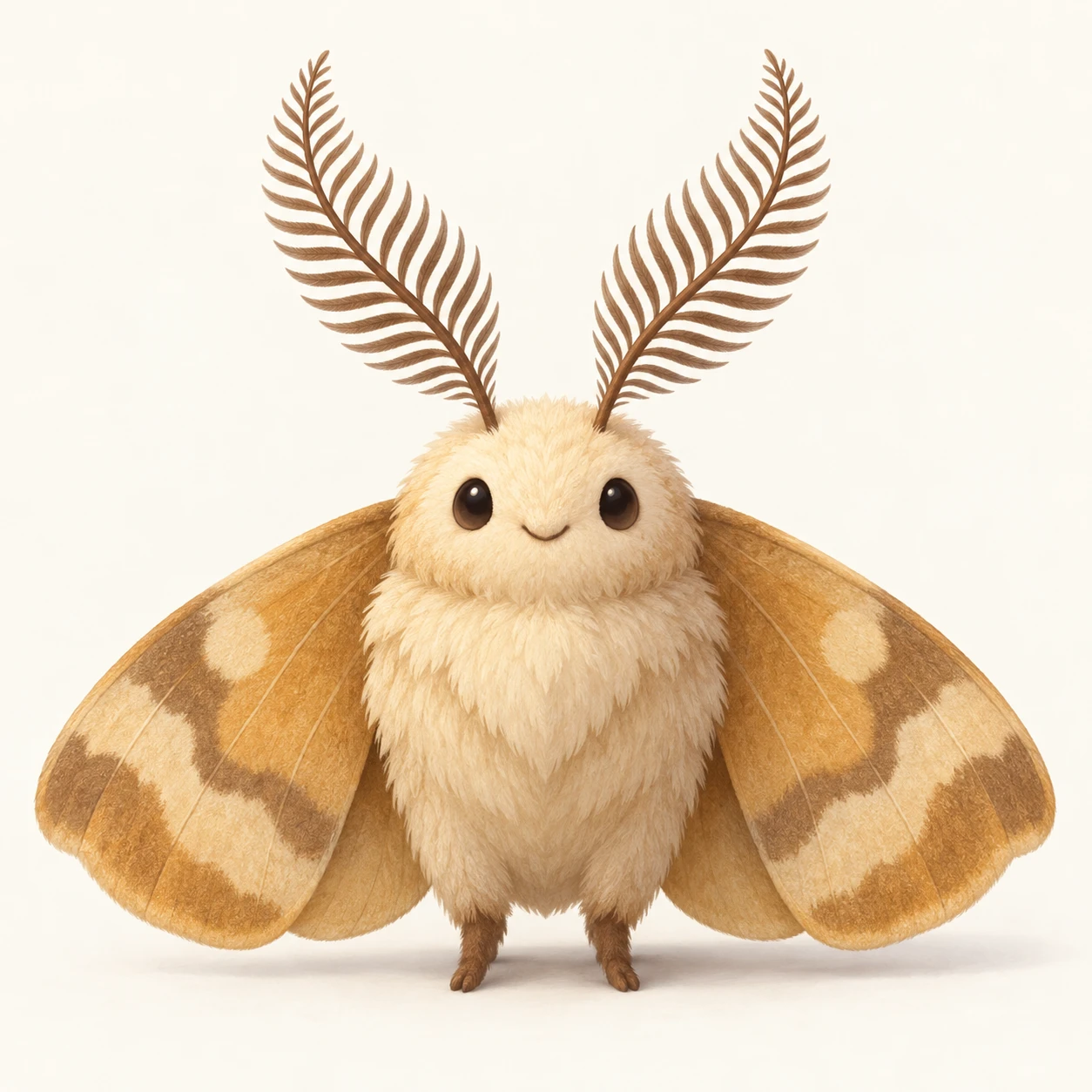
Build a little moth character’s feathery antennae with paired branches that shorten toward each antenna tip.
Little Moth Friend · Comb-Branched Antennae
- Shape & line
- Draw each antenna as a gently outward-curving shaft with paired, slender side branches. Make the branches longest around the lower middle and progressively shorter toward the tip, leaving narrow background gaps between them so each antenna reads as a tapered feather rather than a solid leaf.
- Color & light
- Use warm cream for the body, muted ochre for the wings, and deeper brown for the antenna shafts and branches. Light the character softly from the upper image-left, placing restrained shadows along the image-right body edge while keeping the antenna branches clearly darker than the background.
- Texture & material
- Render the wings as matte, powdery surfaces with a few broad, softly edged color patches. Add short downy strokes around the chest and head, but keep the antenna branches smooth and individually legible so body fluff does not obscure their comb structure.
- Composition
- Give the antennae generous space above the head and separate their inner branches across a clear central background gap. Keep the wings below the antenna tips and simplify wing markings near the head so the paired branching silhouettes remain the first detail the viewer notices.
Priority
Prioritize readable tapered branching along both antenna shafts.
What to avoid & what to check
Avoid merging the antenna branches into opaque leaf shapes or tangled hair.
Check that both antennae show a continuous shaft, separated side branches, and visibly shorter branches near the tip.
Exact prompt for this example
SUBJECT
One original, friendly little moth character with a rounded body, two open wings, two small dark eyes, and two prominent featherlike antennae. Each antenna has one curved central shaft carrying short branches on both sides.

COMPOSITION
Use a frontal, full-body view with the moth centered against a plain pale background. Spread the wings gently outward and let the antennae rise into the open space above the head, with every antenna tip and wing edge inside the frame.

STYLE GUIDE
1. Shape & line
Draw each antenna as a gently outward-curving shaft with paired, slender side branches. Make the branches longest around the lower middle and progressively shorter toward the tip, leaving narrow background gaps between them so each antenna reads as a tapered feather rather than a solid leaf.

2. Color & light
Use warm cream for the body, muted ochre for the wings, and deeper brown for the antenna shafts and branches. Light the character softly from the upper image-left, placing restrained shadows along the image-right body edge while keeping the antenna branches clearly darker than the background.

3. Texture & material
Render the wings as matte, powdery surfaces with a few broad, softly edged color patches. Add short downy strokes around the chest and head, but keep the antenna branches smooth and individually legible so body fluff does not obscure their comb structure.

4. Composition
Give the antennae generous space above the head and separate their inner branches across a clear central background gap. Keep the wings below the antenna tips and simplify wing markings near the head so the paired branching silhouettes remain the first detail the viewer notices.

PRIORITY
Preserve the requested identity, count, action, composition and output settings. Apply the style rules within those constraints; a style reference must not replace the subject or layout. Within the style: Prioritize readable tapered branching along both antenna shafts.

AVOID
Avoid merging the antenna branches into opaque leaf shapes or tangled hair.

OUTPUT
Create one square character illustration with no lettering, captions, logos, or watermark.

SELF-CHECK
Check that both antennae show a continuous shaft, separated side branches, and visibly shorter branches near the tip.
Model information comes from image provenance. The same prompt may produce a different result.