Text to imageCharacterStyle guide
Yawning Crocodile · Hinged Jaw Rotation
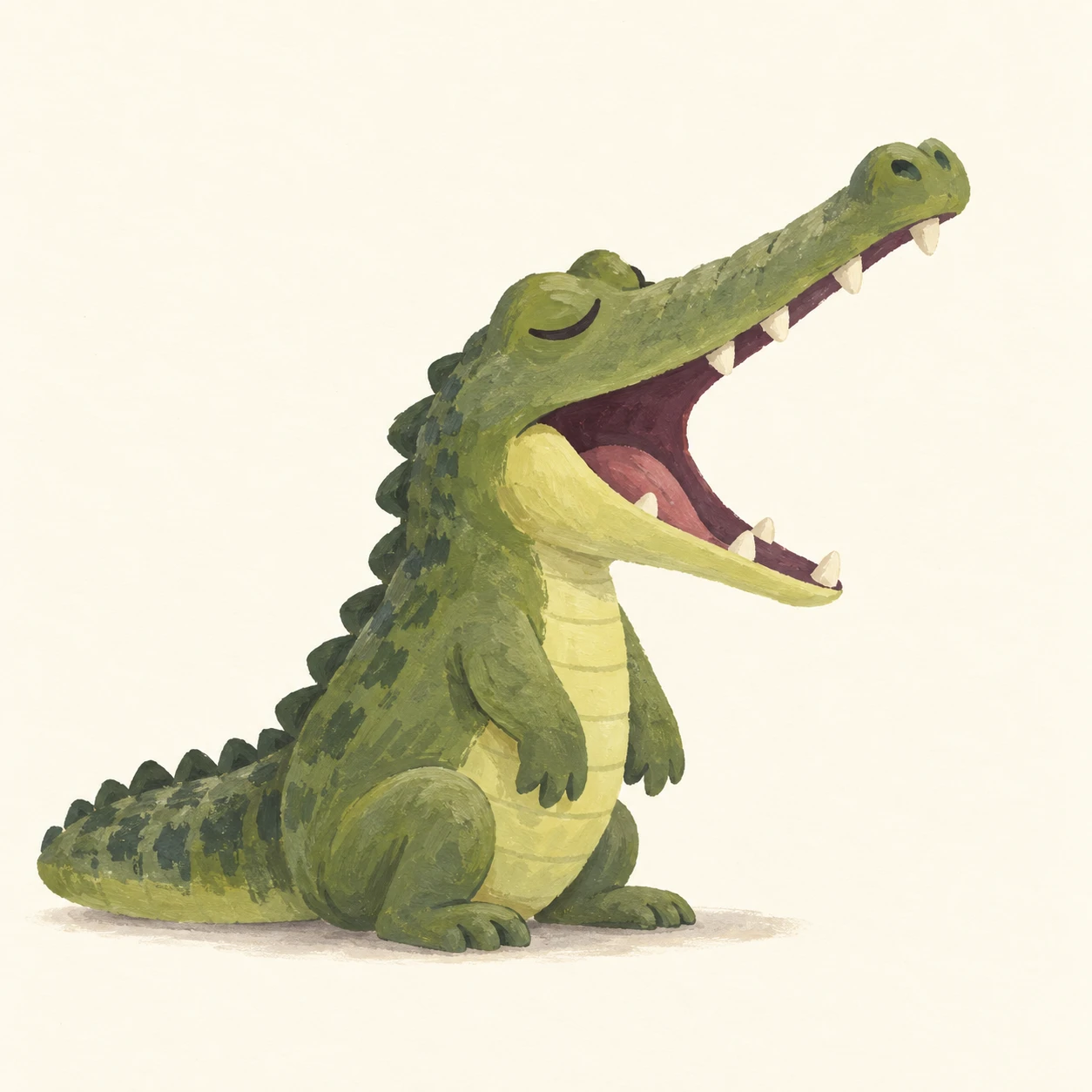
A character reference showing a small crocodile’s leisurely yawn through two jaw contours opening from one shared mouth corner.
Yawning Crocodile · Hinged Jaw Rotation
- Shape & line
- Construct the jaws as two long, rounded wedges sharing a hinge at the image-left end of the mouth opening. Angle the upper jaw toward the upper-right and the lower jaw toward the lower-right, so their inner contours meet at the same mouth corner; add a few blunt teeth along those contours.
- Color & light
- Paint the body muted moss green, the belly pale yellow-green and the mouth interior deep plum. Use broad, soft light from image-upper-left, with restrained darker green beneath the jaw and belly; let the dark mouth opening clearly separate the two jaws.
- Texture & material
- Use matte, opaque gouache fills with slight brush variation inside the larger body shapes. Suggest scales with a few broad dry-brush marks on the back and tail, while keeping the jaw edges and shared mouth corner clean enough to read immediately.
- Composition
- Make the open jaws the focal point by placing them against uninterrupted ivory space on image-right. Keep the forelegs below the mouth opening and the tail extending toward image-left; ground the seated body with a small soft shadow directly beneath its feet and haunches.
Priority
Prioritize the shared jaw hinge and a relaxed, readable yawn.
What to avoid & what to check
Avoid detached jaws, aggressive teeth and heavy texture around the mouth corner.
Check that both inner jaw contours meet at one visible mouth corner and the yawn reads at thumbnail size.
Exact prompt for this example
SUBJECT
One original small crocodile character seated on its haunches, yawning with relaxed closed eyes. Its upper and lower jaws connect at one clearly visible mouth corner; its short forelegs hang loosely and its tail rests behind its body.

COMPOSITION
Show the entire character in a near-profile view facing image-right, centered slightly left on a plain warm ivory background. Keep the mouth corner, both jaw tips, feet and tail visible, with generous open space in front of the snout.

STYLE GUIDE
1. Shape & line
Construct the jaws as two long, rounded wedges sharing a hinge at the image-left end of the mouth opening. Angle the upper jaw toward the upper-right and the lower jaw toward the lower-right, so their inner contours meet at the same mouth corner; add a few blunt teeth along those contours.

2. Color & light
Paint the body muted moss green, the belly pale yellow-green and the mouth interior deep plum. Use broad, soft light from image-upper-left, with restrained darker green beneath the jaw and belly; let the dark mouth opening clearly separate the two jaws.

3. Texture & material
Use matte, opaque gouache fills with slight brush variation inside the larger body shapes. Suggest scales with a few broad dry-brush marks on the back and tail, while keeping the jaw edges and shared mouth corner clean enough to read immediately.

4. Composition
Make the open jaws the focal point by placing them against uninterrupted ivory space on image-right. Keep the forelegs below the mouth opening and the tail extending toward image-left; ground the seated body with a small soft shadow directly beneath its feet and haunches.

PRIORITY
Preserve the requested identity, count, action, composition and output settings. Apply the style rules within those constraints; a style reference must not replace the subject or layout. Within the style: Prioritize the shared jaw hinge and a relaxed, readable yawn.

AVOID
Avoid detached jaws, aggressive teeth and heavy texture around the mouth corner.

OUTPUT
One square image in opaque gouache illustration, with no lettering, captions, logos or watermark.

SELF-CHECK
Check that both inner jaw contours meet at one visible mouth corner and the yawn reads at thumbnail size.
Model information comes from image provenance. The same prompt may produce a different result.