Text to imagePortraitStyle guide
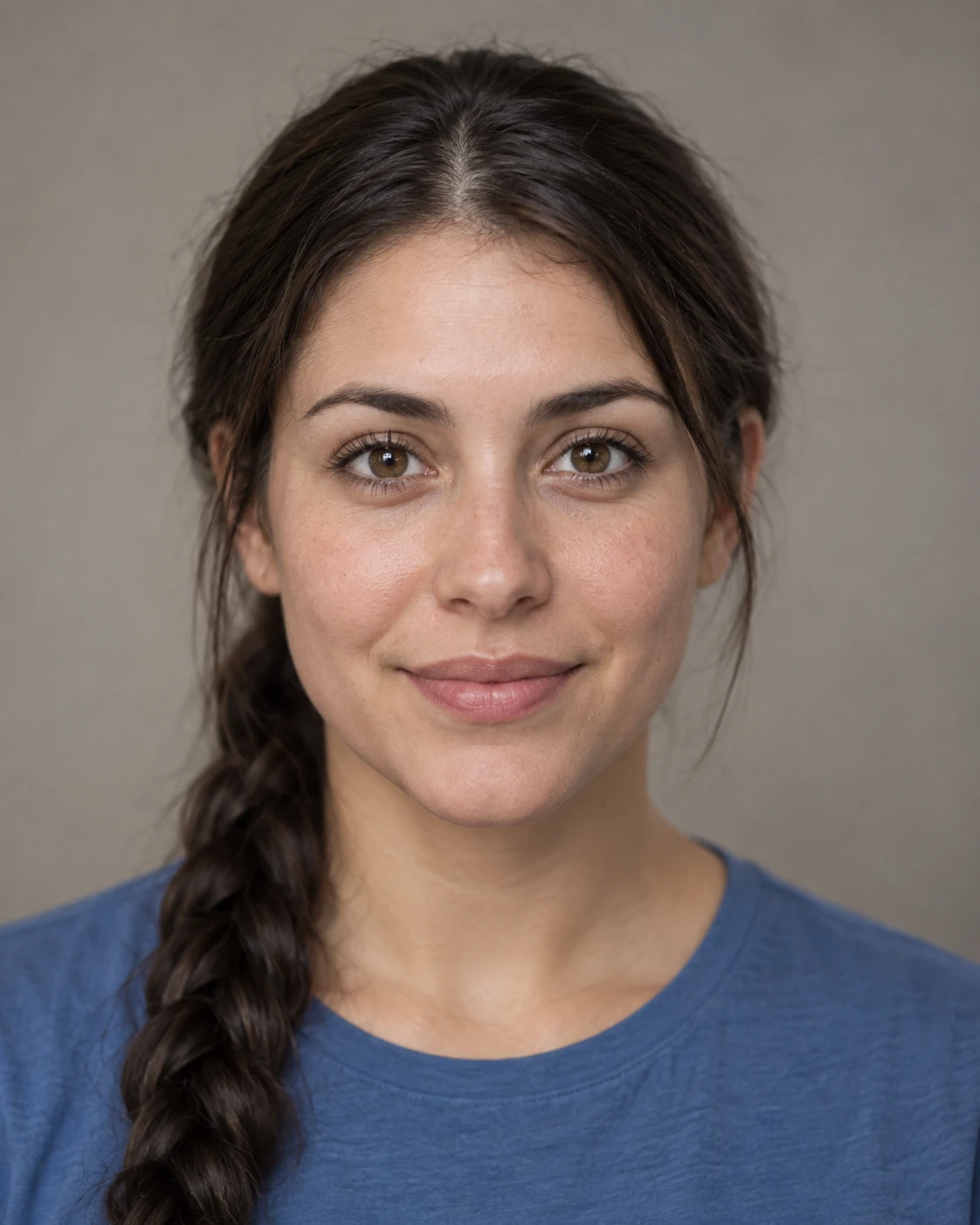
Braided-Hair Adult · Shallow-Depth Focus
A photographic portrait reference that concentrates attention through crisp eyes and gently blurred ears and background.
Braided-Hair Adult · Shallow-Depth Focus
- Shape & line
- Keep the front-facing head naturally proportioned and the eye line level. Define both irises, eyelid edges, and nearby lashes clearly; let the contours of the ears soften as they recede behind the face.
- Color & light
- Use a broad soft light from above the camera so both eyes and cheeks remain readable, with gentle shadows beneath the nose and chin. Keep skin color natural, the shirt muted blue, and the background warm gray with restrained contrast.
- Texture & material
- Render fine skin texture around the eyes and upper cheeks without smoothing it into plastic. Preserve readable hair strands beside the forehead, then progressively merge strands in the rear hair and lower braid into soft photographic masses.
- Composition
- Place the plane of sharpest focus across both eyes, allowing the nose tip to be slightly softer and the ears and shoulders noticeably softer. Keep the distant background evenly blurred; retain the head silhouette while removing distracting background detail.
Priority
Make both eyes equally sharp and show a gradual focus falloff into receding features.
What to avoid & what to check
Avoid uneven eye sharpness, cutout-like blur boundaries, and waxy skin.
Confirm that both eyes are crisp while the ears and background soften without breaking the head silhouette.
Exact prompt for this example
SUBJECT
One adult with a single dark braid resting over the image-left shoulder, wearing a plain muted-blue shirt. The face points straight toward the camera, both eyes look into the lens, and the ears sit behind the eye plane.

COMPOSITION
An eye-level, head-and-shoulders portrait with both eyes equally distant from the camera. Include the entire head and the upper braid, leave modest space above the hair, and place a plain warm-gray background visibly behind the subject.

STYLE GUIDE
1. Shape & line
Keep the front-facing head naturally proportioned and the eye line level. Define both irises, eyelid edges, and nearby lashes clearly; let the contours of the ears soften as they recede behind the face.

2. Color & light
Use a broad soft light from above the camera so both eyes and cheeks remain readable, with gentle shadows beneath the nose and chin. Keep skin color natural, the shirt muted blue, and the background warm gray with restrained contrast.

3. Texture & material
Render fine skin texture around the eyes and upper cheeks without smoothing it into plastic. Preserve readable hair strands beside the forehead, then progressively merge strands in the rear hair and lower braid into soft photographic masses.

4. Composition
Place the plane of sharpest focus across both eyes, allowing the nose tip to be slightly softer and the ears and shoulders noticeably softer. Keep the distant background evenly blurred; retain the head silhouette while removing distracting background detail.

PRIORITY
Preserve the requested identity, count, action, composition and output settings. Apply the style rules within those constraints; a style reference must not replace the subject or layout. Within the style: Make both eyes equally sharp and show a gradual focus falloff into receding features.

AVOID
Avoid uneven eye sharpness, cutout-like blur boundaries, and waxy skin.

OUTPUT
One photographic image in a vertical 4:5 aspect ratio, with no text, labels, borders, or watermark.

SELF-CHECK
Confirm that both eyes are crisp while the ears and background soften without breaking the head silhouette.
Model information comes from image provenance. The same prompt may produce a different result.