Text to imageCharacterStyle guide
Little Mushroom Friend · Radial Cap Gills
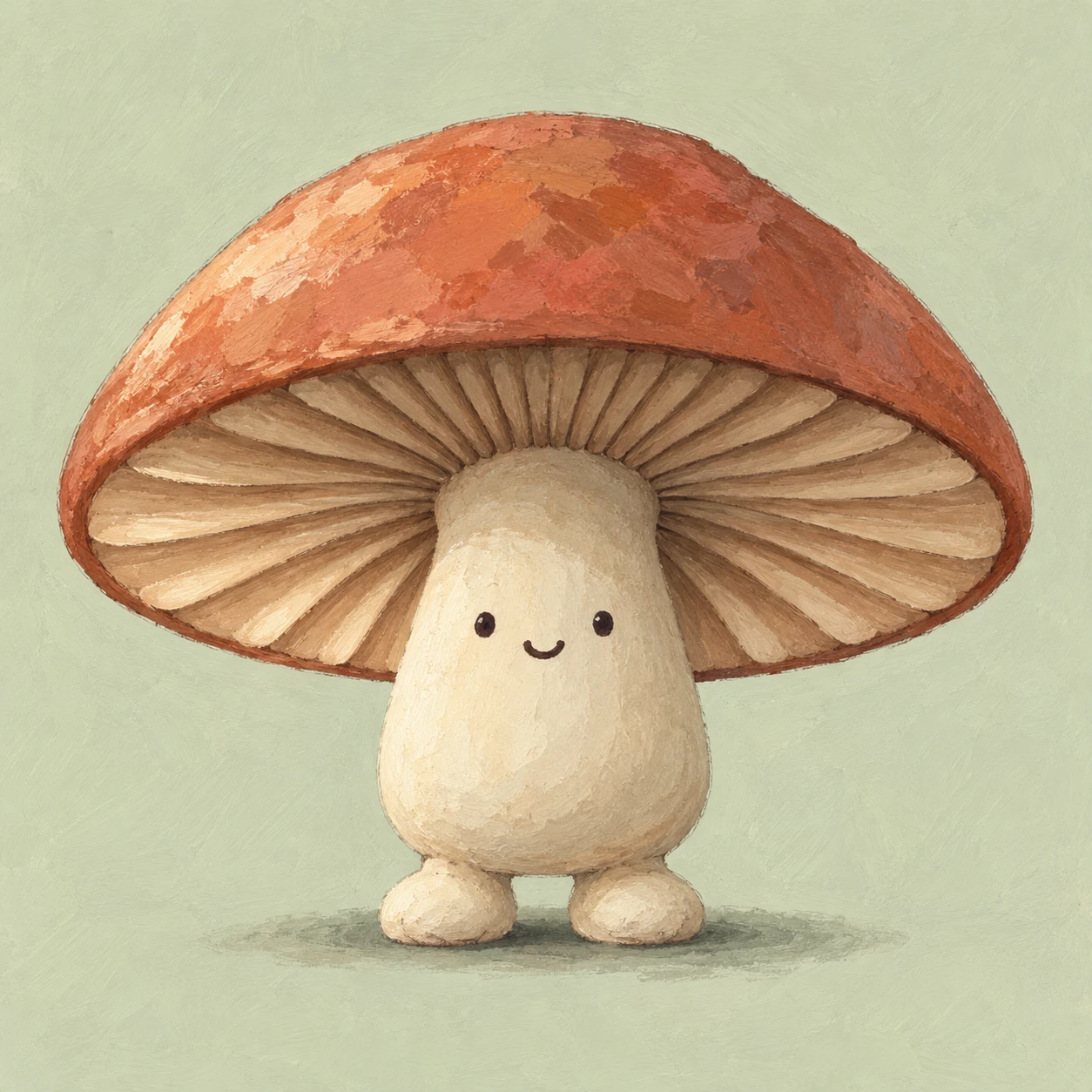
A mushroom character whose underside gills converge around the stem and spread toward the cap edge to reveal depth.
Little Mushroom Friend · Radial Cap Gills
- Shape & line
- Draw the cap as a shallow rounded dome with a curved underside rim. Construct its gills as tapered radial blades that begin around the stem junction and fan outward to the rim; compress the gaps on the far, image-upper underside and open them across the near, image-lower underside.
- Color & light
- Use a muted terracotta cap and cream stem against a pale sage background. Light from image upper left, placing warm pale accents on the left rim and left-facing gill edges; deepen the intervening grooves and the small shadow directly beneath the cap on the stem.
- Texture & material
- Build the surfaces with matte, opaque gouache patches and softly broken brush edges. Keep the cap gently mottled, the stem comparatively smooth, and the gill blades crisp enough to remain separate; reserve pencil marks for the outer contour and a few recessed grooves.
- Composition
- Let the cap span most of the character's width while the face sits lower on the exposed stem, leaving the radial junction unobstructed. Arrange the feet beneath the stem with a small gap, and add a compact ground shadow touching both soles to anchor the friendly upright pose.
Priority
Make the gills read as radial blades attached around the stem rather than parallel stripes.
What to avoid & what to check
Avoid a flat underside filled with evenly spaced spokes or a face that hides the gill junction.
Check that the gills converge around the stem, widen toward the rim, and show tighter spacing on the far underside.
Exact prompt for this example
SUBJECT
One original mushroom friend with a broad terracotta cap, a short cream stem bearing two dot eyes and a small smile, and two stubby feet. The stem joins the center of the cap underside; visible gills radiate from a ring around that junction toward the rim.

COMPOSITION
Show the entire character centered in a square frame, viewed slightly from below so the cap underside occupies a readable crescent above the face. Keep both feet visible and leave generous pale background space around the cap.

STYLE GUIDE
1. Shape & line
Draw the cap as a shallow rounded dome with a curved underside rim. Construct its gills as tapered radial blades that begin around the stem junction and fan outward to the rim; compress the gaps on the far, image-upper underside and open them across the near, image-lower underside.

2. Color & light
Use a muted terracotta cap and cream stem against a pale sage background. Light from image upper left, placing warm pale accents on the left rim and left-facing gill edges; deepen the intervening grooves and the small shadow directly beneath the cap on the stem.

3. Texture & material
Build the surfaces with matte, opaque gouache patches and softly broken brush edges. Keep the cap gently mottled, the stem comparatively smooth, and the gill blades crisp enough to remain separate; reserve pencil marks for the outer contour and a few recessed grooves.

4. Composition
Let the cap span most of the character's width while the face sits lower on the exposed stem, leaving the radial junction unobstructed. Arrange the feet beneath the stem with a small gap, and add a compact ground shadow touching both soles to anchor the friendly upright pose.

PRIORITY
Preserve the requested identity, count, action, composition and output settings. Apply the style rules within those constraints; a style reference must not replace the subject or layout. Within the style: Make the gills read as radial blades attached around the stem rather than parallel stripes.

AVOID
Avoid a flat underside filled with evenly spaced spokes or a face that hides the gill junction.

OUTPUT
One square character illustration in opaque gouache with restrained pencil contours, without lettering, labels, borders, or watermarks.

SELF-CHECK
Check that the gills converge around the stem, widen toward the rim, and show tighter spacing on the far underside.
Model information comes from image provenance. The same prompt may produce a different result.