Text to imageArt stylesStyle guide
One Cabbage Leaf · Wax-Resist Watercolor
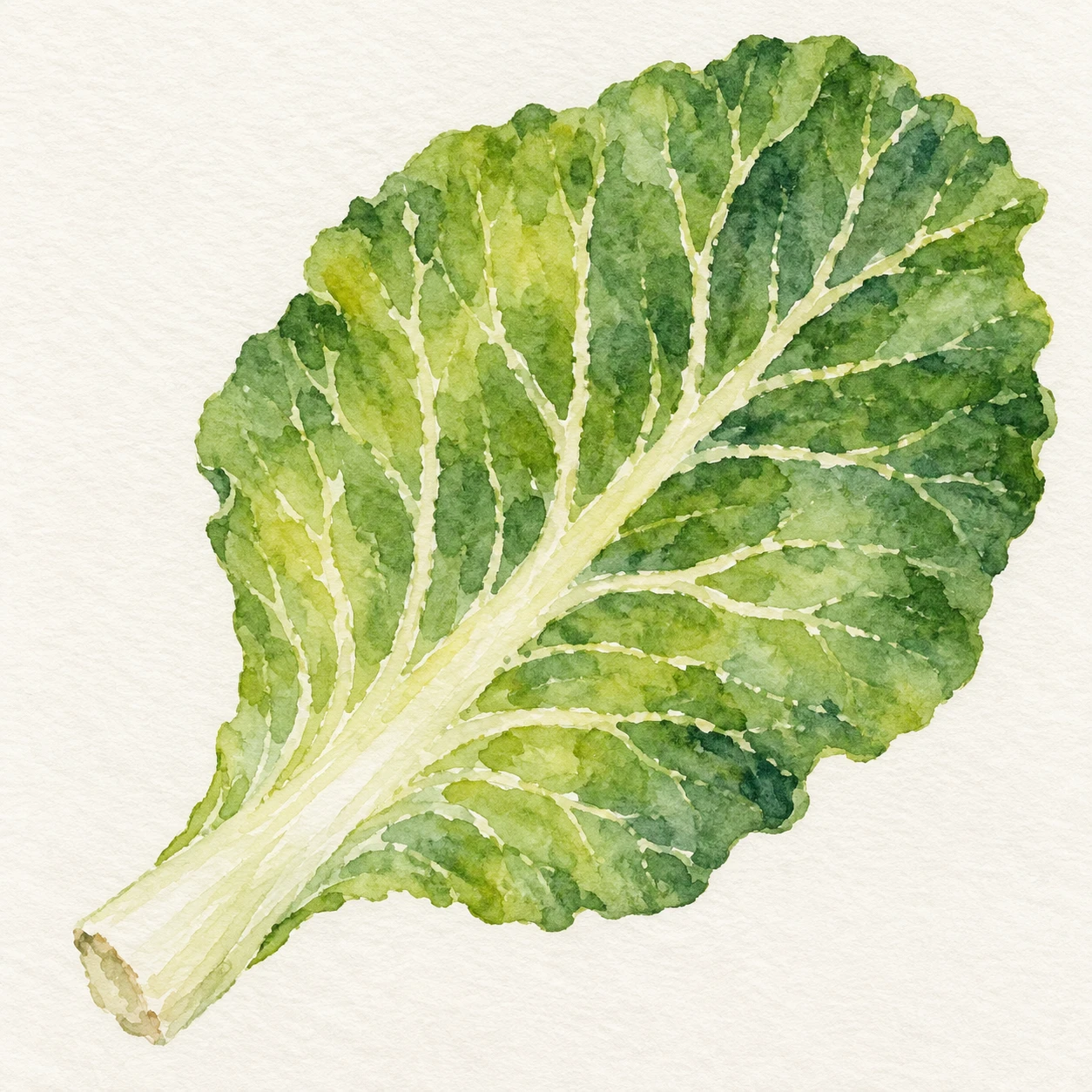
Render a cabbage leaf with pale wax-reserved veins and green watercolor pooling between them.
One Cabbage Leaf · Wax-Resist Watercolor
- Shape & line
- Build the leaf around a broad, tapering central rib, then draw branching veins with clear wax before painting; leave these lines uneven and softly broken so the pale paper forms an organic vein network inside a gently scalloped silhouette.
- Color & light
- Brush translucent yellow-green washes across the waxed veins and deepen selected spaces between them with cool green; let the pigment stop or separate at the wax, keeping the central rib pale and the darker color concentrated within the blade.
- Texture & material
- Show the resist through irregular pigment beads and small bare-paper breaks along the veins, with gentle watercolor pooling beside them; retain visible paper grain and matte washes so the wax reads through interrupted color rather than glossy raised ridges.
- Composition
- Place the single leaf diagonally from the lower-left stalk to the upper-right tip, keeping its outline fully inside the frame; make the central rib and several branching resist lines readable at a glance, with the surrounding paper left quiet and unpainted.
Priority
Make the wax-reserved vein network the clearest feature of the watercolor.
What to avoid & what to check
Avoid opaque white vein outlines and uniformly smooth digital fills.
Check that green pigment visibly separates at the pale veins while the whole leaf remains easy to recognize.
Exact prompt for this example
SUBJECT
One detached cabbage leaf with a broad, gently crinkled green blade and a thick pale central rib that branches into smaller veins.

COMPOSITION
Show the entire leaf from above on warm white watercolor paper, with its cut stalk toward the lower left and its leafy tip toward the upper right. Leave generous paper visible around the silhouette.

STYLE GUIDE
1. Shape & line
Build the leaf around a broad, tapering central rib, then draw branching veins with clear wax before painting; leave these lines uneven and softly broken so the pale paper forms an organic vein network inside a gently scalloped silhouette.

2. Color & light
Brush translucent yellow-green washes across the waxed veins and deepen selected spaces between them with cool green; let the pigment stop or separate at the wax, keeping the central rib pale and the darker color concentrated within the blade.

3. Texture & material
Show the resist through irregular pigment beads and small bare-paper breaks along the veins, with gentle watercolor pooling beside them; retain visible paper grain and matte washes so the wax reads through interrupted color rather than glossy raised ridges.

4. Composition
Place the single leaf diagonally from the lower-left stalk to the upper-right tip, keeping its outline fully inside the frame; make the central rib and several branching resist lines readable at a glance, with the surrounding paper left quiet and unpainted.

PRIORITY
Preserve the requested identity, count, action, composition and output settings. Apply the style rules within those constraints; a style reference must not replace the subject or layout. Within the style: Make the wax-reserved vein network the clearest feature of the watercolor.

AVOID
Avoid opaque white vein outlines and uniformly smooth digital fills.

OUTPUT
Create one square image of a finished wax-resist watercolor artwork, without text, labels, borders, or watermarks.

SELF-CHECK
Check that green pigment visibly separates at the pale veins while the whole leaf remains easy to recognize.
Model information comes from image provenance. The same prompt may produce a different result.