Text to imageArt stylesStyle guide
One Beet · Oil-Pastel Sgraffito
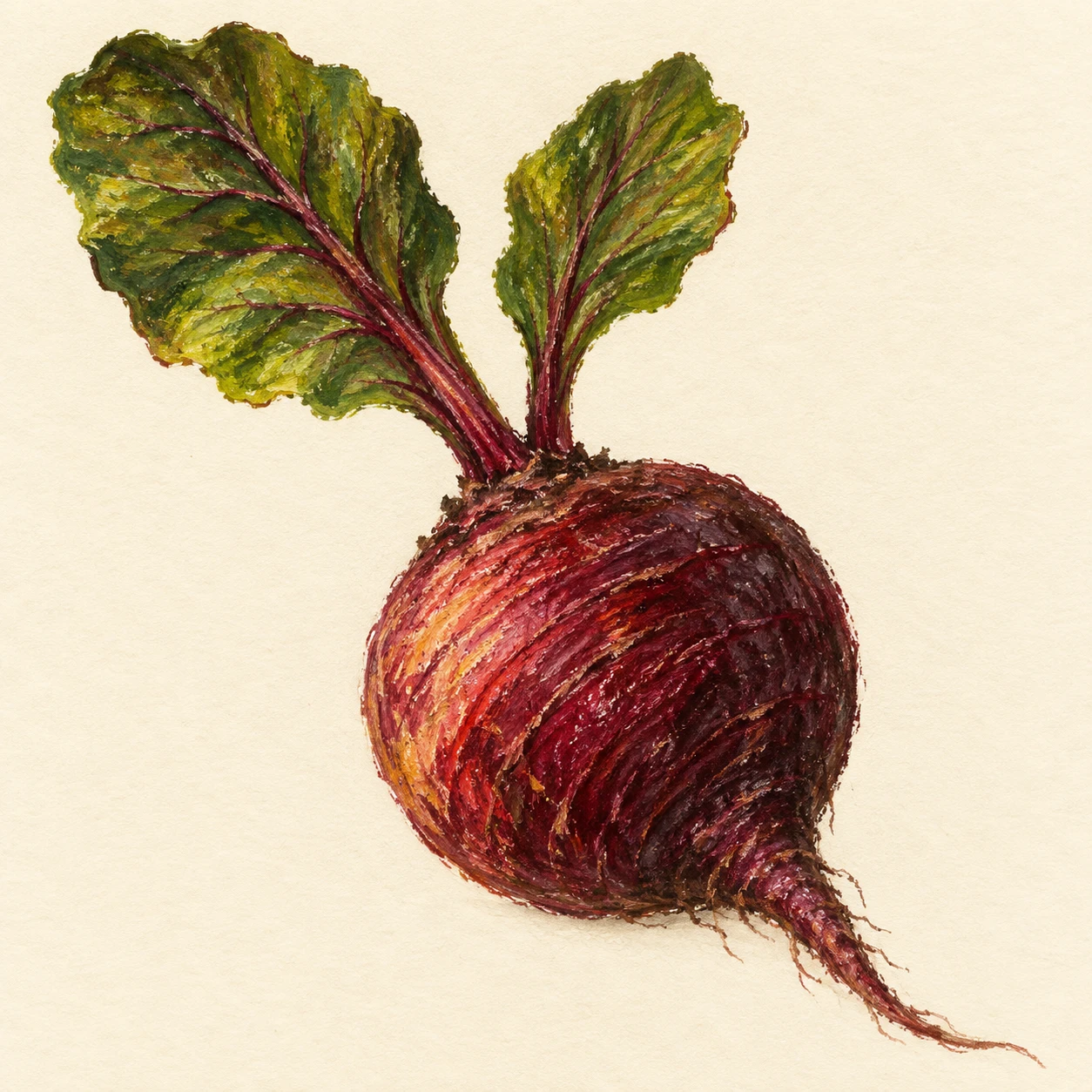
Scratch through dark oil pastel to reveal a bright underlayer, using curved marks to describe a beet’s rounded body.
One Beet · Oil-Pastel Sgraffito
- Shape & line
- Build the beet with a slightly irregular rounded silhouette and a tapering root. Scratch curved strokes that bow around the bulb, shortening them near its outer edges; draw each leaf’s scraped veins branching from a single central vein.
- Color & light
- Lay coral and pale yellow beneath a deep burgundy coat on the bulb, and yellow-green beneath dark olive on the leaves. Reveal more warm undercolor on the image-left side of the bulb and leave broader dark areas on its image-right side to suggest rounded volume.
- Texture & material
- Make the surface visibly waxy, with overlapping pastel drag marks and small crumbs along some scratched grooves. Scrape through the upper coat to expose colored pastel rather than white paper; vary the grooves between fine lines and a few broad scraped patches.
- Composition
- Place the bulb slightly below center and keep the two leaves separated by a visible wedge of ivory paper. Confine the scratched marks to the beet and leaves, preserving an open background so the layered color and curved grooves remain easy to read.
Priority
Prioritize exposed colored underlayers and scratches that describe the beet’s volume.
What to avoid & what to check
Avoid white scratchboard lines, glossy digital gradients and evenly spaced decorative stripes.
Check that the grooves reveal colored underlayers and visibly curve around the bulb.
Exact prompt for this example
SUBJECT
One round beetroot with a short tapered root and two attached leaves; both leaf stems emerge from the same crown.

COMPOSITION
Show the entire beet in a close, upright view, with its root pointing toward the lower right and its leaves opening toward the upper left. Keep generous blank paper around the silhouette.

STYLE GUIDE
1. Shape & line
Build the beet with a slightly irregular rounded silhouette and a tapering root. Scratch curved strokes that bow around the bulb, shortening them near its outer edges; draw each leaf’s scraped veins branching from a single central vein.

2. Color & light
Lay coral and pale yellow beneath a deep burgundy coat on the bulb, and yellow-green beneath dark olive on the leaves. Reveal more warm undercolor on the image-left side of the bulb and leave broader dark areas on its image-right side to suggest rounded volume.

3. Texture & material
Make the surface visibly waxy, with overlapping pastel drag marks and small crumbs along some scratched grooves. Scrape through the upper coat to expose colored pastel rather than white paper; vary the grooves between fine lines and a few broad scraped patches.

4. Composition
Place the bulb slightly below center and keep the two leaves separated by a visible wedge of ivory paper. Confine the scratched marks to the beet and leaves, preserving an open background so the layered color and curved grooves remain easy to read.

PRIORITY
Preserve the requested identity, count, action, composition and output settings. Apply the style rules within those constraints; a style reference must not replace the subject or layout. Within the style: Prioritize exposed colored underlayers and scratches that describe the beet’s volume.

AVOID
Avoid white scratchboard lines, glossy digital gradients and evenly spaced decorative stripes.

OUTPUT
One square image of an oil-pastel artwork on warm ivory paper, with no lettering, labels, signature or watermark.

SELF-CHECK
Check that the grooves reveal colored underlayers and visibly curve around the bulb.
Model information comes from image provenance. The same prompt may produce a different result.