Text to imagePortraitStyle guide
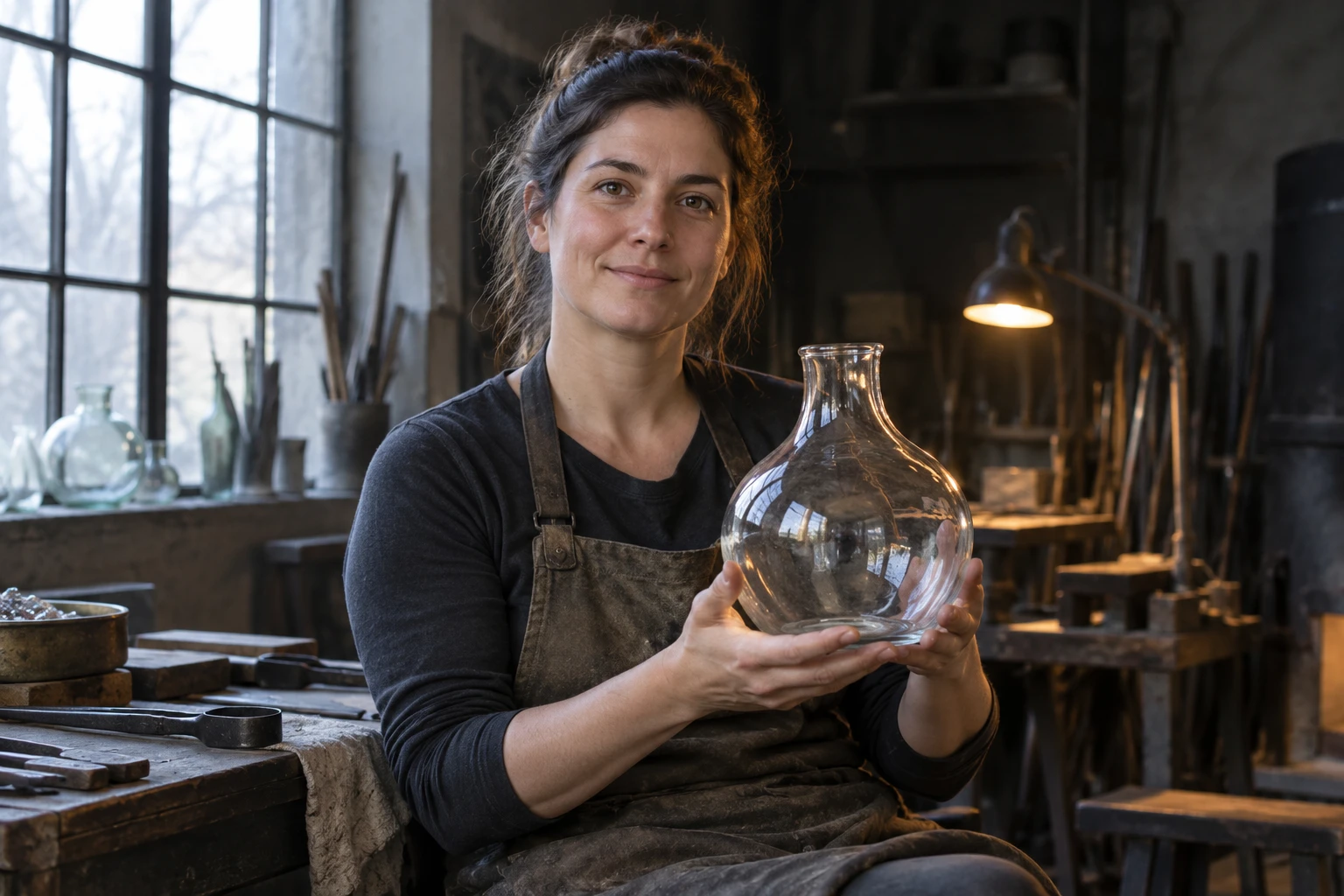
Glassmaker · Mixed-Light Portrait
Use two practical light sources to portray both the person and their craft.
Remix this referenceGlassmaker · Mixed-Light Portrait
- Shape & line
- Preserve natural facial anatomy and plausible hands around one complete clear vessel.
- Color & light
- Shape the face with cool left window light and separate vessel rim and shoulder with a small warm rear-right lamp.
- Texture & material
- Keep natural skin texture and believable transparent glass reflections without impossible glow.
- Composition
- Make the face focal in a waist-up portrait while keeping the entire vessel visible and tools softly subordinate.
Priority
Preserve the distinctive construction and medium first, readable spatial hierarchy second, subtle surface details third.
What to avoid & what to check
Avoid extra subjects, inconsistent repeated geometry, hidden key details, crowded overlaps, unwanted text and watermarks.
Check each style rule against the finished image: visible shape construction, color and light, material treatment, and composition. Preserve the exact subject count and scene requirements.
Exact prompt for this example
SUBJECT
Create a photographic environmental portrait of one original glassmaker seated beside an inactive workbench, holding a clear unfinished glass vessel at chest height. Frame from the waist up with the person's face as the focal point and the vessel fully visible. Cool daylight from a tall window on camera left shapes the face; a small warm bench lamp behind and to the right catches the vessel's rim and separates the shoulder from a dark workshop background. Keep the glass transparent with believable reflections and no impossible glow. Include only a few softly focused tools that explain the craft. Preserve natural skin texture, a relaxed direct gaze, and restrained contrast. No lettering, logos, signatures, or watermarks.

COMPOSITION
One seated glassmaker waist up, relaxed direct gaze, complete unfinished clear vessel held at chest. Cool window left, small warm bench lamp behind right; quiet tools.

STYLE GUIDE
1. Shape & line
Preserve natural facial anatomy and plausible hands around one complete clear vessel.

2. Color & light
Shape the face with cool left window light and separate vessel rim and shoulder with a small warm rear-right lamp.

3. Texture & material
Keep natural skin texture and believable transparent glass reflections without impossible glow.

4. Composition
Make the face focal in a waist-up portrait while keeping the entire vessel visible and tools softly subordinate.

PRIORITY
Preserve the requested identity, count, action, composition and output settings. Apply the style rules within those constraints; a style reference must not replace the subject or layout. Within the style: Preserve the distinctive construction and medium first, readable spatial hierarchy second, subtle surface details third.

AVOID
Avoid extra subjects, inconsistent repeated geometry, hidden key details, crowded overlaps, unwanted text and watermarks.

OUTPUT
One finished landscape image, aspect ratio 3:2. No lettering, captions, dimensions, unrelated logos, watermark, border or interface.

SELF-CHECK
Check each style rule against the finished image: visible shape construction, color and light, material treatment, and composition. Preserve the exact subject count and scene requirements.
Model information comes from image provenance. The same prompt may produce a different result.