Text to imageLandscapeStyle guide
Small Lake · Fragmented Sun Glitter
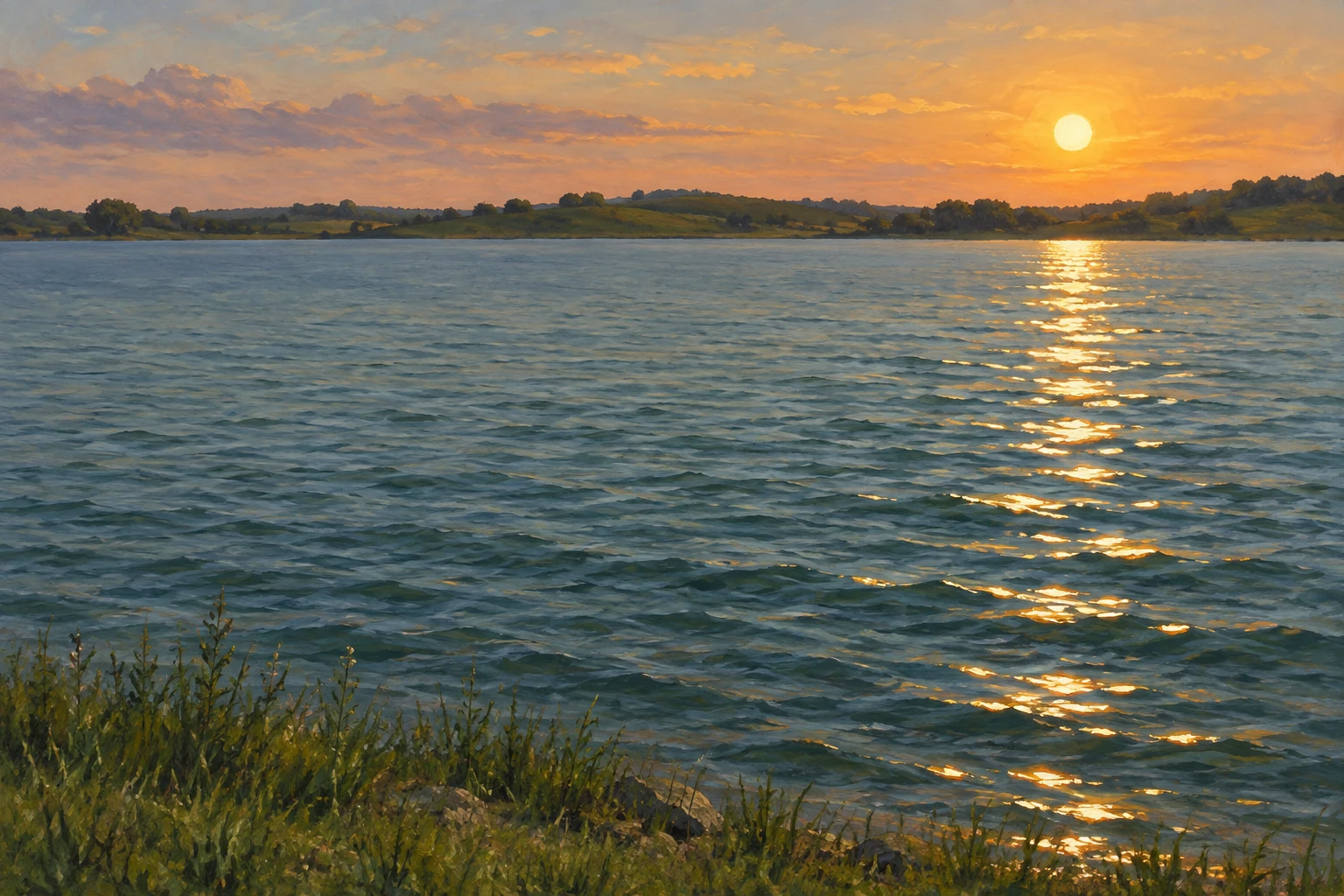
Connect short glints across rippled water to form a reflection path from a low sun toward the foreground.
Small Lake · Fragmented Sun Glitter
- Shape & line
- Draw the far shore as a low, gently uneven silhouette, and build the water from shallow horizontal ripple strokes. Shape each reflected glint as a short broken dash following a ripple crest, with irregular gaps that keep the reflection visibly fragmented.
- Color & light
- Set warm pale-gold glints against muted blue-green water, reserving the brightest cream for a few glints. Place the sun at upper right and align the broken light path beneath it toward lower right; retain darker water between glints so the path reads as light caught by separate ripples.
- Texture & material
- Use softly blended paint for the sky and restrained opaque brush marks for the lake. Make the illuminated ripple crests crisp while leaving their surrounding water softer; keep the grassy shore matte and subdued so its texture does not compete with the glitter.
- Composition
- Gather the glints into a narrow broken cluster near the far shore directly below the sun, then spread them into a broader, uneven path toward the lower-right edge. Leave generous unlit water on image left, and vary the glint lengths and gaps so the path avoids becoming a solid stripe or a regular ladder.
Priority
Make the broken sunlight path the clearest visual feature.
What to avoid & what to check
Avoid a solid luminous stripe or evenly repeated sparkle marks.
Check that separated horizontal glints align beneath the upper-right sun and spread toward the lower-right foreground.
Exact prompt for this example
SUBJECT
Show one small lake bordered by a low grassy shore, with one low sun above the far shore in the upper-right part of the image. Its reflection forms a broken path across the lake toward the lower-right foreground.

COMPOSITION
Use a wide view from the near shore, with the far shoreline in the upper third and water filling most of the frame. Keep the sun and its reflection path clearly visible on the image-right side, balanced by quiet open water on the left.

STYLE GUIDE
1. Shape & line
Draw the far shore as a low, gently uneven silhouette, and build the water from shallow horizontal ripple strokes. Shape each reflected glint as a short broken dash following a ripple crest, with irregular gaps that keep the reflection visibly fragmented.

2. Color & light
Set warm pale-gold glints against muted blue-green water, reserving the brightest cream for a few glints. Place the sun at upper right and align the broken light path beneath it toward lower right; retain darker water between glints so the path reads as light caught by separate ripples.

3. Texture & material
Use softly blended paint for the sky and restrained opaque brush marks for the lake. Make the illuminated ripple crests crisp while leaving their surrounding water softer; keep the grassy shore matte and subdued so its texture does not compete with the glitter.

4. Composition
Gather the glints into a narrow broken cluster near the far shore directly below the sun, then spread them into a broader, uneven path toward the lower-right edge. Leave generous unlit water on image left, and vary the glint lengths and gaps so the path avoids becoming a solid stripe or a regular ladder.

PRIORITY
Preserve the requested identity, count, action, composition and output settings. Apply the style rules within those constraints; a style reference must not replace the subject or layout. Within the style: Make the broken sunlight path the clearest visual feature.

AVOID
Avoid a solid luminous stripe or evenly repeated sparkle marks.

OUTPUT
Create one painterly landscape image in a 3:2 horizontal aspect ratio, with no text, labels, borders, or watermark.

SELF-CHECK
Check that separated horizontal glints align beneath the upper-right sun and spread toward the lower-right foreground.
Model information comes from image provenance. The same prompt may produce a different result.