Text to imageSpace & architectureStyle guide
Small Entry · Sunlight Across a Bench
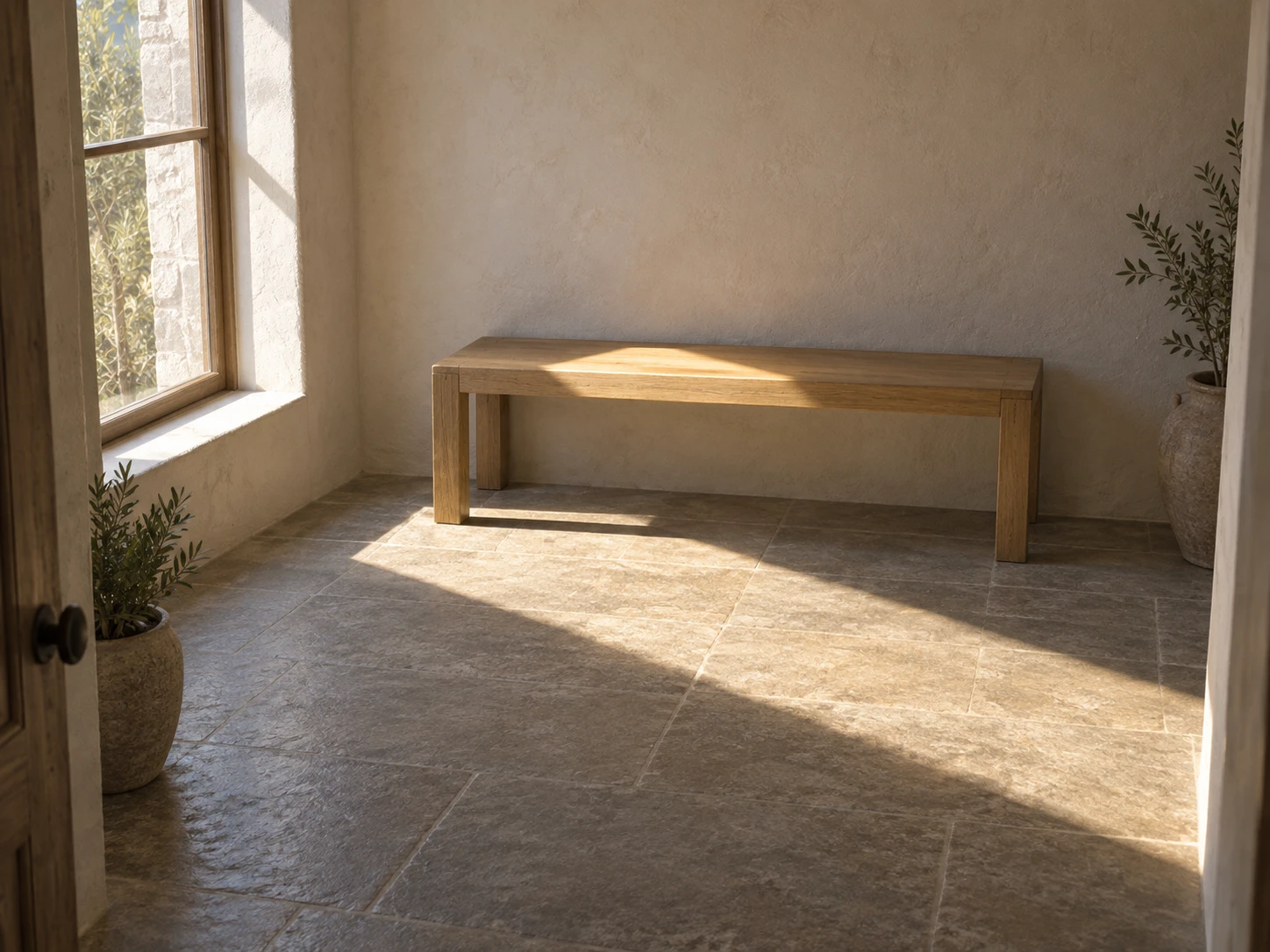
A spatial reference showing how one continuous sunlight band reveals the orientation and height of a floor and bench.
Small Entry · Sunlight Across a Bench
- Shape & line
- Build the bench from a rectangular seat and straight square legs, keeping its edges crisp and room verticals upright. Where the sunlight crosses the bench, make its boundaries change direction across the horizontal seat and vertical front edge so the lit patch describes connected planes.
- Color & light
- Send warm sunlight from the image-left window diagonally toward lower image-right, placing the bench's middle inside the same bright band visible on the floor. Cast the seat and leg shadows toward image-right within that band, and keep the surrounding room softly lit in cooler muted tones.
- Texture & material
- Use matte ivory plaster, pale oak with restrained lengthwise grain, and a smooth gray stone floor. Let sunlight reveal gentle surface variation without glossy reflections, and retain visible wood and floor texture in both the illuminated patches and cast shadows.
- Composition
- Leave a generous foreground floor area and frame both long edges of the sunlight band wherever the bench does not interrupt them. Keep the window on image-left and the whole bench in view so the viewer can follow the light from its opening, across the seat, and onto the shadowed floor beneath it.
Priority
Prioritize a continuous sunlight band that visibly changes shape across the bench and floor.
What to avoid & what to check
Avoid disconnected bright patches or a bench shadow outside the visible sunlight band.
Check that the image-left window, illuminated bench middle, and floor shadow clearly belong to the same sunlight band.
Exact prompt for this example
SUBJECT
A small plaster-walled entry with one simple wooden bench against the back wall and one tall window on image-left. Direct sunlight from that window forms one broad diagonal band across the floor and the middle of the bench; the bench casts its shadow onto the floor within that same visible band.

COMPOSITION
View from the open entrance at a slightly elevated three-quarter angle. Show the left window, the entire bench, and enough foreground floor to trace the sunlight band from image-left toward lower image-right. Keep the bench centered slightly to the right and the illuminated floor unobstructed.

STYLE GUIDE
1. Shape & line
Build the bench from a rectangular seat and straight square legs, keeping its edges crisp and room verticals upright. Where the sunlight crosses the bench, make its boundaries change direction across the horizontal seat and vertical front edge so the lit patch describes connected planes.

2. Color & light
Send warm sunlight from the image-left window diagonally toward lower image-right, placing the bench's middle inside the same bright band visible on the floor. Cast the seat and leg shadows toward image-right within that band, and keep the surrounding room softly lit in cooler muted tones.

3. Texture & material
Use matte ivory plaster, pale oak with restrained lengthwise grain, and a smooth gray stone floor. Let sunlight reveal gentle surface variation without glossy reflections, and retain visible wood and floor texture in both the illuminated patches and cast shadows.

4. Composition
Leave a generous foreground floor area and frame both long edges of the sunlight band wherever the bench does not interrupt them. Keep the window on image-left and the whole bench in view so the viewer can follow the light from its opening, across the seat, and onto the shadowed floor beneath it.

PRIORITY
Preserve the requested identity, count, action, composition and output settings. Apply the style rules within those constraints; a style reference must not replace the subject or layout. Within the style: Prioritize a continuous sunlight band that visibly changes shape across the bench and floor.

AVOID
Avoid disconnected bright patches or a bench shadow outside the visible sunlight band.

OUTPUT
One image in a 4:3 landscape aspect ratio, rendered as a realistic architectural photograph, with no lettering, labels, or watermark.

SELF-CHECK
Check that the image-left window, illuminated bench middle, and floor shadow clearly belong to the same sunlight band.
Model information comes from image provenance. The same prompt may produce a different result.