Text to imageCharacterStyle guide
Acorn Friend · Face-Wrapping Feature Arcs
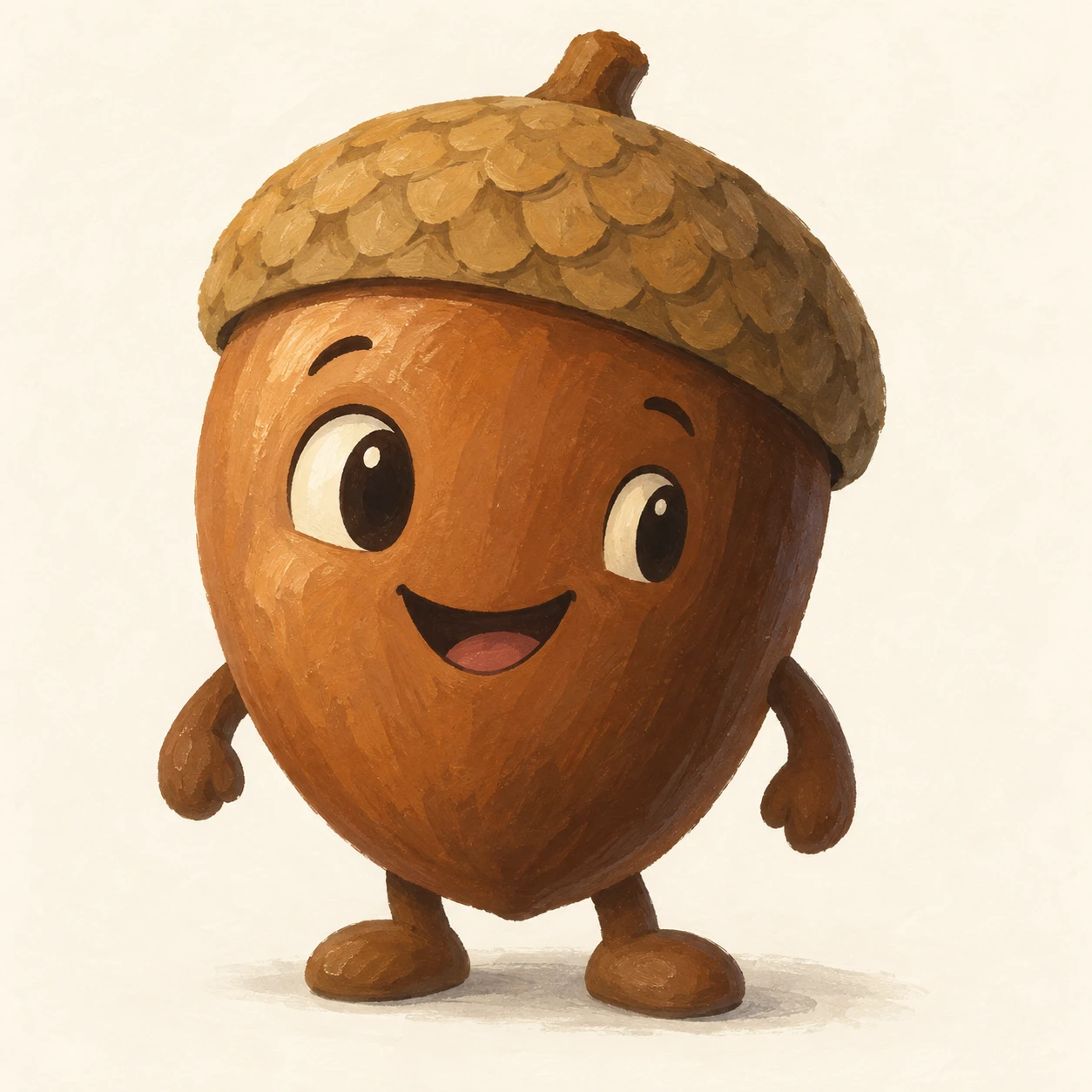
A character reference showing how eyes and a smile follow an acorn’s curved body to give a simple face convincing volume.
Acorn Friend · Face-Wrapping Feature Arcs
- Shape & line
- Build the body as a plump tapering oval beneath a shallow domed cap. Place the eyes along an implied arc wrapping around the body: make the image-left eye wider and the receding image-right eye slightly narrower, with less space between that eye and the outer contour. Curve the smile around the same volume, shortening its image-right half.
- Color & light
- Use chestnut brown for the body and muted ochre for the cap. Light from the upper image-left, laying a broad warm highlight across the visible left surface and a soft darker band along the receding right edge. Keep the eyes and mouth dark enough to remain clear across both value areas.
- Texture & material
- Give the gouache matte, opaque coverage with a few broad brush marks following the body’s curve. Suggest the cap’s roughness with sparse overlapping scallops, while keeping the facial area smooth enough that texture does not interrupt the feature arcs.
- Composition
- Keep the arms low and separated from the body by small readable gaps so the face remains the focal point. Set both feet on one visible ground level and add a small soft shadow directly beneath them. Preserve the three-quarter turn instead of arranging the face as a symmetrical front view.
Priority
Prioritize facial arcs that visibly follow the acorn’s rounded volume.
What to avoid & what to check
Avoid a flat symmetrical face pasted onto a shaded body.
Check that the image-right eye and smile half recede consistently with the body’s turn.
Exact prompt for this example
SUBJECT
One original cheerful acorn character with a rounded brown body, a snug cap, two short arms and two small feet. Its face sits directly on the curved body beneath the cap. Turn the body slightly toward image-right so the image-left facial surface is broad and the image-right surface recedes.

COMPOSITION
Show the entire standing character in a close three-quarter view at face height, centered on a plain warm ivory background. Keep both eyes, the complete smile and the cap visible, with comfortable space around the arms and feet.

STYLE GUIDE
1. Shape & line
Build the body as a plump tapering oval beneath a shallow domed cap. Place the eyes along an implied arc wrapping around the body: make the image-left eye wider and the receding image-right eye slightly narrower, with less space between that eye and the outer contour. Curve the smile around the same volume, shortening its image-right half.

2. Color & light
Use chestnut brown for the body and muted ochre for the cap. Light from the upper image-left, laying a broad warm highlight across the visible left surface and a soft darker band along the receding right edge. Keep the eyes and mouth dark enough to remain clear across both value areas.

3. Texture & material
Give the gouache matte, opaque coverage with a few broad brush marks following the body’s curve. Suggest the cap’s roughness with sparse overlapping scallops, while keeping the facial area smooth enough that texture does not interrupt the feature arcs.

4. Composition
Keep the arms low and separated from the body by small readable gaps so the face remains the focal point. Set both feet on one visible ground level and add a small soft shadow directly beneath them. Preserve the three-quarter turn instead of arranging the face as a symmetrical front view.

PRIORITY
Preserve the requested identity, count, action, composition and output settings. Apply the style rules within those constraints; a style reference must not replace the subject or layout. Within the style: Prioritize facial arcs that visibly follow the acorn’s rounded volume.

AVOID
Avoid a flat symmetrical face pasted onto a shaded body.

OUTPUT
One square character reference image in opaque gouache illustration, without lettering, captions or watermarks.

SELF-CHECK
Check that the image-right eye and smile half recede consistently with the body’s turn.
Model information comes from image provenance. The same prompt may produce a different result.