Text to imagePortraitStyle guide
Dark-Haired Adult · Lost-and-Found Edges
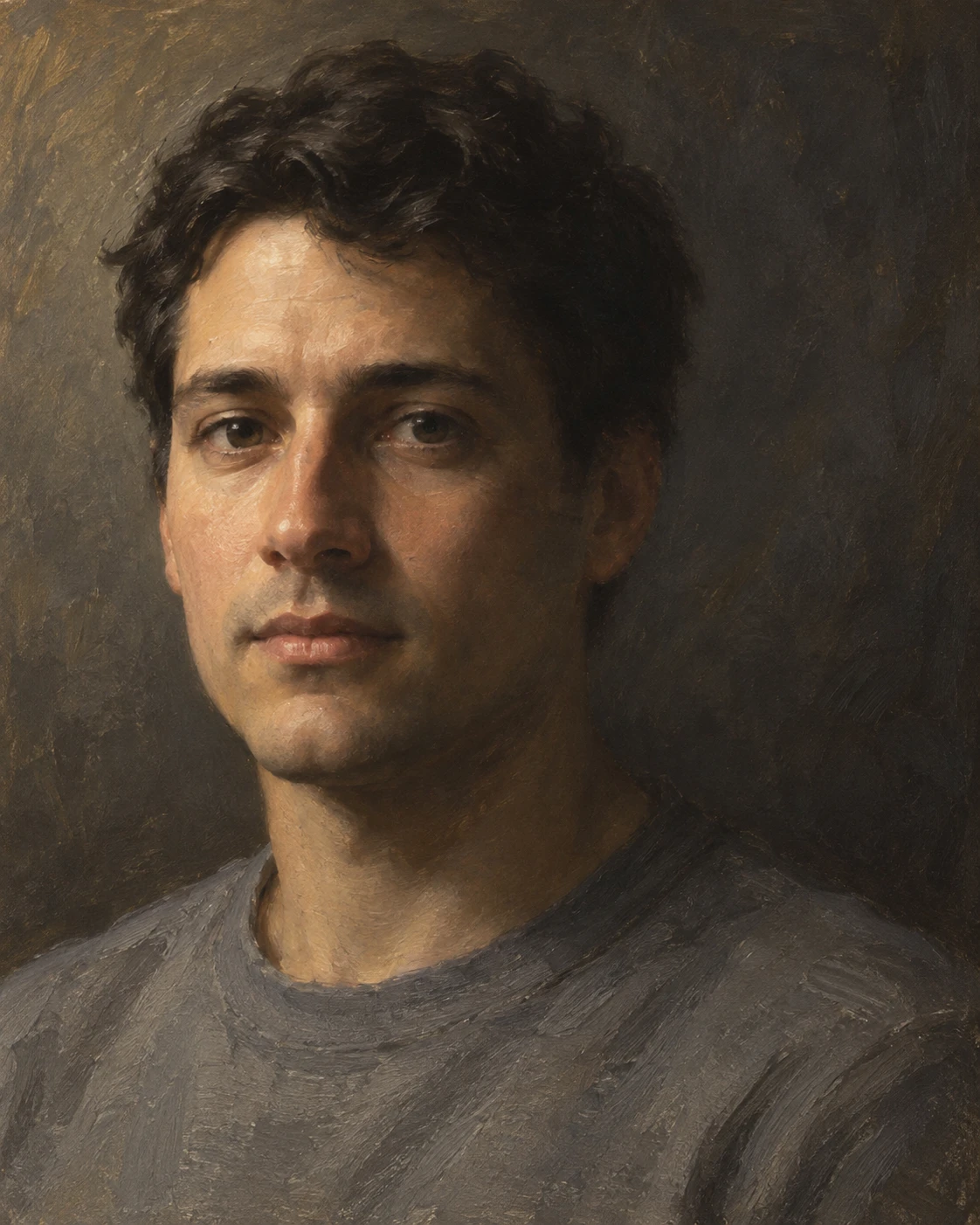
An oil portrait that builds facial volume by merging shadow-side contours into the background and recovering edges in the light.
Dark-Haired Adult · Lost-and-Found Edges
- Shape & line
- Build the head with rounded forehead, cheek, and jaw forms. Keep the image-left upper eyelid, nostril, and short mouth seam clearly drawn; soften the lower eyelids and cheek transitions so internal features do not become a uniform outline.
- Color & light
- Place a broad soft light above image-left, illuminating the image-left forehead and cheek while leaving the image-right temple and jaw in muted shadow. Use warm ochre skin lights and cool gray-brown shadows; match the background beside the image-right temple and jaw to their shadow value so those boundaries visibly disappear.
- Texture & material
- Use thin blended oil paint in the shadow and background, with a few thicker brush touches on the lit cheekbone and nose. Group the hair into broad dark masses with sparse directional strokes, preserving visible brush texture without rendering individual pores or every strand.
- Composition
- Recover a crisp silhouette along the image-left forehead and cheek against a slightly darker background, then let the image-right temple and jaw merge into the background over broad stretches. Restore a short edge beneath the chin so the head stays readable, and keep the shoulders softer than the face.
Priority
Prioritize the visible alternation between clear contours and contours that merge into the background.
What to avoid & what to check
Avoid continuous outlines, rim light along the merged edge, and uniform blur across the face.
Check that the image-right temple and jaw lose their boundaries while the eyes, lit cheek, and chin still define a readable head.
Exact prompt for this example
SUBJECT
One adult with short dark hair, a relaxed closed mouth, and a plain gray crewneck shirt. The head faces nearly forward with a slight turn toward image-left; both eyes remain visible.

COMPOSITION
Use a vertical head-and-shoulders view at eye level, with the face slightly left of center and quiet background space on image-right. Include the entire hair silhouette and the upper shoulders.

STYLE GUIDE
1. Shape & line
Build the head with rounded forehead, cheek, and jaw forms. Keep the image-left upper eyelid, nostril, and short mouth seam clearly drawn; soften the lower eyelids and cheek transitions so internal features do not become a uniform outline.

2. Color & light
Place a broad soft light above image-left, illuminating the image-left forehead and cheek while leaving the image-right temple and jaw in muted shadow. Use warm ochre skin lights and cool gray-brown shadows; match the background beside the image-right temple and jaw to their shadow value so those boundaries visibly disappear.

3. Texture & material
Use thin blended oil paint in the shadow and background, with a few thicker brush touches on the lit cheekbone and nose. Group the hair into broad dark masses with sparse directional strokes, preserving visible brush texture without rendering individual pores or every strand.

4. Composition
Recover a crisp silhouette along the image-left forehead and cheek against a slightly darker background, then let the image-right temple and jaw merge into the background over broad stretches. Restore a short edge beneath the chin so the head stays readable, and keep the shoulders softer than the face.

PRIORITY
Preserve the requested identity, count, action, composition and output settings. Apply the style rules within those constraints; a style reference must not replace the subject or layout. Within the style: Prioritize the visible alternation between clear contours and contours that merge into the background.

AVOID
Avoid continuous outlines, rim light along the merged edge, and uniform blur across the face.

OUTPUT
One finished oil-painted portrait in a 4:5 aspect ratio, with no lettering, captions, signature, or watermark.

SELF-CHECK
Check that the image-right temple and jaw lose their boundaries while the eyes, lit cheek, and chin still define a readable head.
Model information comes from image provenance. The same prompt may produce a different result.