Text to imageArt stylesStyle guide
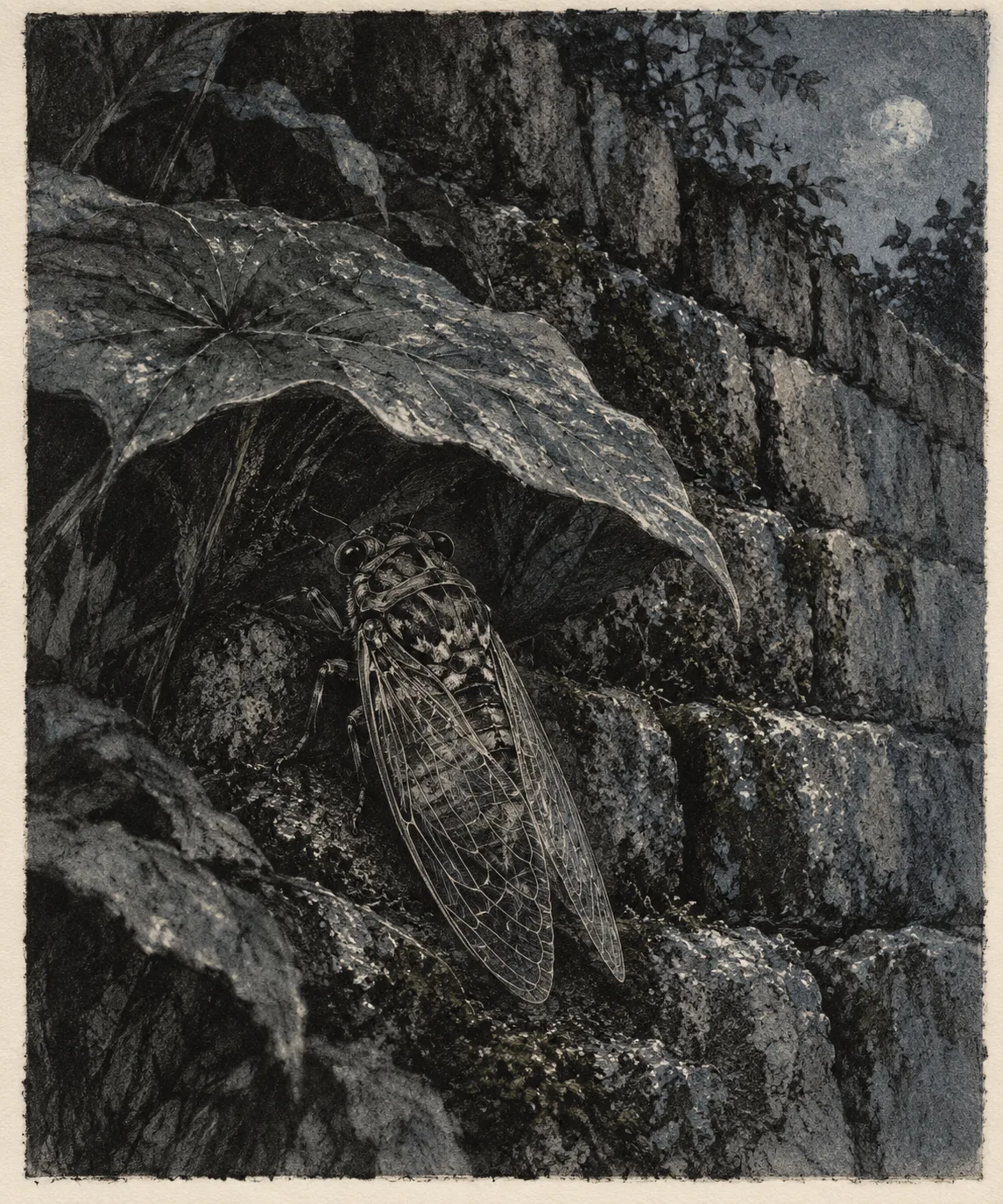
Night Cicada · Drypoint Burr
Use drypoint burr and plate tone to give a nocturnal scene depth and tactile edges.
Night Cicada · Drypoint Burr
- 1
- Use visibly fuzzy drypoint burr on the darkest leaf and wall contours.
- 2
- Render wing structure with sparse, fine incised lines rather than solid fill.
- 3
- Maintain a continuous light plate tone in the distance with selectively wiped highlights.
- 4
- Limit the image to black ink, one blue-gray pass, and visible off-white paper.
Priority
Preserve the four style rules when changing subject or composition.
What to avoid & what to check
Avoid unwanted lettering, logos and watermarks.
Check silhouette and composition at thumbnail size.
Build assets in this style
Shared style locked
Exact prompt for this example
Exact prompt · Original
Depict one original cicada resting beneath a broad garden leaf at night as a hand-pulled drypoint print. Place the insect slightly below center, with a wet stone wall receding behind it and a small opening of pale night sky in the upper corner. Let closely scratched lines describe the transparent wings, while dense burr-dark strokes gather under the leaf and along the wall joints. Leave a thin veil of plate tone across the background, then wipe selective highlights into the wing veins and damp stones. Allow subtle uneven ink pressure at the edges, but keep the insect anatomy legible and the composition calm. Use black ink and one muted blue-gray printing pass on off-white paper. No lettering, logos, or watermarks.
Model information comes from image provenance. The same prompt may produce a different result.