Text to imageArt stylesStyle guide
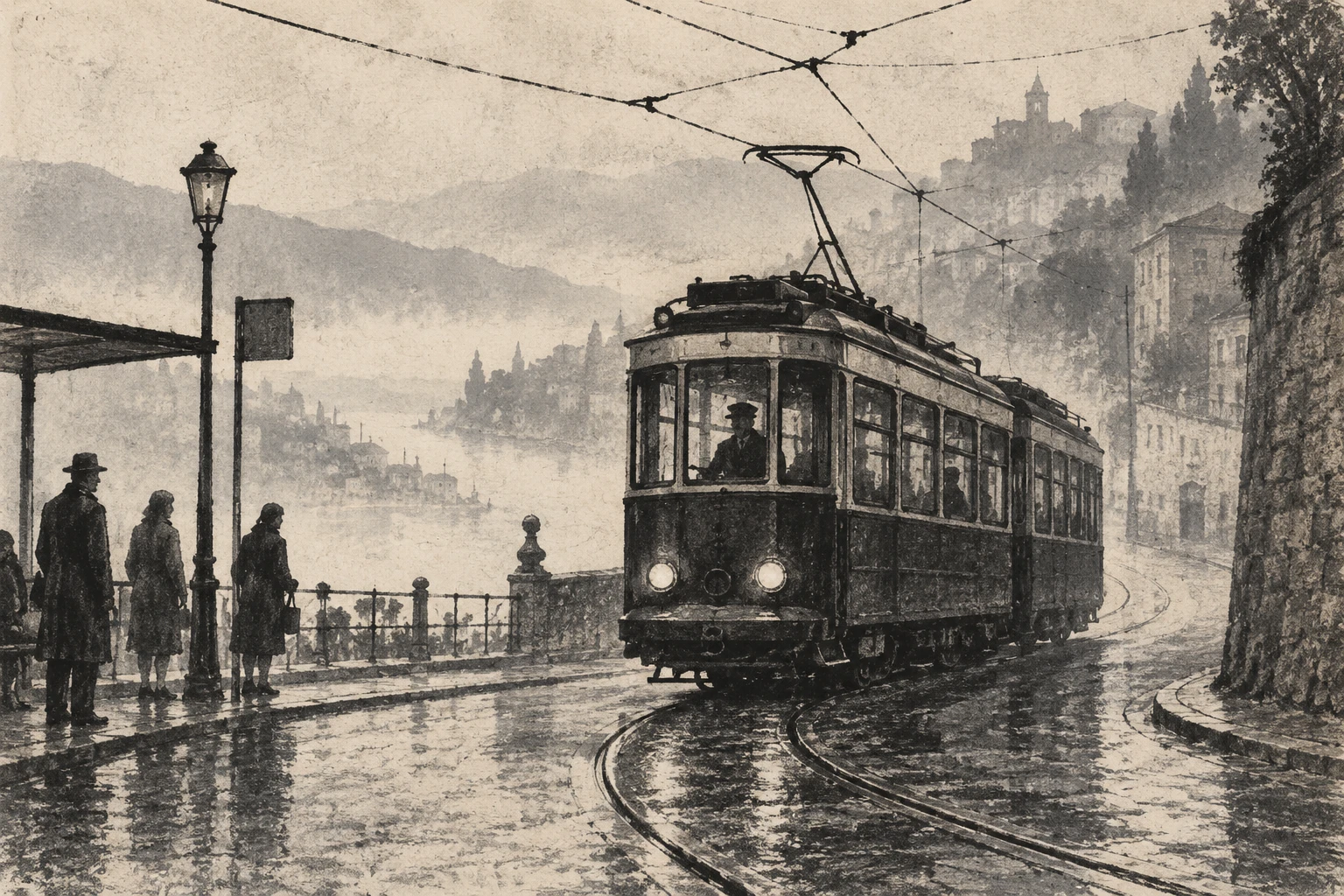
Morning Tram · Stone Lithography
Use lithographic crayon grain and tusche wash to balance solid structure with soft atmosphere.
Remix this referenceMorning Tram · Stone Lithography
- Shape & line
- Build structural edges and overhead wires with gritty lithographic crayon lines, keeping sharp focal contrast at the vehicle front and wheels.
- Color & light
- Use a limited dark ink range against pale mist, with broad translucent tusche washes for wet street and atmosphere.
- Texture & material
- Preserve limestone grain, uneven ink pickup and tactile hand-pulled print texture, without glossy photographic surfaces.
- Composition
- Use one strong dark diagonal against open pale space, with simple separated secondary silhouettes and calm spatial hierarchy.
Priority
Preserve the distinctive construction and medium first, readable spatial hierarchy second, subtle surface details third.
What to avoid & what to check
Avoid extra subjects, inconsistent repeated geometry, hidden key details, crowded overlaps, unwanted text and watermarks.
Check each style rule against the finished image: visible shape construction, color and light, material treatment, and composition. Preserve the exact subject count and scene requirements.
Exact prompt for this example
SUBJECT
Make an original stone-lithograph-style print of a small morning tram turning through a quiet hillside junction. Compose the tram as a strong dark diagonal against pale mist, with a few waiting passengers reduced to simple, distinct silhouettes. Build the tram's metal edges and overhead wires with gritty lithographic crayon marks; render the mist and damp street with broad translucent tusche washes. Let the limestone grain remain visible in open areas and allow subtle uneven ink pickup at the edges, while preserving crisp contrast at the tram's front and wheels. Use a limited ink range and the flat, tactile character of a hand-pulled print. No lettering on the tram or signs, no logos, and no watermarks.

COMPOSITION
A small tram turns diagonally through a quiet hillside junction in pale morning mist. A few waiting passengers remain separate simple silhouettes; keep front and wheels sharp and all signs blank.

STYLE GUIDE
1. Shape & line
Build structural edges and overhead wires with gritty lithographic crayon lines, keeping sharp focal contrast at the vehicle front and wheels.

2. Color & light
Use a limited dark ink range against pale mist, with broad translucent tusche washes for wet street and atmosphere.

3. Texture & material
Preserve limestone grain, uneven ink pickup and tactile hand-pulled print texture, without glossy photographic surfaces.

4. Composition
Use one strong dark diagonal against open pale space, with simple separated secondary silhouettes and calm spatial hierarchy.

PRIORITY
Preserve the requested identity, count, action, composition and output settings. Apply the style rules within those constraints; a style reference must not replace the subject or layout. Within the style: Preserve the distinctive construction and medium first, readable spatial hierarchy second, subtle surface details third.

AVOID
Avoid extra subjects, inconsistent repeated geometry, hidden key details, crowded overlaps, unwanted text and watermarks.

OUTPUT
One finished landscape image, aspect ratio 3:2. No lettering, captions, dimensions, unrelated logos, watermark, border or interface.

SELF-CHECK
Check each style rule against the finished image: visible shape construction, color and light, material treatment, and composition. Preserve the exact subject count and scene requirements.
Model information comes from image provenance. The same prompt may produce a different result.