Text to imageArt stylesStyle guide
One Daisy · Cross-Stitch
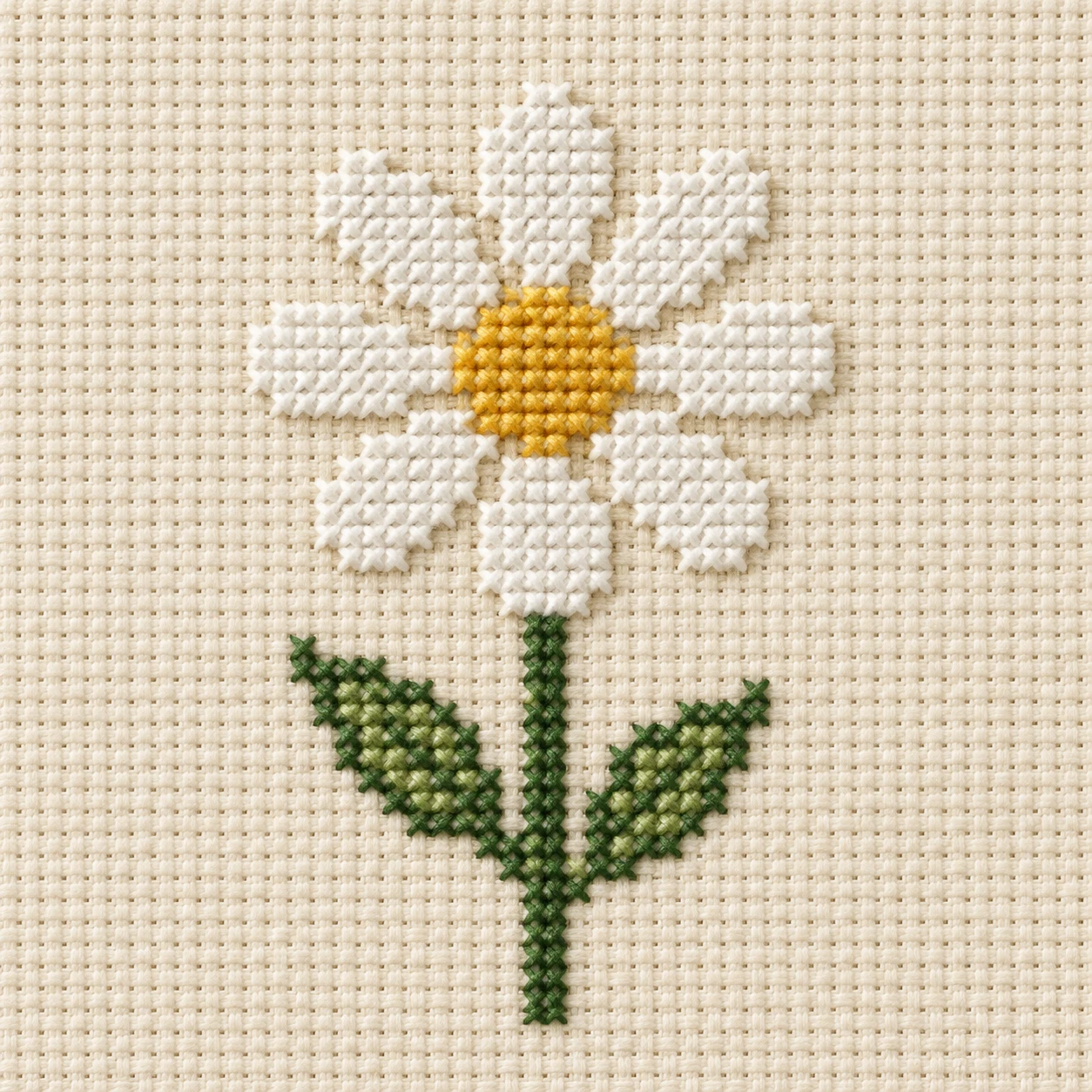
A cross-stitch image reference showing one daisy through gridded X-shaped stitches and stepped contours.
One Daisy · Cross-Stitch
- Shape & line
- Build every filled shape from rows of discrete X-shaped stitches on one consistent square grid. Give each petal a stepped rounded tip, and turn the stem and pointed leaves through short stair-step changes rather than smooth drawn outlines.
- Color & light
- Use warm white for the petals, golden yellow for the center, and two greens for the stem and leaves against cream fabric. Light from the image's upper left so raised threads catch pale highlights there and cast soft, short shadows toward the lower right.
- Texture & material
- Render the floss as softly rounded strands with a faint fibrous sheen. Keep both diagonal arms visible in each X, with the lower-left-to-upper-right arm consistently crossing on top; retain small fabric gaps between stitches and a visible woven grid in exposed areas.
- Composition
- Keep the whole motif on the same front-facing fabric plane, with no perspective compression. Separate neighboring petal tips with exposed fabric notches, and leave open fabric beside the stem so the bloom, two leaves, and stem remain distinct at a glance.
Priority
Prioritize readable X-shaped stitches and a coherent grid throughout the daisy.
What to avoid & what to check
Avoid smooth painted fills or continuous outlines that conceal the crossed threads.
Check that each flower part is built from crossed stitches and that exposed fabric separates the petal tips.
Exact prompt for this example
SUBJECT
One embroidered daisy with white petals surrounding a golden-yellow center, one green stem extending downward, and two leaves attached on opposite sides of that stem, all stitched onto a single piece of cream woven fabric.

COMPOSITION
Show the fabric straight-on in a square crop. Center the complete flower, with its bloom in the upper half and its stem ending in the lower half. Keep generous exposed fabric around the motif and make individual crossed stitches readable.

STYLE GUIDE
1. Shape & line
Build every filled shape from rows of discrete X-shaped stitches on one consistent square grid. Give each petal a stepped rounded tip, and turn the stem and pointed leaves through short stair-step changes rather than smooth drawn outlines.

2. Color & light
Use warm white for the petals, golden yellow for the center, and two greens for the stem and leaves against cream fabric. Light from the image's upper left so raised threads catch pale highlights there and cast soft, short shadows toward the lower right.

3. Texture & material
Render the floss as softly rounded strands with a faint fibrous sheen. Keep both diagonal arms visible in each X, with the lower-left-to-upper-right arm consistently crossing on top; retain small fabric gaps between stitches and a visible woven grid in exposed areas.

4. Composition
Keep the whole motif on the same front-facing fabric plane, with no perspective compression. Separate neighboring petal tips with exposed fabric notches, and leave open fabric beside the stem so the bloom, two leaves, and stem remain distinct at a glance.

PRIORITY
Preserve the requested identity, count, action, composition and output settings. Apply the style rules within those constraints; a style reference must not replace the subject or layout. Within the style: Prioritize readable X-shaped stitches and a coherent grid throughout the daisy.

AVOID
Avoid smooth painted fills or continuous outlines that conceal the crossed threads.

OUTPUT
Create one square image of a cross-stitch textile illustration, without lettering, captions, borders, or watermarks.

SELF-CHECK
Check that each flower part is built from crossed stitches and that exposed fabric separates the petal tips.
Model information comes from image provenance. The same prompt may produce a different result.