Text to imagePortraitStyle guide
Ceramic Conservator · Cross-Polarized Light
Control glare so a portrait reveals both expression and glazed detail.
Remix this referenceCeramic Conservator · Cross-Polarized Light
- Shape & line
- Keep natural seated posture and plausible finger contacts while two fragments align into one vessel.
- Color & light
- Suppress broad glare on glaze and skin using broad cross-polarized light, retaining one narrow controlled rim highlight.
- Texture & material
- Reveal fine crack networks, natural skin and believable conservation materials with neutral documentary detail.
- Composition
- Balance face and working hands in a waist-up portrait, keeping workshop shelves quieter than the action.
Priority
Preserve the distinctive construction and medium first, readable spatial hierarchy second, subtle surface details third.
What to avoid & what to check
Avoid extra subjects, inconsistent repeated geometry, hidden key details, crowded overlaps, unwanted text and watermarks.
Check each style rule against the finished image: visible shape construction, color and light, material treatment, and composition. Preserve the exact subject count and scene requirements.
Exact prompt for this example
SUBJECT
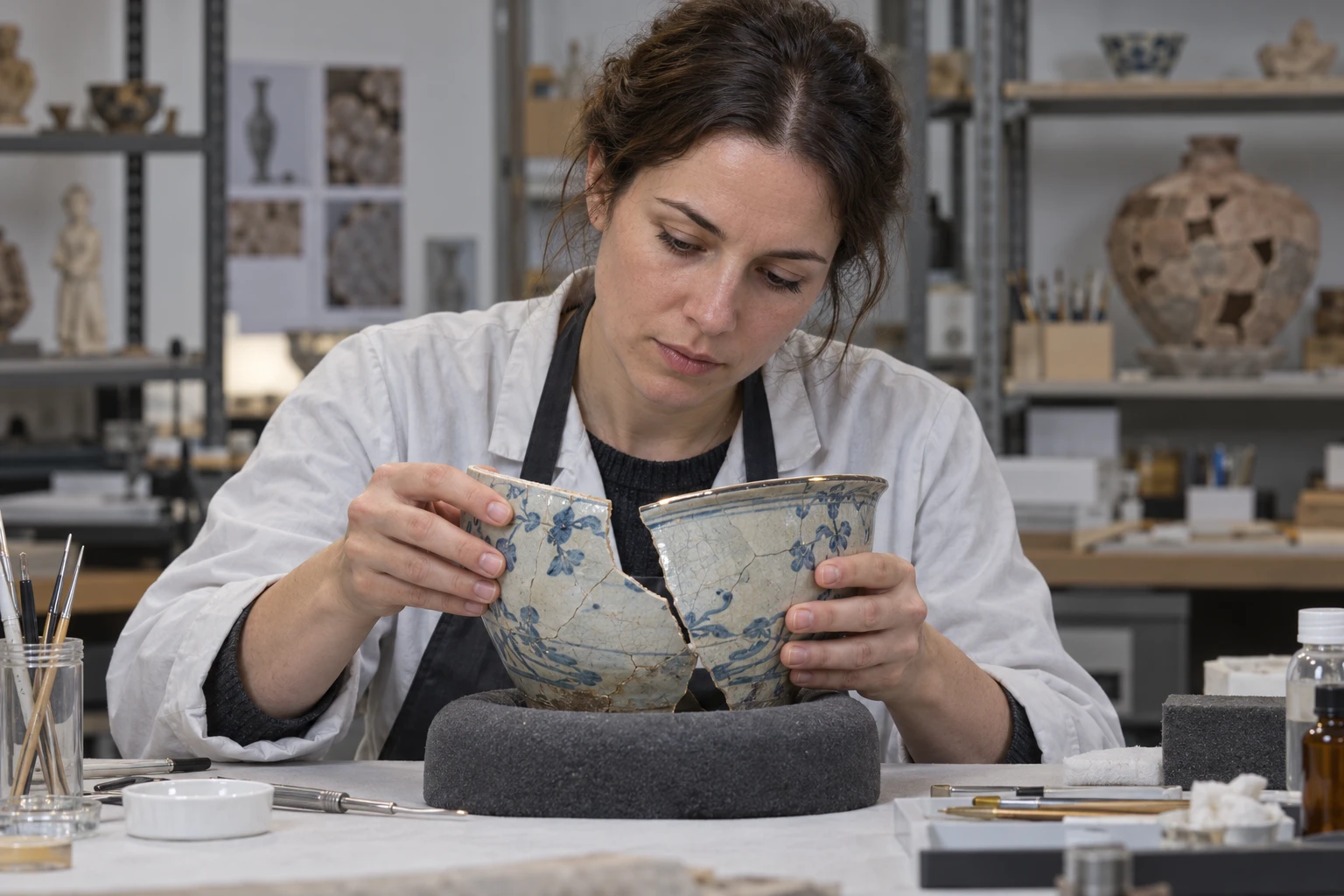
Create a photographic environmental portrait of one ceramic conservator seated at a workbench, carefully aligning two fragments of a glazed vessel. Frame the person from the waist up with the face and working hands equally important. Use broad cross-polarized studio light to suppress broad glare on the glaze and skin, revealing the fine crack network and the conservator's concentrated expression. Allow one narrow, controlled highlight along the vessel's rim so its curvature remains clear. Keep the background workshop softly recognizable through shelves and tools, but quieter than the hands and face. Natural posture, believable conservation materials, subtle neutral color, and documentary photographic detail. The lighting method should be apparent through the unusually clear surface information, not through visible equipment. No captions, readable lettering, logos, or watermarks.

COMPOSITION
Waist-up ceramic conservator carefully aligns two glazed-vessel fragments at a workbench. Face and both working hands equally readable; shelves and tools softly behind.

STYLE GUIDE
1. Shape & line
Keep natural seated posture and plausible finger contacts while two fragments align into one vessel.

2. Color & light
Suppress broad glare on glaze and skin using broad cross-polarized light, retaining one narrow controlled rim highlight.

3. Texture & material
Reveal fine crack networks, natural skin and believable conservation materials with neutral documentary detail.

4. Composition
Balance face and working hands in a waist-up portrait, keeping workshop shelves quieter than the action.

PRIORITY
Preserve the requested identity, count, action, composition and output settings. Apply the style rules within those constraints; a style reference must not replace the subject or layout. Within the style: Preserve the distinctive construction and medium first, readable spatial hierarchy second, subtle surface details third.

AVOID
Avoid extra subjects, inconsistent repeated geometry, hidden key details, crowded overlaps, unwanted text and watermarks.

OUTPUT
One finished landscape image, aspect ratio 3:2. No lettering, captions, dimensions, unrelated logos, watermark, border or interface.

SELF-CHECK
Check each style rule against the finished image: visible shape construction, color and light, material treatment, and composition. Preserve the exact subject count and scene requirements.
Model information comes from image provenance. The same prompt may produce a different result.