Text to imageIllustrationStyle guide
One Hanging Cloth · Suspension Folds
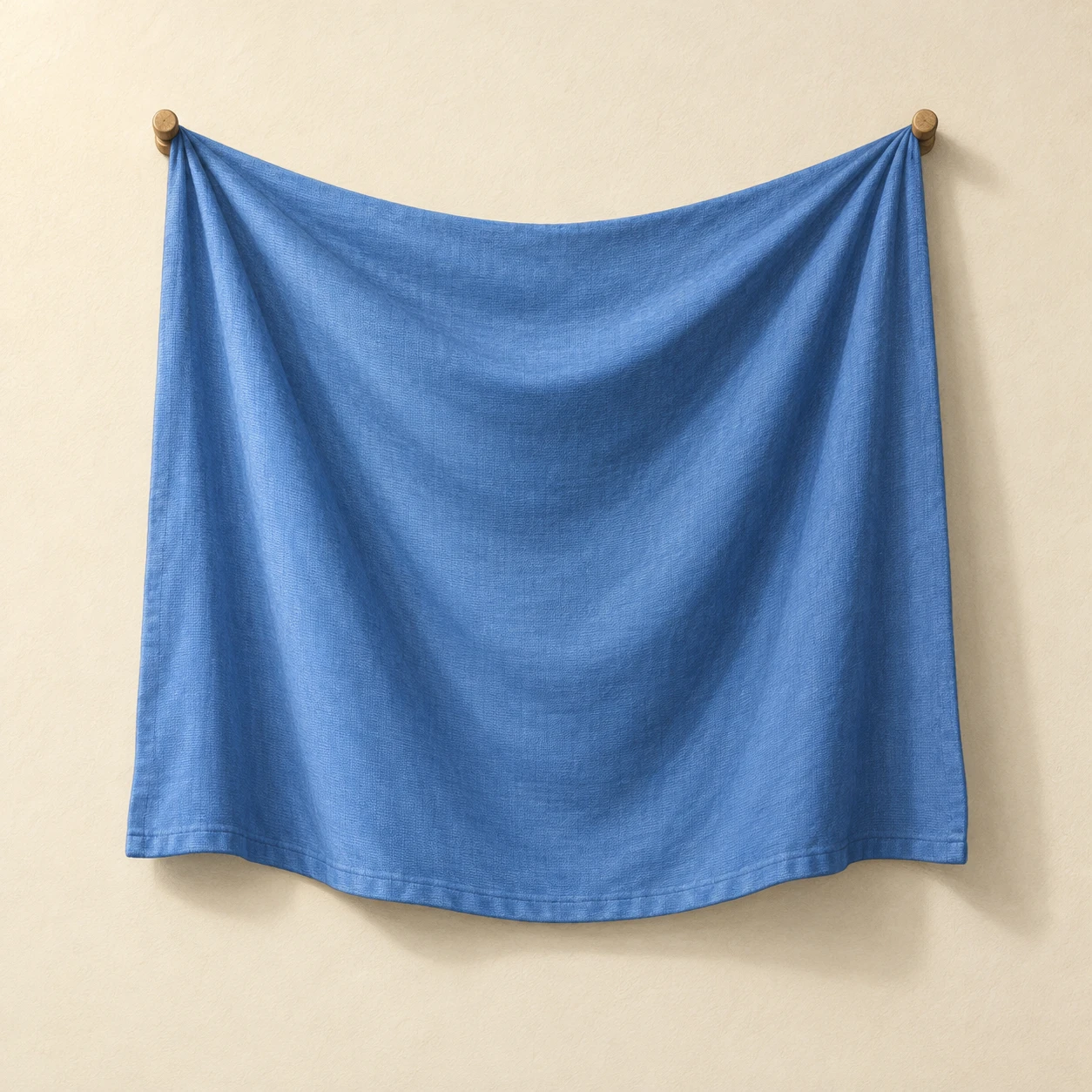
An illustration of cloth suspended by two corners, using curved folds to reveal tension at the supports and sag through the center.
One Hanging Cloth · Suspension Folds
- Shape & line
- Draw the upper edge as a shallow downward bow between the secured corners. Run several curved folds inward and downward from each peg, opening into broad U-shaped folds across the center; let their curvature ease toward the freely hanging lower hem. Use thin contours and fewer interior lines in the broad, relaxed areas.
- Color & light
- Place soft light above image-left. Give the fold ridges facing image-left pale blue highlights and the troughs facing image-right deeper blue shadows, blending across rounded folds. Add small dark attachment shadows directly beneath the pegs so the gathered corners visibly meet their supports.
- Texture & material
- Render the cloth as matte woven cotton with restrained pencil grain over smooth painted color. Let faint fiber marks follow the drape, and describe the hem with a narrow doubled edge that bends with the folds; keep the fabric broad and supple rather than sharply creased.
- Composition
- Keep both corner attachments exposed and separate their converging fold lines enough to read each origin. Leave the central sag unobstructed, and show a soft wall shadow just below and to image-right of the cloth, with visible wall gaps beside the lower edges to establish its hanging depth.
Priority
Prioritize folds that visibly originate at the two supports and relax into the central sag.
What to avoid & what to check
Avoid evenly spaced parallel wrinkles or rigid accordion pleats.
Check that both secured corners, the bowed upper edge, and the freely hanging hem remain clearly visible.
Exact prompt for this example
SUBJECT
One plain rectangular blue cloth hangs against a warm ivory wall from two small pegs securing its upper corners. The peg on image-left and the peg on image-right sit at the same height; the unsupported cloth sags between them, with its lower edge hanging freely.

COMPOSITION
Use a nearly frontal view showing the entire cloth and both pegs. Center the cloth with generous wall space around it, and keep the attachment points, central sag, and lower hem clearly readable.

STYLE GUIDE
1. Shape & line
Draw the upper edge as a shallow downward bow between the secured corners. Run several curved folds inward and downward from each peg, opening into broad U-shaped folds across the center; let their curvature ease toward the freely hanging lower hem. Use thin contours and fewer interior lines in the broad, relaxed areas.

2. Color & light
Place soft light above image-left. Give the fold ridges facing image-left pale blue highlights and the troughs facing image-right deeper blue shadows, blending across rounded folds. Add small dark attachment shadows directly beneath the pegs so the gathered corners visibly meet their supports.

3. Texture & material
Render the cloth as matte woven cotton with restrained pencil grain over smooth painted color. Let faint fiber marks follow the drape, and describe the hem with a narrow doubled edge that bends with the folds; keep the fabric broad and supple rather than sharply creased.

4. Composition
Keep both corner attachments exposed and separate their converging fold lines enough to read each origin. Leave the central sag unobstructed, and show a soft wall shadow just below and to image-right of the cloth, with visible wall gaps beside the lower edges to establish its hanging depth.

PRIORITY
Preserve the requested identity, count, action, composition and output settings. Apply the style rules within those constraints; a style reference must not replace the subject or layout. Within the style: Prioritize folds that visibly originate at the two supports and relax into the central sag.

AVOID
Avoid evenly spaced parallel wrinkles or rigid accordion pleats.

OUTPUT
Create one illustration in a square aspect ratio, with no lettering, labels, borders, or watermark.

SELF-CHECK
Check that both secured corners, the bowed upper edge, and the freely hanging hem remain clearly visible.
Model information comes from image provenance. The same prompt may produce a different result.