Text to imageCharacterStyle guide
Singing Finch · Throat Expansion
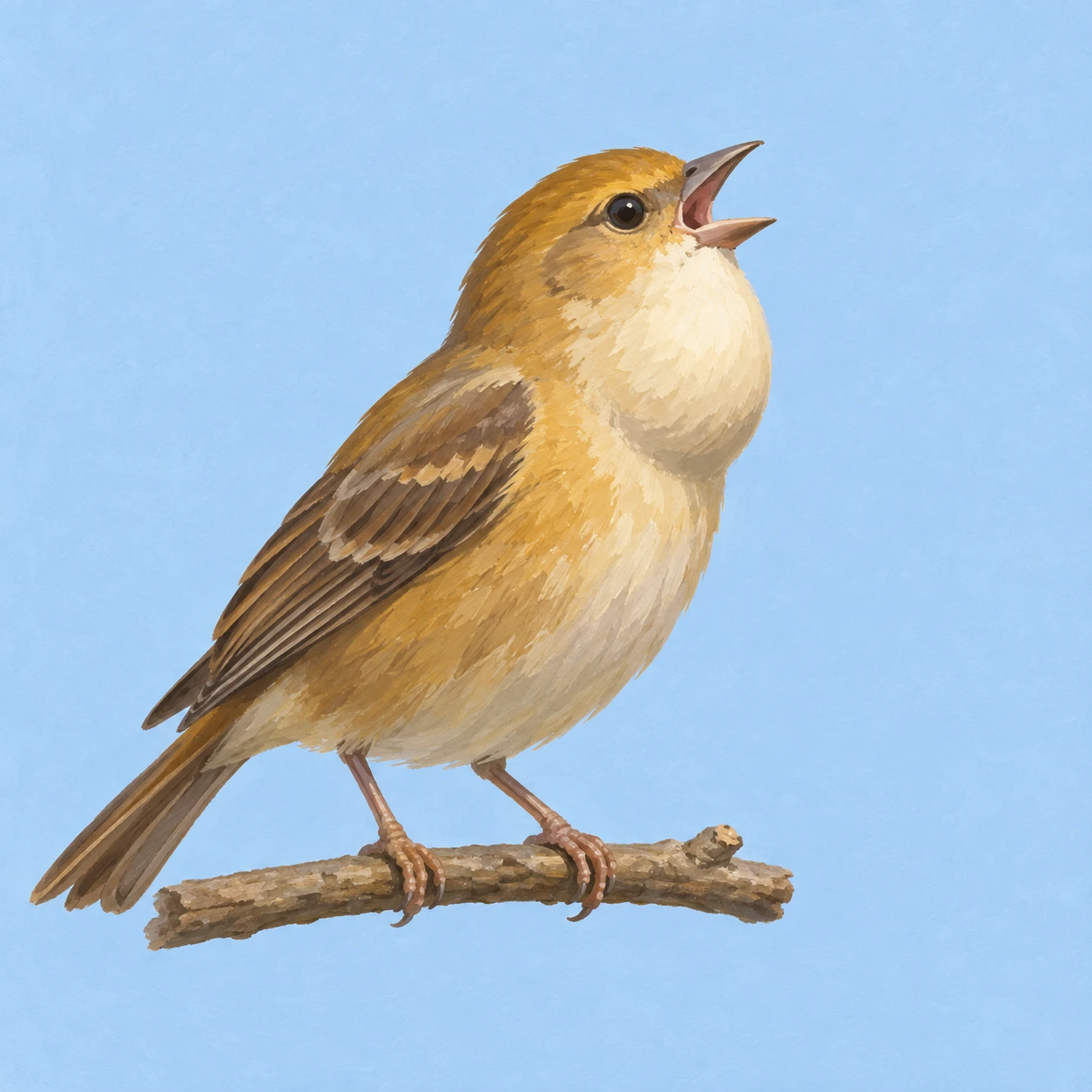
A small finch character whose open beak and expanded throat work together to convey a singing moment.
Singing Finch · Throat Expansion
- Shape & line
- Draw the open beak as two tapered wedges with a readable gap. Continue the lower beak into a rounded, outward-bulging throat, then let that contour ease inward before joining the chest; keep the head smaller than the body so the throat expansion remains clear.
- Color & light
- Use a warm ochre body, a pale cream throat, and muted brown wings. Light the bird from the upper image-left, placing a broad light patch on the swollen throat and a soft darker crescent along its lower edge to describe the rounded volume.
- Texture & material
- Build the feathers with opaque gouache patches and a few short brush marks on the wing and belly. Keep the expanded throat a smoother painted mass, allowing only faint paper grain there so feather detail does not break up its swelling.
- Composition
- Set the bird against a plain pale blue background and keep the twig below the belly. Separate the beak, throat, and chest contours from the background, with generous empty space on image-right so the upward singing gesture reads immediately.
Priority
Make the open beak and expanded throat read as one coordinated singing action.
What to avoid & what to check
Avoid turning the throat swelling into a separate dangling pouch or hiding it beneath feather detail.
Check that the throat bulges directly beneath the open beak and flows continuously into the chest.
Exact prompt for this example
SUBJECT
One original finch character singing, with its beak open, head tipped slightly upward, and throat visibly expanded beneath the lower beak. Both feet rest on one short horizontal twig.

COMPOSITION
Show the entire bird and twig in a square frame, in a clear side view facing image-right. Place the bird slightly left of center, leaving open space in front of its beak. Keep the throat contour unobstructed.

STYLE GUIDE
1. Shape & line
Draw the open beak as two tapered wedges with a readable gap. Continue the lower beak into a rounded, outward-bulging throat, then let that contour ease inward before joining the chest; keep the head smaller than the body so the throat expansion remains clear.

2. Color & light
Use a warm ochre body, a pale cream throat, and muted brown wings. Light the bird from the upper image-left, placing a broad light patch on the swollen throat and a soft darker crescent along its lower edge to describe the rounded volume.

3. Texture & material
Build the feathers with opaque gouache patches and a few short brush marks on the wing and belly. Keep the expanded throat a smoother painted mass, allowing only faint paper grain there so feather detail does not break up its swelling.

4. Composition
Set the bird against a plain pale blue background and keep the twig below the belly. Separate the beak, throat, and chest contours from the background, with generous empty space on image-right so the upward singing gesture reads immediately.

PRIORITY
Preserve the requested identity, count, action, composition and output settings. Apply the style rules within those constraints; a style reference must not replace the subject or layout. Within the style: Make the open beak and expanded throat read as one coordinated singing action.

AVOID
Avoid turning the throat swelling into a separate dangling pouch or hiding it beneath feather detail.

OUTPUT
Create one square character illustration in opaque gouache, without lettering, captions, musical notes, or a watermark.

SELF-CHECK
Check that the throat bulges directly beneath the open beak and flows continuously into the chest.
Model information comes from image provenance. The same prompt may produce a different result.