Text to imageCharacterStyle guide
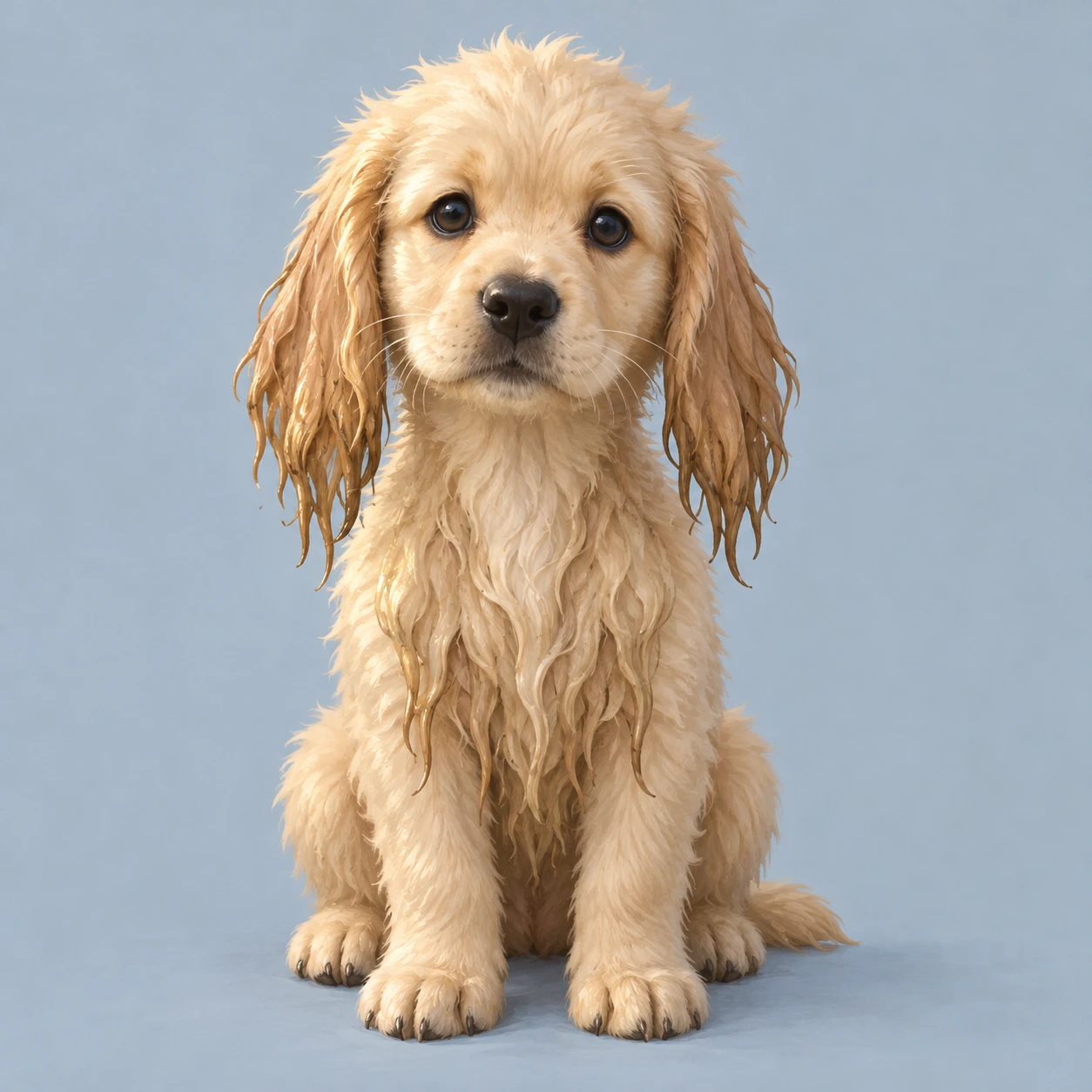
Damp Puppy · Clumped Fur
Gather damp fur into tapering locks to distinguish a puppy’s fluffy crown from its drooping wet ears.
Damp Puppy · Clumped Fur
- Shape & line
- Draw the dry crown with short, rounded outward tufts, then gather the damp ear and chest fur into fewer, longer locks that narrow toward their tips. Let the ear locks hang downward from broad attached roots, and use short interior lines only where neighboring locks separate.
- Color & light
- Keep the coat warm cream, shifting damp areas toward a slightly darker muted ochre. Light the puppy from the upper image-left, placing soft highlights on the image-left faces of the locks and restrained brown shadows in the grooves between them.
- Texture & material
- Paint dry fur with soft broken brush edges and damp fur with smoother, more continuous lock surfaces. Add a few narrow subdued highlights along the wet locks, preserving their soft hair texture rather than turning them into shiny solid spikes.
- Composition
- Keep the puppy large enough for the crown-to-ear texture change to read immediately. Place the longest damp locks along the lower ear edges and below the chest, leaving the eyes, muzzle, and front paws clearly separated from these pointed shapes.
Priority
Prioritize the visible change from fluffy dry tufts to hanging wet locks.
What to avoid & what to check
Avoid uniform fur spikes or a glossy plastic coat.
Check that the damp locks have attached roots, tapered tips, and darker separating grooves.
Exact prompt for this example
SUBJECT
One original small cream-colored puppy sitting upright, with two floppy ears and a gentle closed-mouth expression. Its crown remains fluffy, while both ears and its lower chest are damp; the wet fur gathers into hanging locks attached to those body surfaces.

COMPOSITION
Show the entire puppy in a near-frontal view at its eye level, centered on a plain pale blue-gray background. Separate both ears from the chest silhouette with slim visible background gaps, and keep the hanging chest locks readable above the front paws.

STYLE GUIDE
1. Shape & line
Draw the dry crown with short, rounded outward tufts, then gather the damp ear and chest fur into fewer, longer locks that narrow toward their tips. Let the ear locks hang downward from broad attached roots, and use short interior lines only where neighboring locks separate.

2. Color & light
Keep the coat warm cream, shifting damp areas toward a slightly darker muted ochre. Light the puppy from the upper image-left, placing soft highlights on the image-left faces of the locks and restrained brown shadows in the grooves between them.

3. Texture & material
Paint dry fur with soft broken brush edges and damp fur with smoother, more continuous lock surfaces. Add a few narrow subdued highlights along the wet locks, preserving their soft hair texture rather than turning them into shiny solid spikes.

4. Composition
Keep the puppy large enough for the crown-to-ear texture change to read immediately. Place the longest damp locks along the lower ear edges and below the chest, leaving the eyes, muzzle, and front paws clearly separated from these pointed shapes.

PRIORITY
Preserve the requested identity, count, action, composition and output settings. Apply the style rules within those constraints; a style reference must not replace the subject or layout. Within the style: Prioritize the visible change from fluffy dry tufts to hanging wet locks.

AVOID
Avoid uniform fur spikes or a glossy plastic coat.

OUTPUT
Create one square character illustration in opaque digital paint, with no lettering, captions, logos, or watermark.

SELF-CHECK
Check that the damp locks have attached roots, tapered tips, and darker separating grooves.
Model information comes from image provenance. The same prompt may produce a different result.