Text to imageIllustrationStyle guide
One Bowl · Ellipse Axis Alignment
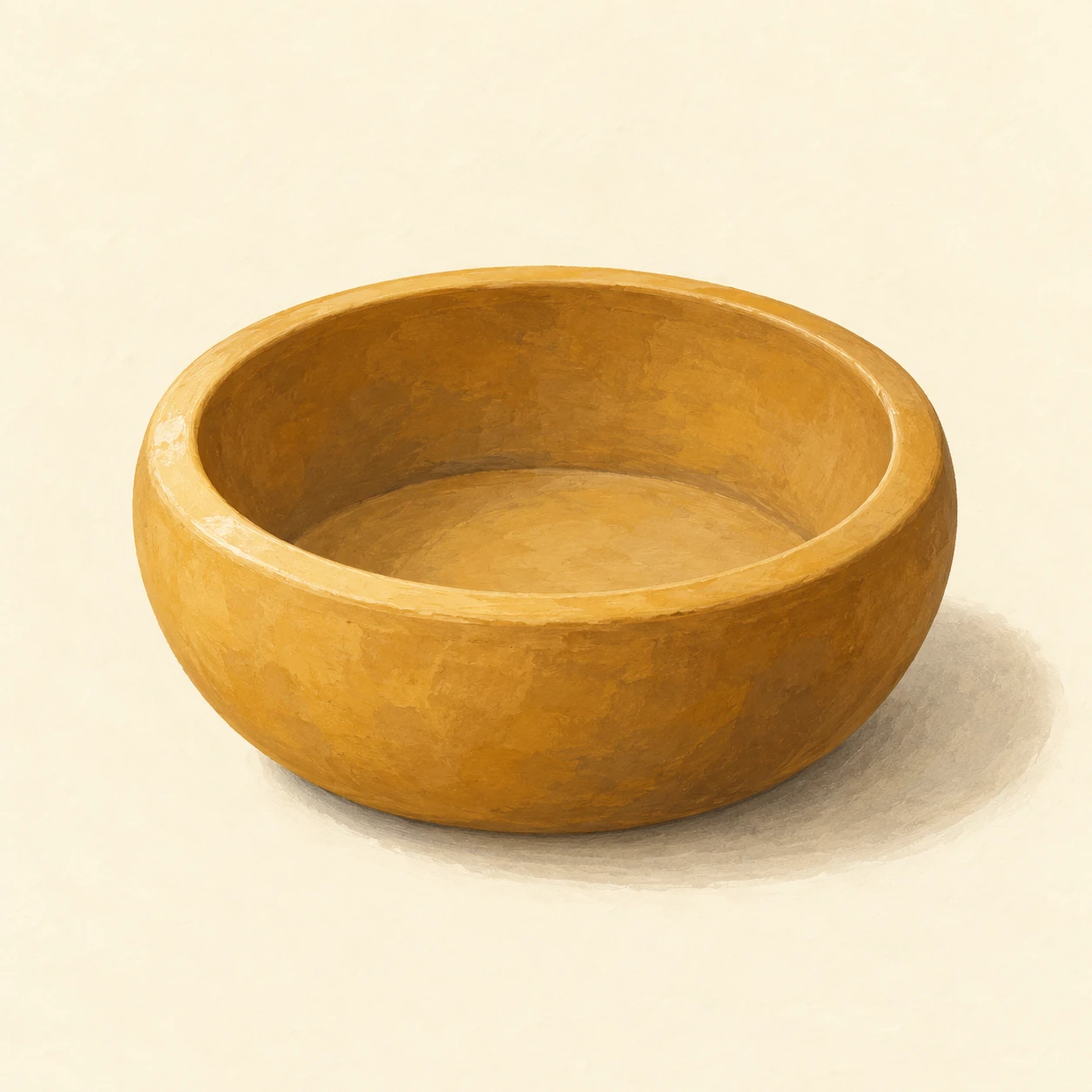
An illustration of a low ochre bowl that aligns the axes of its rim and interior ellipses to make its opening and depth convincing.
One Bowl · Ellipse Axis Alignment
- Shape & line
- Draw the outer rim and inner opening as nested ellipses sharing a horizontal major-axis direction and an image-vertical minor-axis direction. Build the recessed floor as a smaller ellipse on that same vertical centerline, shifted slightly toward the image bottom to establish depth; join the bowl's outer walls smoothly to the rim.
- Color & light
- Use warm ochre for the bowl and pale cream for the background. Light from the image upper left, giving the upper-left rim a pale highlight and the lower-right exterior a darker ochre mass; place a soft cast shadow on the ground toward the image lower right and darken the interior where the wall meets the floor.
- Texture & material
- Render the ceramic with matte gouache-like fills and sparse, broad brush variation. Keep the rim contours clean and continuous, and let subtle pigment unevenness sit inside the painted surfaces so the material texture does not distort the ellipse geometry.
- Composition
- Keep the bowl upright without camera roll, occupying roughly the central half of the canvas with generous cream margins. Separate the front rim, back interior wall, and recessed floor through clear contour and value changes, making the aligned opening the strongest visual feature.
Priority
Prioritize coherent ellipse alignment and a clearly recessed interior.
What to avoid & what to check
Avoid mismatched ellipse tilts, pointed oval ends, and texture that breaks the rim.
Check that all ellipse axes align and the floor reads below the opening.
Exact prompt for this example
SUBJECT
One empty, low, round ochre ceramic bowl with a thick rim and a shallow interior; the inner opening sits within the outer rim, and the recessed interior floor remains visibly below it.

COMPOSITION
Show the whole bowl from an elevated three-quarter viewpoint, centered slightly below the middle of the image. Its opening reads as a wide horizontal ellipse, with enough visible interior to distinguish the back wall from the recessed floor.

STYLE GUIDE
1. Shape & line
Draw the outer rim and inner opening as nested ellipses sharing a horizontal major-axis direction and an image-vertical minor-axis direction. Build the recessed floor as a smaller ellipse on that same vertical centerline, shifted slightly toward the image bottom to establish depth; join the bowl's outer walls smoothly to the rim.

2. Color & light
Use warm ochre for the bowl and pale cream for the background. Light from the image upper left, giving the upper-left rim a pale highlight and the lower-right exterior a darker ochre mass; place a soft cast shadow on the ground toward the image lower right and darken the interior where the wall meets the floor.

3. Texture & material
Render the ceramic with matte gouache-like fills and sparse, broad brush variation. Keep the rim contours clean and continuous, and let subtle pigment unevenness sit inside the painted surfaces so the material texture does not distort the ellipse geometry.

4. Composition
Keep the bowl upright without camera roll, occupying roughly the central half of the canvas with generous cream margins. Separate the front rim, back interior wall, and recessed floor through clear contour and value changes, making the aligned opening the strongest visual feature.

PRIORITY
Preserve the requested identity, count, action, composition and output settings. Apply the style rules within those constraints; a style reference must not replace the subject or layout. Within the style: Prioritize coherent ellipse alignment and a clearly recessed interior.

AVOID
Avoid mismatched ellipse tilts, pointed oval ends, and texture that breaks the rim.

OUTPUT
Create one square illustration with no text, labels, axis guides, or watermark.

SELF-CHECK
Check that all ellipse axes align and the floor reads below the opening.
Model information comes from image provenance. The same prompt may produce a different result.