Text to imageArt stylesStyle guide
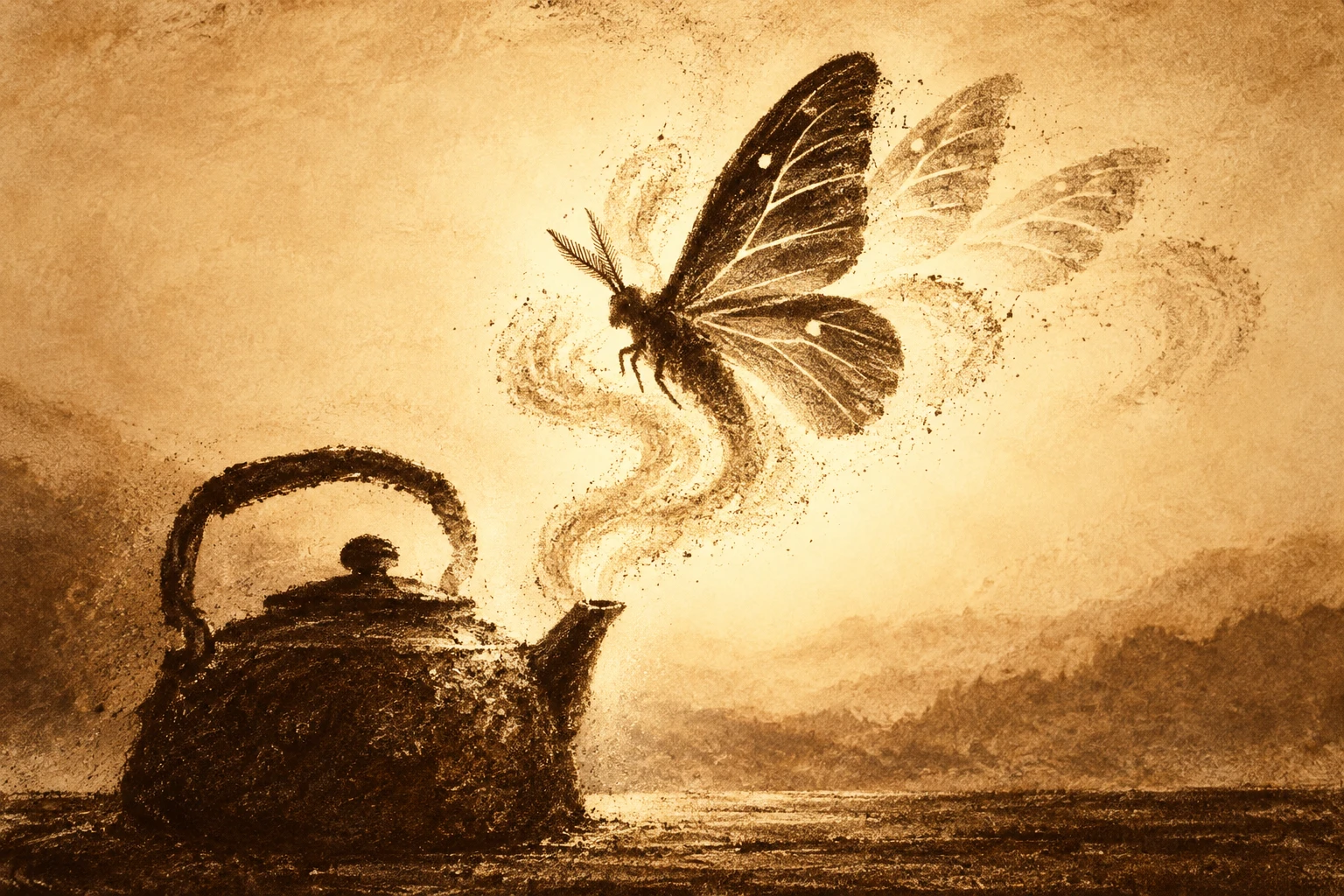
Steam Moth · Backlit Sand Animation
An animation-rendering study using sand density and cleared light to describe motion.
Remix this referenceSteam Moth · Backlit Sand Animation
- Shape & line
- Build one moth and kettle from irregular hand-shaped granular silhouettes, keeping erased wing echoes subordinate.
- Color & light
- Use backlit glass luminosity: dense sand darkens the kettle and near wing, sparse grains form steam, cleared lines brighten veins.
- Texture & material
- Preserve visible grains, finger-swept transitions and matte handmade edges without smooth digital rendering.
- Composition
- Keep one central emergence action surrounded by broad luminous space, with echoes reading as movement rather than separate insects.
Priority
Preserve the distinctive construction and medium first, readable spatial hierarchy second, subtle surface details third.
What to avoid & what to check
Avoid extra subjects, inconsistent repeated geometry, hidden key details, crowded overlaps, unwanted text and watermarks.
Check each style rule against the finished image: visible shape construction, color and light, material treatment, and composition. Preserve the exact subject count and scene requirements.
Exact prompt for this example
SUBJECT
Create a single original animation frame of a large moth emerging from a plume of steam above a quiet kettle. Render it as sand moved by hand across a backlit glass surface: dense grains form the dark kettle and the moth's near wing, thin scattered grains form the steam, and cleared glass creates narrow luminous veins in both wings. Let a few partially erased wing positions curve behind the moth to imply a recent flutter without becoming separate insects. Compose the scene as a broad horizontal frame with generous glowing space around the subject. Preserve irregular granular edges, finger-swept transitions, and a matte handmade feel. No lettering, logos, or watermarks.

COMPOSITION
Broad horizontal sand-animation frame: one large moth emerges above one quiet kettle, with a few faint partially erased wing positions and generous glowing space.

STYLE GUIDE
1. Shape & line
Build one moth and kettle from irregular hand-shaped granular silhouettes, keeping erased wing echoes subordinate.

2. Color & light
Use backlit glass luminosity: dense sand darkens the kettle and near wing, sparse grains form steam, cleared lines brighten veins.

3. Texture & material
Preserve visible grains, finger-swept transitions and matte handmade edges without smooth digital rendering.

4. Composition
Keep one central emergence action surrounded by broad luminous space, with echoes reading as movement rather than separate insects.

PRIORITY
Preserve the requested identity, count, action, composition and output settings. Apply the style rules within those constraints; a style reference must not replace the subject or layout. Within the style: Preserve the distinctive construction and medium first, readable spatial hierarchy second, subtle surface details third.

AVOID
Avoid extra subjects, inconsistent repeated geometry, hidden key details, crowded overlaps, unwanted text and watermarks.

OUTPUT
One finished landscape image, aspect ratio 3:2. No lettering, captions, dimensions, unrelated logos, watermark, border or interface.

SELF-CHECK
Check each style rule against the finished image: visible shape construction, color and light, material treatment, and composition. Preserve the exact subject count and scene requirements.
Model information comes from image provenance. The same prompt may produce a different result.