Text to imageProductStyle guide
One Aluminum Dial · Concentric Brushing Reflections
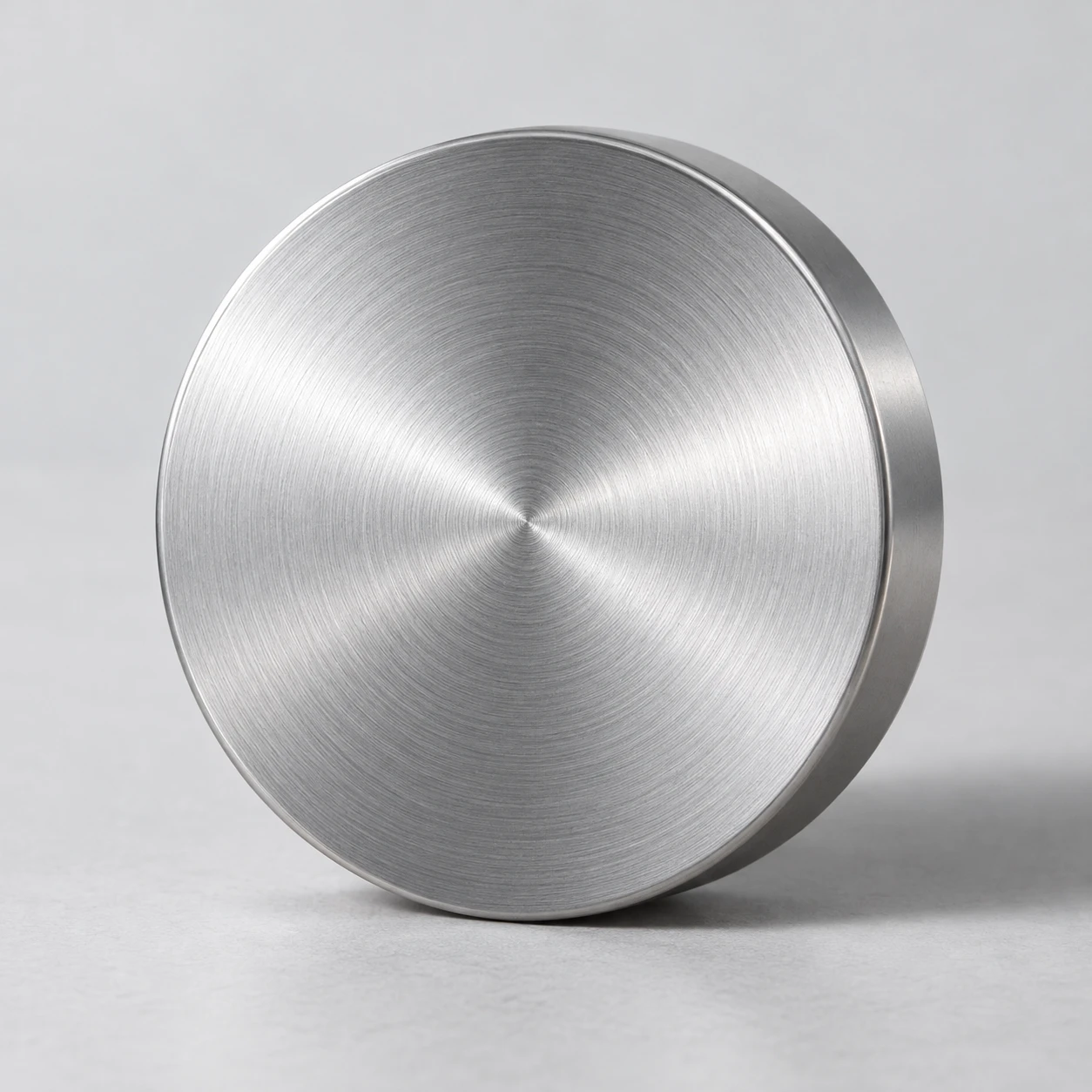
Render an aluminum dial with opposed fan-shaped highlights that reveal its concentric brushed-metal surface.
One Aluminum Dial · Concentric Brushing Reflections
- Shape & line
- Build the dial from a clean circular front and a shallow cylindrical sidewall; use a fine rounded rim to separate these surfaces, and keep the front face flat rather than domed.
- Color & light
- Place the main soft light on image-left. Across the silver front, form two opposed, softly bounded pale highlight fans extending from the center toward the image-left and image-right rim; leave the upper and lower sectors darker so brightness changes around the circle rather than becoming a uniform white disk.
- Texture & material
- Describe the brushed face with delicate, closely spaced concentric arcs that remain visible through both bright and dark sectors. Keep this grain subordinate to the broad highlight fans, without deep grooves; render the sidewall with a smooth lengthwise reflection that stops at the front rim.
- Composition
- Let the front face occupy most of the dial's visible area so the circular grain and opposed fans are easy to compare. Anchor its lower edge to the tabletop with a compact contact shadow, and extend a soft cast shadow toward image-right under the image-left light.
Priority
Prioritize concentric grain and opposed highlight fans on a clearly flat metal face.
What to avoid & what to check
Avoid radial scratches, deep circular grooves, and a mirrorlike reflection of the room.
Check that the arcs share one center and remain readable beneath both highlight fans.
Exact prompt for this example
SUBJECT
One plain silver aluminum control dial: a shallow circular cylinder with a flat front face and a smooth cylindrical sidewall. Concentric brushing covers the front face, with every ring sharing the face's center.

COMPOSITION
Show the entire dial upright on a pale gray tabletop, viewed nearly face-on from slightly above and image-right so its front remains broadly circular and a narrow sidewall appears on image-right. Center it with generous clear margins.

STYLE GUIDE
1. Shape & line
Build the dial from a clean circular front and a shallow cylindrical sidewall; use a fine rounded rim to separate these surfaces, and keep the front face flat rather than domed.

2. Color & light
Place the main soft light on image-left. Across the silver front, form two opposed, softly bounded pale highlight fans extending from the center toward the image-left and image-right rim; leave the upper and lower sectors darker so brightness changes around the circle rather than becoming a uniform white disk.

3. Texture & material
Describe the brushed face with delicate, closely spaced concentric arcs that remain visible through both bright and dark sectors. Keep this grain subordinate to the broad highlight fans, without deep grooves; render the sidewall with a smooth lengthwise reflection that stops at the front rim.

4. Composition
Let the front face occupy most of the dial's visible area so the circular grain and opposed fans are easy to compare. Anchor its lower edge to the tabletop with a compact contact shadow, and extend a soft cast shadow toward image-right under the image-left light.

PRIORITY
Preserve the requested identity, count, action, composition and output settings. Apply the style rules within those constraints; a style reference must not replace the subject or layout. Within the style: Prioritize concentric grain and opposed highlight fans on a clearly flat metal face.

AVOID
Avoid radial scratches, deep circular grooves, and a mirrorlike reflection of the room.

OUTPUT
Create one square photorealistic studio product image with no lettering, numbers, logos, captions, or watermark.

SELF-CHECK
Check that the arcs share one center and remain readable beneath both highlight fans.
Model information comes from image provenance. The same prompt may produce a different result.