Text to imageArt stylesStyle guide
One Lemon · Gouache Scumbling
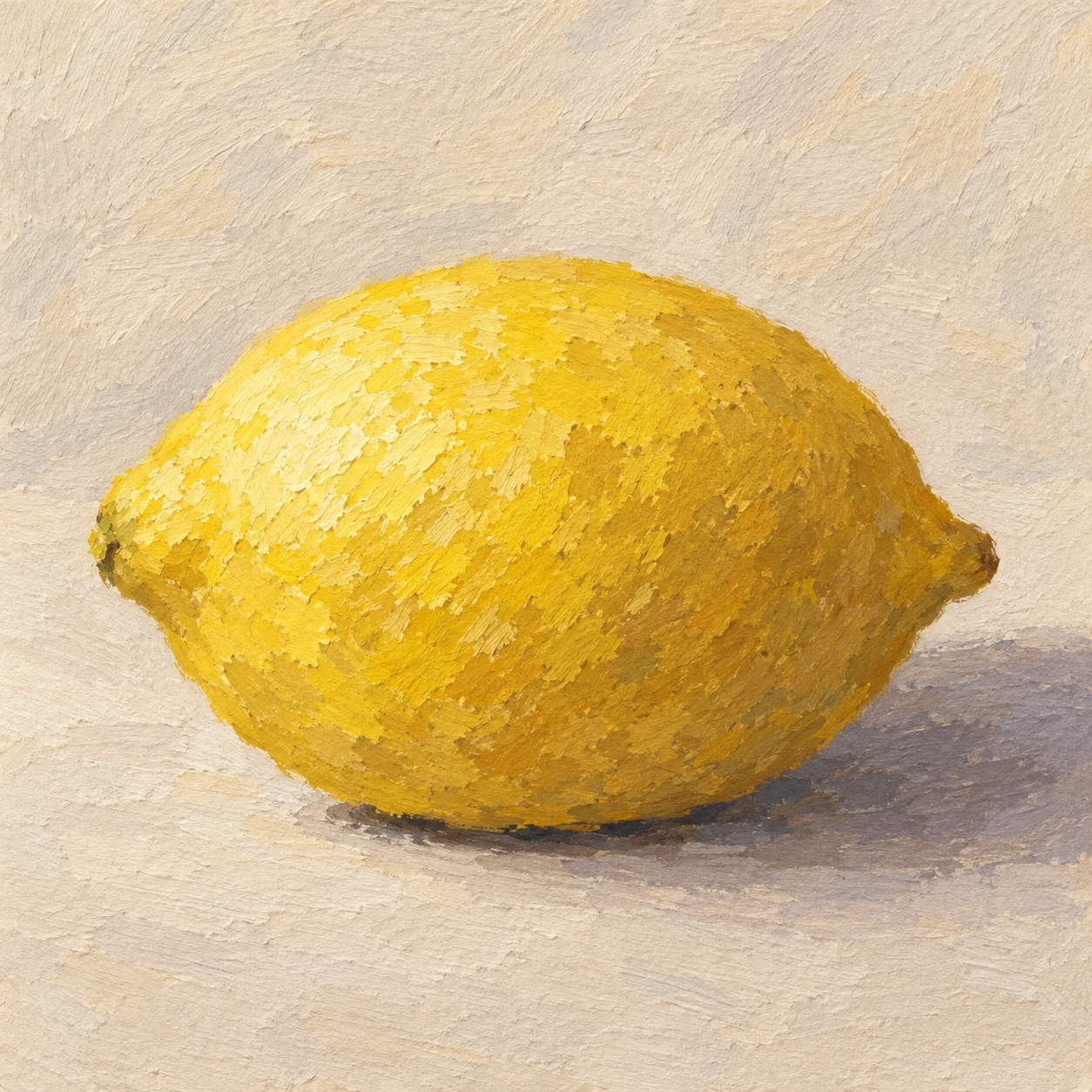
Drag a broken layer of light gouache over a darker base to describe a lemon’s rounded form and textured color layers.
One Lemon · Gouache Scumbling
- Shape & line
- Build the lemon from a broad oval with two restrained pointed ends. Define its silhouette with painted color edges rather than an ink outline, keeping the upper edge clear and allowing a few broken brush marks along the lower edge.
- Color & light
- Lay in a muted ochre base, then place pale lemon-yellow scumbles on the upper image-left surface under light from the upper left. Leave more ochre visible toward the lower image-right side, and extend a soft gray-violet cast shadow from the contact area toward image-right.
- Texture & material
- Drag a lightly loaded, nearly dry brush across the paper tooth so opaque yellow catches the raised grain while irregular gaps reveal the darker base. Let these broken patches curve around the lemon’s volume, joining more closely in the lit area and thinning into scattered marks toward shadow.
- Composition
- Keep the lemon large enough for the broken paint layers to read clearly. Paint the warm off-white background and tabletop in broad, quiet strokes, and use a small dark contact shadow directly beneath the lemon to anchor it without competing with the scumbled surface.
Priority
Make the lighter broken paint layer and the darker base visible together.
What to avoid & what to check
Avoid smooth airbrushed blending or evenly stamped texture.
Check that pale paint catches the paper grain while ochre gaps remain visible across the rounded surface.
Exact prompt for this example
SUBJECT
One whole yellow lemon with a gently elongated body and a small pointed tip at each end, resting horizontally on a plain surface.

COMPOSITION
Use a close, slightly elevated three-quarter view. Center the lemon below the image midpoint, with its long axis running from image-left to image-right and ample quiet space around its silhouette.

STYLE GUIDE
1. Shape & line
Build the lemon from a broad oval with two restrained pointed ends. Define its silhouette with painted color edges rather than an ink outline, keeping the upper edge clear and allowing a few broken brush marks along the lower edge.

2. Color & light
Lay in a muted ochre base, then place pale lemon-yellow scumbles on the upper image-left surface under light from the upper left. Leave more ochre visible toward the lower image-right side, and extend a soft gray-violet cast shadow from the contact area toward image-right.

3. Texture & material
Drag a lightly loaded, nearly dry brush across the paper tooth so opaque yellow catches the raised grain while irregular gaps reveal the darker base. Let these broken patches curve around the lemon’s volume, joining more closely in the lit area and thinning into scattered marks toward shadow.

4. Composition
Keep the lemon large enough for the broken paint layers to read clearly. Paint the warm off-white background and tabletop in broad, quiet strokes, and use a small dark contact shadow directly beneath the lemon to anchor it without competing with the scumbled surface.

PRIORITY
Preserve the requested identity, count, action, composition and output settings. Apply the style rules within those constraints; a style reference must not replace the subject or layout. Within the style: Make the lighter broken paint layer and the darker base visible together.

AVOID
Avoid smooth airbrushed blending or evenly stamped texture.

OUTPUT
Create one square image of a gouache painting on textured paper, with no text, labels, signature, or border.

SELF-CHECK
Check that pale paint catches the paper grain while ochre gaps remain visible across the rounded surface.
Model information comes from image provenance. The same prompt may produce a different result.