Text to imageProductStyle guide
Coral Silicone Soap Case · Water Beading
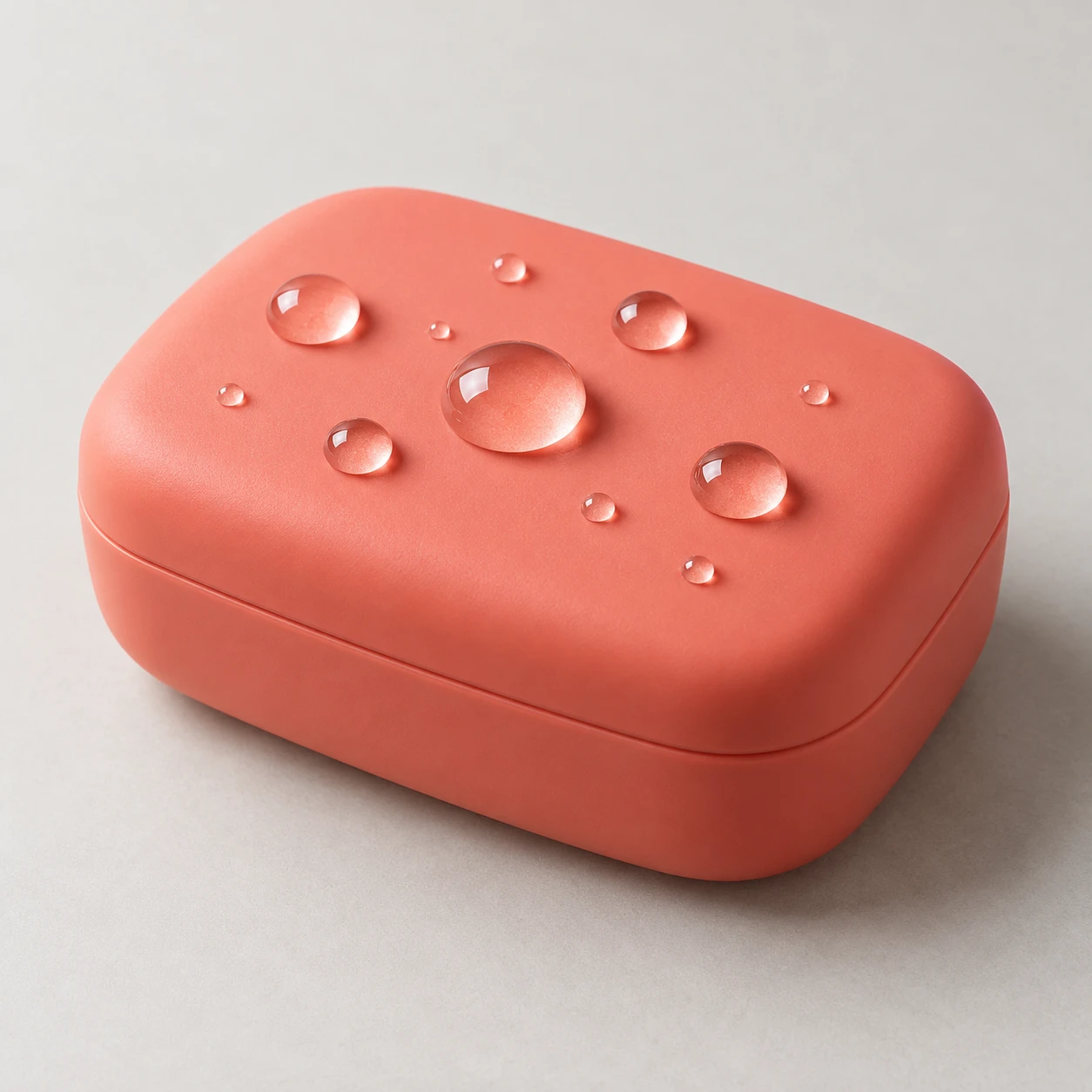
A product image showing rounded water beads on matte silicone through highlights, refracted surface color, and small contact shadows.
Coral Silicone Soap Case · Water Beading
- Shape & line
- Build the case as a low rounded rectangle with softly curved corners and a continuous shallow seam below the lid; draw each water bead as a distinct convex dome with a clear footprint against the lid, varying its size without merging the beads into a puddle.
- Color & light
- Place a broad soft key light at image-upper-left so the coral lid is brighter than the image-right wall. Give each larger bead a compact white reflection on its upper-left side and a darker lower-right crescent, with a small cast shadow extending from its contact footprint toward image-lower-right.
- Texture & material
- Render the silicone as smooth matte material with broad subdued shading. Keep the water glossy and transparent: let coral remain visible through each bead, slightly shift and concentrate that color inside the curved dome, and sharpen the liquid reflections against the quiet silicone surface.
- Composition
- Keep the entire case and its soft tabletop shadow inside the frame. Leave open coral areas between the droplets so their raised profiles remain readable, and hold the lid and beads in clear focus while the plain background stays visually quiet.
Priority
Make the contrast between raised glossy water beads and matte silicone immediately readable.
What to avoid & what to check
Avoid opaque pearl-like droplets, continuous wet films, and uniform glowing outlines.
Check that each large bead touches the lid and shares the same upper-left light direction.
Exact prompt for this example
SUBJECT
One closed coral silicone travel soap case with a rounded rectangular body and a shallow lid seam. Several separate clear water beads rest directly on its upper lid, with the largest beads near the image-center and smaller beads scattered around them.

COMPOSITION
Show the case from an elevated three-quarter view so its broad upper lid, front wall, and image-right wall are readable. Center it on a pale warm-gray tabletop with generous margins; keep the droplets large enough to inspect.

STYLE GUIDE
1. Shape & line
Build the case as a low rounded rectangle with softly curved corners and a continuous shallow seam below the lid; draw each water bead as a distinct convex dome with a clear footprint against the lid, varying its size without merging the beads into a puddle.

2. Color & light
Place a broad soft key light at image-upper-left so the coral lid is brighter than the image-right wall. Give each larger bead a compact white reflection on its upper-left side and a darker lower-right crescent, with a small cast shadow extending from its contact footprint toward image-lower-right.

3. Texture & material
Render the silicone as smooth matte material with broad subdued shading. Keep the water glossy and transparent: let coral remain visible through each bead, slightly shift and concentrate that color inside the curved dome, and sharpen the liquid reflections against the quiet silicone surface.

4. Composition
Keep the entire case and its soft tabletop shadow inside the frame. Leave open coral areas between the droplets so their raised profiles remain readable, and hold the lid and beads in clear focus while the plain background stays visually quiet.

PRIORITY
Preserve the requested identity, count, action, composition and output settings. Apply the style rules within those constraints; a style reference must not replace the subject or layout. Within the style: Make the contrast between raised glossy water beads and matte silicone immediately readable.

AVOID
Avoid opaque pearl-like droplets, continuous wet films, and uniform glowing outlines.

OUTPUT
One square product-reference image in a realistic studio-photography medium, with no lettering, labels, logos, or watermark.

SELF-CHECK
Check that each large bead touches the lid and shares the same upper-left light direction.
Model information comes from image provenance. The same prompt may produce a different result.