Text to imageCharacterStyle guide
Grinning Raccoon · Cheek-Driven Lower-Lid Lift
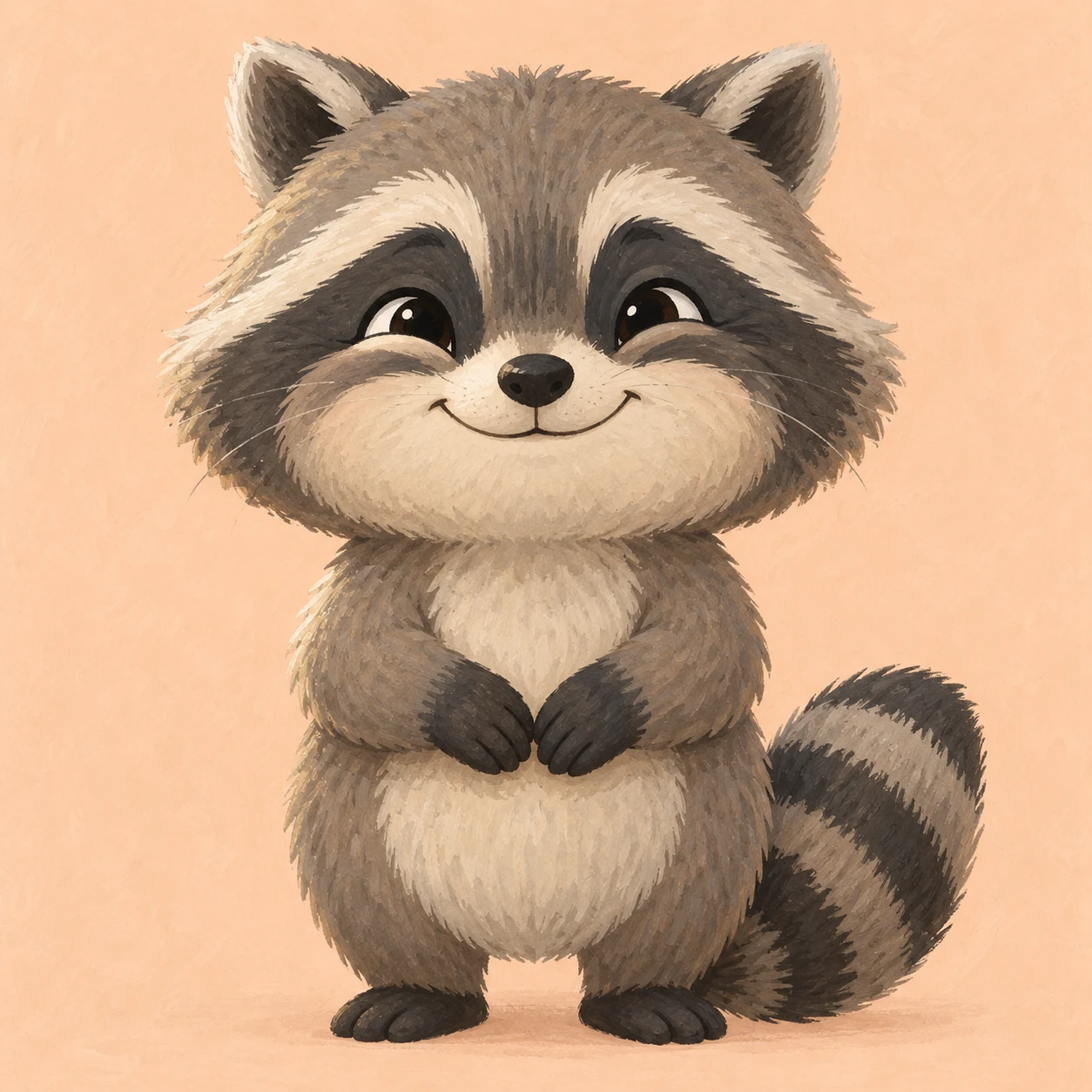
Connect raised mouth corners, lifted cheeks, and upward-curving lower lids to give a raccoon a broad, readable grin.
Grinning Raccoon · Cheek-Driven Lower-Lid Lift
- Shape & line
- Draw the closed mouth as a shallow upward curve with raised corners, then swell each cheek directly beneath its eye. Curve the lower eyelids upward into the eye openings so the lifted cheeks visibly narrow both eyes from below; retain the upper eye contours and small visible pupils.
- Color & light
- Use warm gray fur, a charcoal eye mask, and a pale cream muzzle. Light the face softly from image-upper-left, leaving gentle shadows beneath the rounded cheeks; keep the eyelid lines darker than the mask so their upward curvature remains clear.
- Texture & material
- Render the character as a matte gouache illustration with opaque color shapes and lightly visible brush grain. Add a few short fur strokes along the outer cheeks and tail, while keeping the eye openings and mouth corners smooth enough to preserve the expression.
- Composition
- Center the frontal face above a compact body on a plain pale peach background. Separate the paws from the cheek silhouette and leave open space around both ears; keep the striped tail low on image-right so the paired cheek-and-lid shapes remain the focal point.
Priority
Make the cheeks visibly lift the lower eyelids into a cheerful squint.
What to avoid & what to check
Avoid lowering the upper lids into a sleepy expression or opening the mouth.
Check that both raised mouth corners lead into lifted cheeks beneath upward-curving lower lids.
Exact prompt for this example
SUBJECT
One original anthropomorphic raccoon with a rounded head, small triangular ears, a dark eye mask, and a striped tail. It stands with its paws loosely gathered at its belly and smiles with its mouth closed; both cheeks rise beneath the eyes and visibly lift the lower eyelids.

COMPOSITION
Show the entire character facing directly forward in a square frame, with the head large enough to read the cheek-to-eyelid relationship. Keep both eyes unobstructed and place the tail beside the body on image-right.

STYLE GUIDE
1. Shape & line
Draw the closed mouth as a shallow upward curve with raised corners, then swell each cheek directly beneath its eye. Curve the lower eyelids upward into the eye openings so the lifted cheeks visibly narrow both eyes from below; retain the upper eye contours and small visible pupils.

2. Color & light
Use warm gray fur, a charcoal eye mask, and a pale cream muzzle. Light the face softly from image-upper-left, leaving gentle shadows beneath the rounded cheeks; keep the eyelid lines darker than the mask so their upward curvature remains clear.

3. Texture & material
Render the character as a matte gouache illustration with opaque color shapes and lightly visible brush grain. Add a few short fur strokes along the outer cheeks and tail, while keeping the eye openings and mouth corners smooth enough to preserve the expression.

4. Composition
Center the frontal face above a compact body on a plain pale peach background. Separate the paws from the cheek silhouette and leave open space around both ears; keep the striped tail low on image-right so the paired cheek-and-lid shapes remain the focal point.

PRIORITY
Preserve the requested identity, count, action, composition and output settings. Apply the style rules within those constraints; a style reference must not replace the subject or layout. Within the style: Make the cheeks visibly lift the lower eyelids into a cheerful squint.

AVOID
Avoid lowering the upper lids into a sleepy expression or opening the mouth.

OUTPUT
Create one square character illustration with no lettering, captions, logos, or watermark.

SELF-CHECK
Check that both raised mouth corners lead into lifted cheeks beneath upward-curving lower lids.
Model information comes from image provenance. The same prompt may produce a different result.