Text to imageProductStyle guide
One Glass Tumbler · Dark-Field Edge Lighting
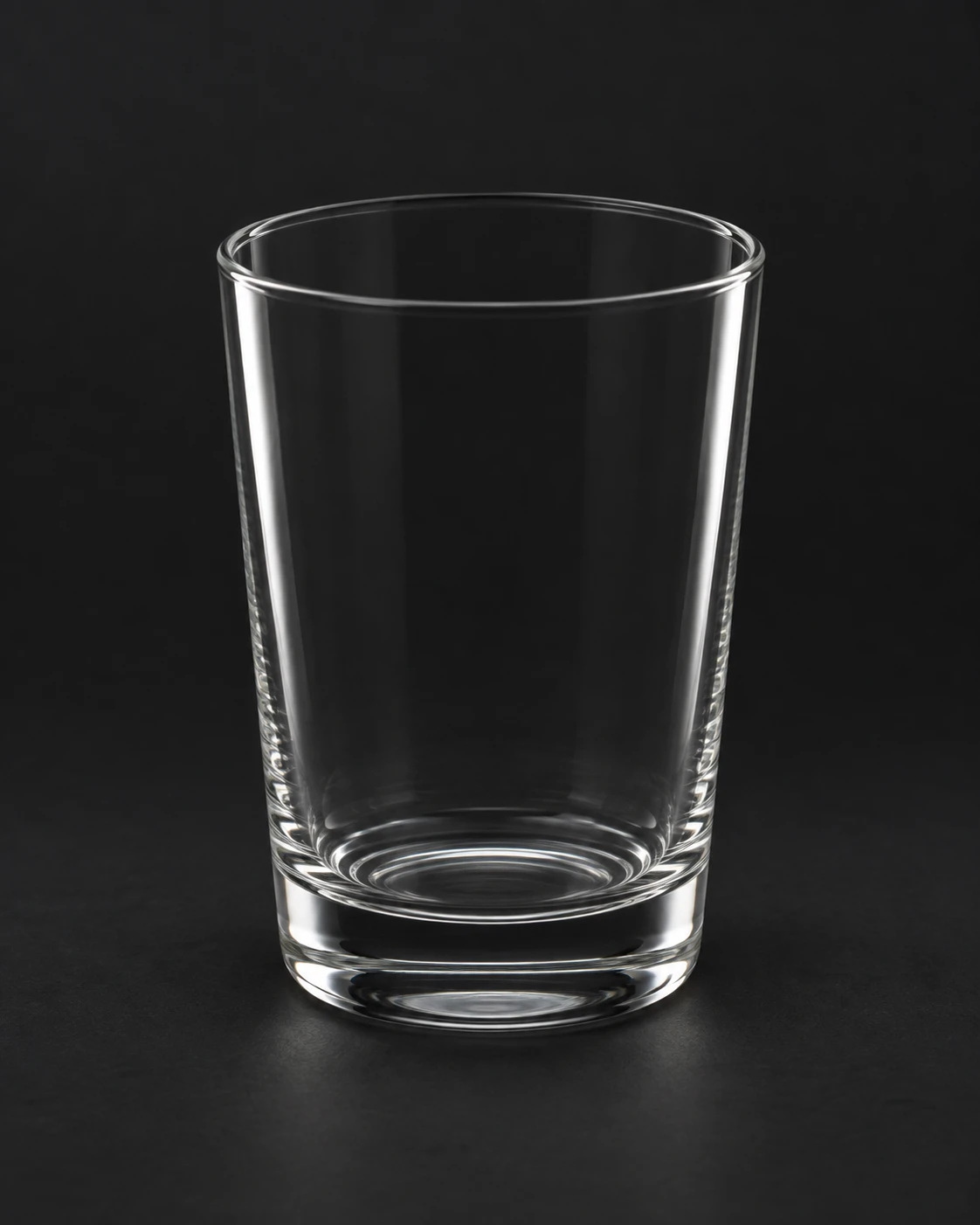
A product image that reveals a clear tumbler’s contour and thickness through bright side reflections against a dark background.
One Glass Tumbler · Dark-Field Edge Lighting
- Shape & line
- Build the tumbler from two gently tapering side contours joined by a shallow elliptical rim and a rounded base. Show the inner rim as a second closely nested ellipse, keeping the rear arc lighter and less prominent so the opening reads as hollow.
- Color & light
- Use dark-field lighting: place tall light sources outside the frame on image-left and image-right, slightly behind the tumbler. Their reflections must form bright narrow strips along the corresponding outer edges, while the broad center remains dark and transparent against the charcoal background.
- Texture & material
- Render smooth, colorless glass with crisp reflections rather than a milky surface. Let the side strips bend around the rounded rim and broaden into short bright arcs at the thick base; retain a darker gap between the base’s upper and lower edges to make its thickness visible.
- Composition
- Keep both illuminated side contours fully inside the frame and separate from the background. Give the tumbler roughly two-thirds of the image height, preserve clear space above the rim, and anchor the base with a small soft contact shadow directly beneath it.
Priority
Prioritize bright edge reflections that make the transparent vessel readable against darkness.
What to avoid & what to check
Avoid an opaque center, glowing outlines, and a broad frontal highlight.
Check that both side reflections follow the glass contours and the hollow opening remains visible.
Exact prompt for this example
SUBJECT
One empty, clear, straight-sided glass tumbler with a rounded rim and a visibly thick base, standing upright on a matte charcoal surface.

COMPOSITION
Use a slightly elevated three-quarter view that reveals the opening and base. Center the entire tumbler against a seamless dark background, with generous space around its silhouette.

STYLE GUIDE
1. Shape & line
Build the tumbler from two gently tapering side contours joined by a shallow elliptical rim and a rounded base. Show the inner rim as a second closely nested ellipse, keeping the rear arc lighter and less prominent so the opening reads as hollow.

2. Color & light
Use dark-field lighting: place tall light sources outside the frame on image-left and image-right, slightly behind the tumbler. Their reflections must form bright narrow strips along the corresponding outer edges, while the broad center remains dark and transparent against the charcoal background.

3. Texture & material
Render smooth, colorless glass with crisp reflections rather than a milky surface. Let the side strips bend around the rounded rim and broaden into short bright arcs at the thick base; retain a darker gap between the base’s upper and lower edges to make its thickness visible.

4. Composition
Keep both illuminated side contours fully inside the frame and separate from the background. Give the tumbler roughly two-thirds of the image height, preserve clear space above the rim, and anchor the base with a small soft contact shadow directly beneath it.

PRIORITY
Preserve the requested identity, count, action, composition and output settings. Apply the style rules within those constraints; a style reference must not replace the subject or layout. Within the style: Prioritize bright edge reflections that make the transparent vessel readable against darkness.

AVOID
Avoid an opaque center, glowing outlines, and a broad frontal highlight.

OUTPUT
Create one photorealistic studio product image in a 4:5 portrait aspect ratio, with no text, logos, or watermark.

SELF-CHECK
Check that both side reflections follow the glass contours and the hollow opening remains visible.
Model information comes from image provenance. The same prompt may produce a different result.