Text to imageArt stylesStyle guide
One Carrot · Flat Felt Appliqué
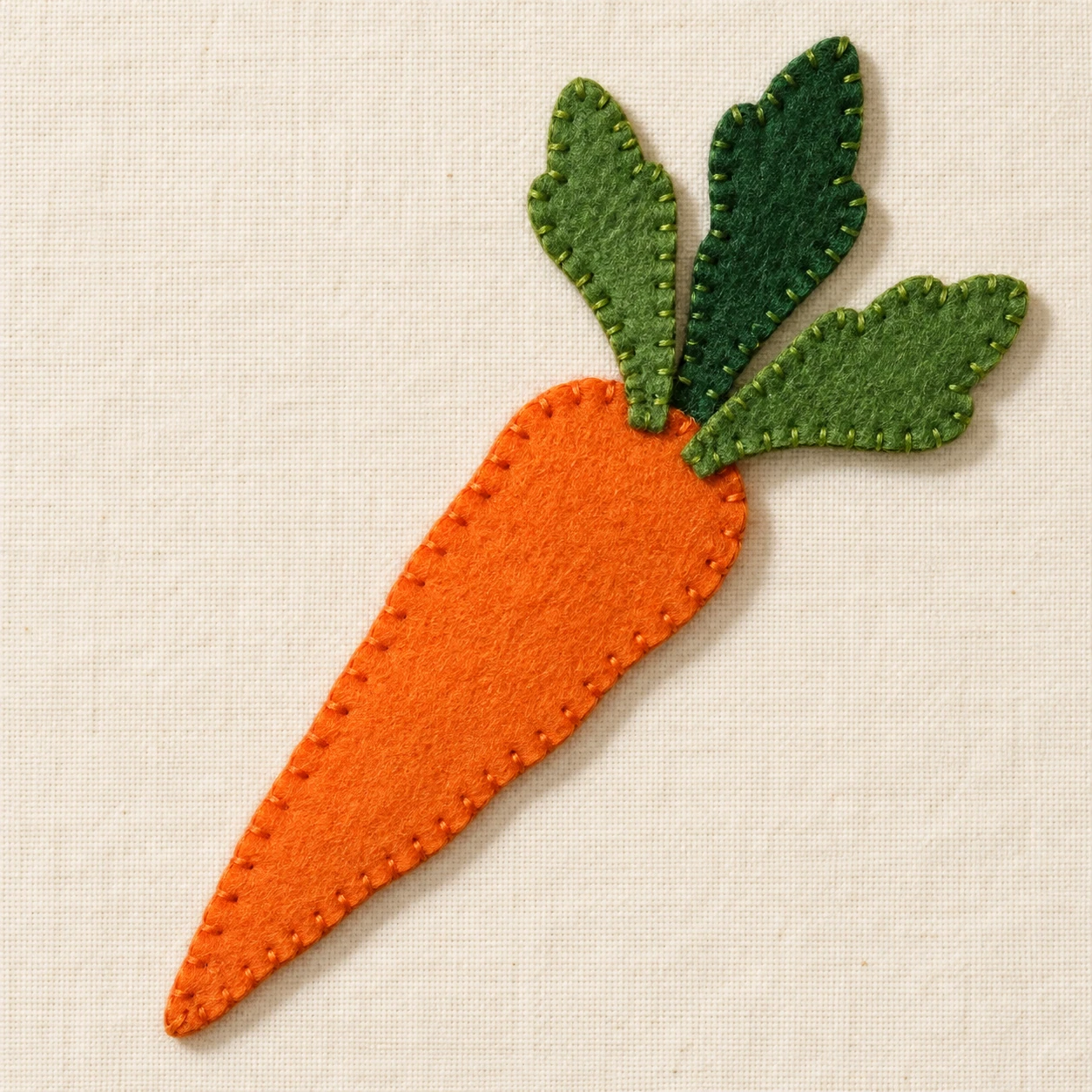
A flat appliqué study of one carrot built from cut felt pieces and blanket-stitched edges.
One Carrot · Flat Felt Appliqué
- Shape & line
- Construct the root from one flat, gently irregular tapered felt shape and each leaf from a separate elongated cutout. Follow the exposed edges with visible blanket stitches: short perpendicular thread bars linked by a continuous thread along the rim.
- Color & light
- Keep the root a broad flat orange and alternate the leaves between medium and dark green against warm cream fabric. Light from image upper left so raised felt edges cast thin, soft shadows toward lower right, especially where leaf bases overlap the root.
- Texture & material
- Give the felt a dense matte fiber surface and the backing a quieter woven texture. Keep every piece thin and unstuffed; show softly fuzzy cut edges and slightly raised thread rather than rounded plush volume.
- Composition
- Let the carrot occupy roughly two thirds of the panel's diagonal. Spread the three leaves into separate readable silhouettes at image upper right, preserve cream gaps between their tips, and leave open fabric around the pointed root at lower left.
Priority
Make the cut felt layers and blanket-stitched edges immediately readable.
What to avoid & what to check
Avoid inflated plush forms, glossy surfaces, and painted shading inside the felt pieces.
Check that one carrot reads clearly and that overlap shadows fall toward image lower right.
Exact prompt for this example
SUBJECT
Show exactly one carrot made as flat felt appliqué on cream fabric. One tapered orange root joins three green felt leaves; the leaf bases overlap the root's broad upper end.

COMPOSITION
Use a close overhead view of a square fabric panel. Place the carrot diagonally, with its pointed root toward image lower left and its leaves toward image upper right. Keep the entire motif visible with generous fabric margins.

STYLE GUIDE
1. Shape & line
Construct the root from one flat, gently irregular tapered felt shape and each leaf from a separate elongated cutout. Follow the exposed edges with visible blanket stitches: short perpendicular thread bars linked by a continuous thread along the rim.

2. Color & light
Keep the root a broad flat orange and alternate the leaves between medium and dark green against warm cream fabric. Light from image upper left so raised felt edges cast thin, soft shadows toward lower right, especially where leaf bases overlap the root.

3. Texture & material
Give the felt a dense matte fiber surface and the backing a quieter woven texture. Keep every piece thin and unstuffed; show softly fuzzy cut edges and slightly raised thread rather than rounded plush volume.

4. Composition
Let the carrot occupy roughly two thirds of the panel's diagonal. Spread the three leaves into separate readable silhouettes at image upper right, preserve cream gaps between their tips, and leave open fabric around the pointed root at lower left.

PRIORITY
Preserve the requested identity, count, action, composition and output settings. Apply the style rules within those constraints; a style reference must not replace the subject or layout. Within the style: Make the cut felt layers and blanket-stitched edges immediately readable.

AVOID
Avoid inflated plush forms, glossy surfaces, and painted shading inside the felt pieces.

OUTPUT
Produce one square 1:1 image, with no lettering, labels, watermark, or decorative border.

SELF-CHECK
Check that one carrot reads clearly and that overlap shadows fall toward image lower right.
Model information comes from image provenance. The same prompt may produce a different result.