Text to imageArt stylesStyle guide
One Chestnut · Velvety Drypoint Lines
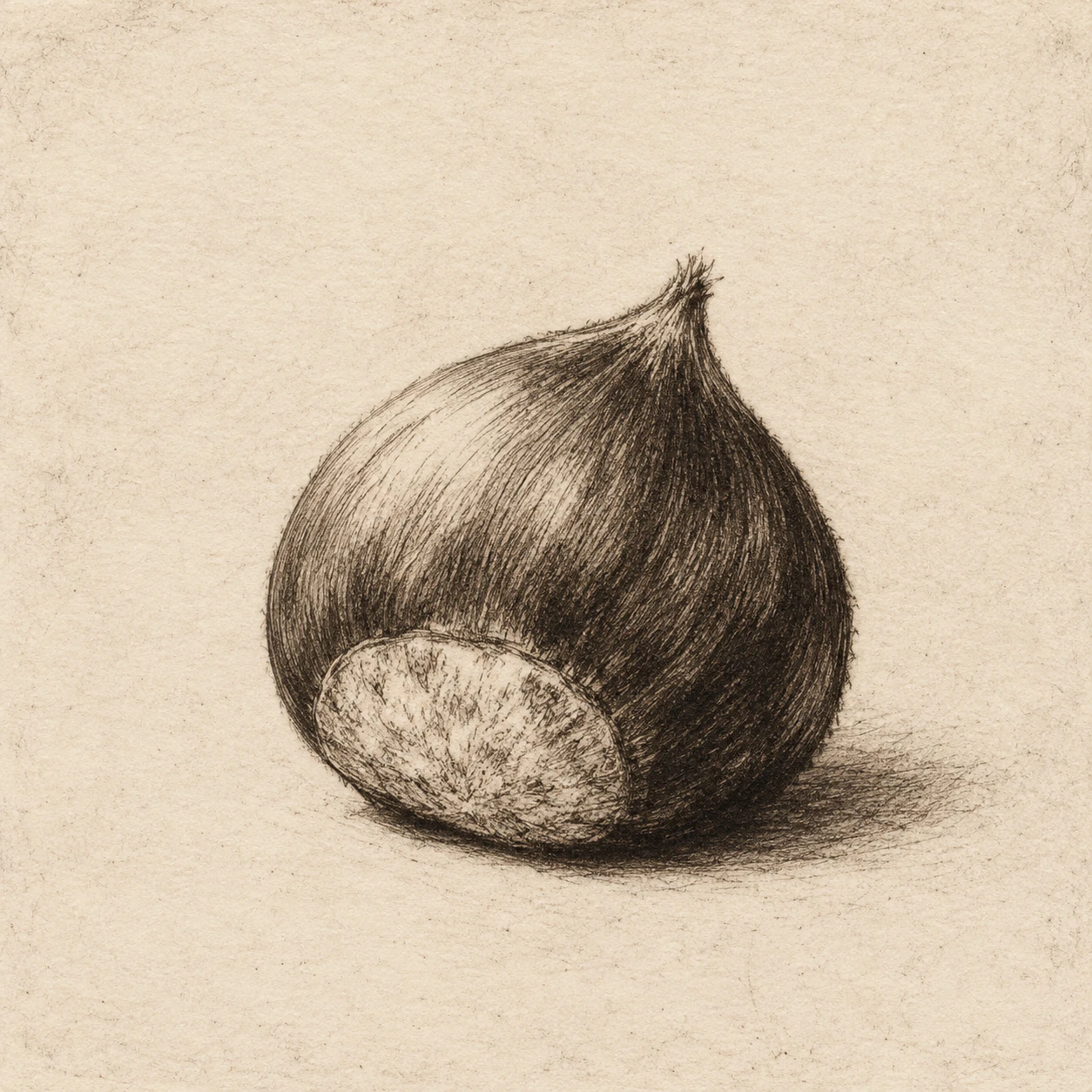
A print of one chestnut demonstrating drypoint burr through dark, softly feathered lines that follow its rounded shell.
One Chestnut · Velvety Drypoint Lines
- Shape & line
- Build the shell with curved incised lines that bend around its volume; let selected darker strokes carry soft, ragged ink fringes from the drypoint burr, while lighter strokes remain fine and distinct.
- Color & light
- Use warm black ink and exposed ivory paper throughout; place the light on the image's upper left, leaving that side sparsely lined and gathering overlapping dark strokes along the lower-right shell, with a short shadow extending rightward from the base.
- Texture & material
- Make the shell's darkest passages look velvety through ink caught beside the engraved strokes, rather than through a uniform blur; render the pale scar with sparse short marks and retain a faint, uneven wiped plate tone across the surrounding paper.
- Composition
- Keep the entire chestnut and its attached ground shadow inside the frame; concentrate the richest burr texture within the lower-right shell and preserve open paper above and to the left so the rounded silhouette and pale scar read immediately.
Priority
Prioritize the contrast between fine incised lines and velvety burr-loaded strokes.
What to avoid & what to check
Avoid uniform fuzzy outlines, charcoal smudging, and glossy photographic highlights.
Check that the dark softness follows individual strokes and that the pale scar remains clearly readable.
Exact prompt for this example
SUBJECT
Depict exactly one chestnut with a rounded, slightly pointed shell and one broad, pale attachment scar on its lower front surface.

COMPOSITION
Use a close three-quarter view, with the pointed tip toward the upper right of the image and the pale scar facing the viewer. Center the chestnut slightly below the midpoint and leave generous paper around it.

STYLE GUIDE
1. Shape & line
Build the shell with curved incised lines that bend around its volume; let selected darker strokes carry soft, ragged ink fringes from the drypoint burr, while lighter strokes remain fine and distinct.

2. Color & light
Use warm black ink and exposed ivory paper throughout; place the light on the image's upper left, leaving that side sparsely lined and gathering overlapping dark strokes along the lower-right shell, with a short shadow extending rightward from the base.

3. Texture & material
Make the shell's darkest passages look velvety through ink caught beside the engraved strokes, rather than through a uniform blur; render the pale scar with sparse short marks and retain a faint, uneven wiped plate tone across the surrounding paper.

4. Composition
Keep the entire chestnut and its attached ground shadow inside the frame; concentrate the richest burr texture within the lower-right shell and preserve open paper above and to the left so the rounded silhouette and pale scar read immediately.

PRIORITY
Preserve the requested identity, count, action, composition and output settings. Apply the style rules within those constraints; a style reference must not replace the subject or layout. Within the style: Prioritize the contrast between fine incised lines and velvety burr-loaded strokes.

AVOID
Avoid uniform fuzzy outlines, charcoal smudging, and glossy photographic highlights.

OUTPUT
Create one square image of a drypoint intaglio print on warm ivory paper, with no lettering, numbers, signature, or watermark.

SELF-CHECK
Check that the dark softness follows individual strokes and that the pale scar remains clearly readable.
Model information comes from image provenance. The same prompt may produce a different result.