Text to imageArt stylesStyle guide
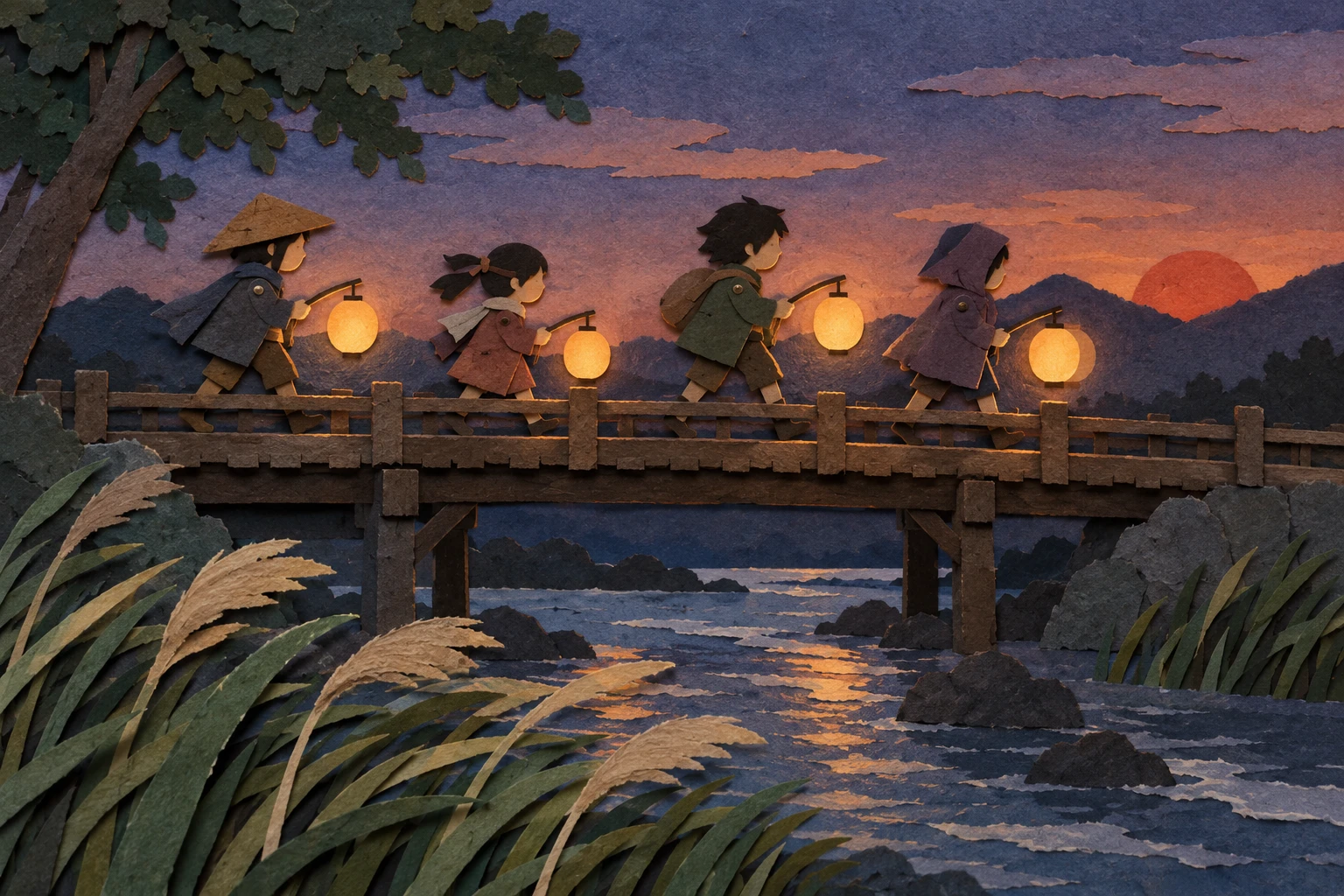
Riverside Lantern Procession · Cut-Paper Animation
Build an animation still from layered paper edges, shallow shadows, and deliberate registration shifts.
Remix this referenceRiverside Lantern Procession · Cut-Paper Animation
- Shape & line
- Use visibly separate cut-paper shapes with simple hinged walking limbs and broad overlapping depth planes.
- Color & light
- Use muted dusk paper colors and warm translucent lantern circles that illuminate only nearby paper.
- Texture & material
- Show fibrous cut edges, narrow cast shadows and tiny visible registration offsets in one reed layer and one lantern glow.
- Composition
- Separate exactly four bearers along one bridge with readable river and reed layers beneath them.
Priority
Preserve the distinctive construction and medium first, readable spatial hierarchy second, subtle surface details third.
What to avoid & what to check
Avoid extra subjects, inconsistent repeated geometry, hidden key details, crowded overlaps, unwanted text and watermarks.
Check each style rule against the finished image: visible shape construction, color and light, material treatment, and composition. Preserve the exact subject count and scene requirements.
Exact prompt for this example
SUBJECT
Create a single frame from an original handmade cut-paper animation: four small lantern bearers cross a riverside footbridge at dusk while reeds bend in the wind below. Construct the figures, bridge, reeds, river, and sky as visibly separate pieces of dyed paper. Give every cut edge a slight fiber roughness and a narrow cast shadow so the layering is legible. Offset one reed layer and one lantern glow by a tiny amount, as if the pieces shifted between photographed frames, while keeping the characters and bridge readable. Use simple hinged shapes for walking limbs and broad overlapping planes for depth; the scene should feel like a physical animation stage photographed from above. Let the warm translucent lantern circles illuminate nearby paper only. Avoid smooth digital gradients, dimensional rendering, captions, lettering, logos, and watermarks.

COMPOSITION
Exactly four lantern bearers crossing one footbridge, reeds below. Physical dyed-paper animation stage photographed from above; all four figures distinct.

STYLE GUIDE
1. Shape & line
Use visibly separate cut-paper shapes with simple hinged walking limbs and broad overlapping depth planes.

2. Color & light
Use muted dusk paper colors and warm translucent lantern circles that illuminate only nearby paper.

3. Texture & material
Show fibrous cut edges, narrow cast shadows and tiny visible registration offsets in one reed layer and one lantern glow.

4. Composition
Separate exactly four bearers along one bridge with readable river and reed layers beneath them.

PRIORITY
Preserve the requested identity, count, action, composition and output settings. Apply the style rules within those constraints; a style reference must not replace the subject or layout. Within the style: Preserve the distinctive construction and medium first, readable spatial hierarchy second, subtle surface details third.

AVOID
Avoid extra subjects, inconsistent repeated geometry, hidden key details, crowded overlaps, unwanted text and watermarks.

OUTPUT
One finished landscape image, aspect ratio 3:2. No lettering, captions, dimensions, unrelated logos, watermark, border or interface.

SELF-CHECK
Check each style rule against the finished image: visible shape construction, color and light, material treatment, and composition. Preserve the exact subject count and scene requirements.
Model information comes from image provenance. The same prompt may produce a different result.