Text to imagePortraitStyle guide
Piano Tuner · Mirror-Relay Portrait
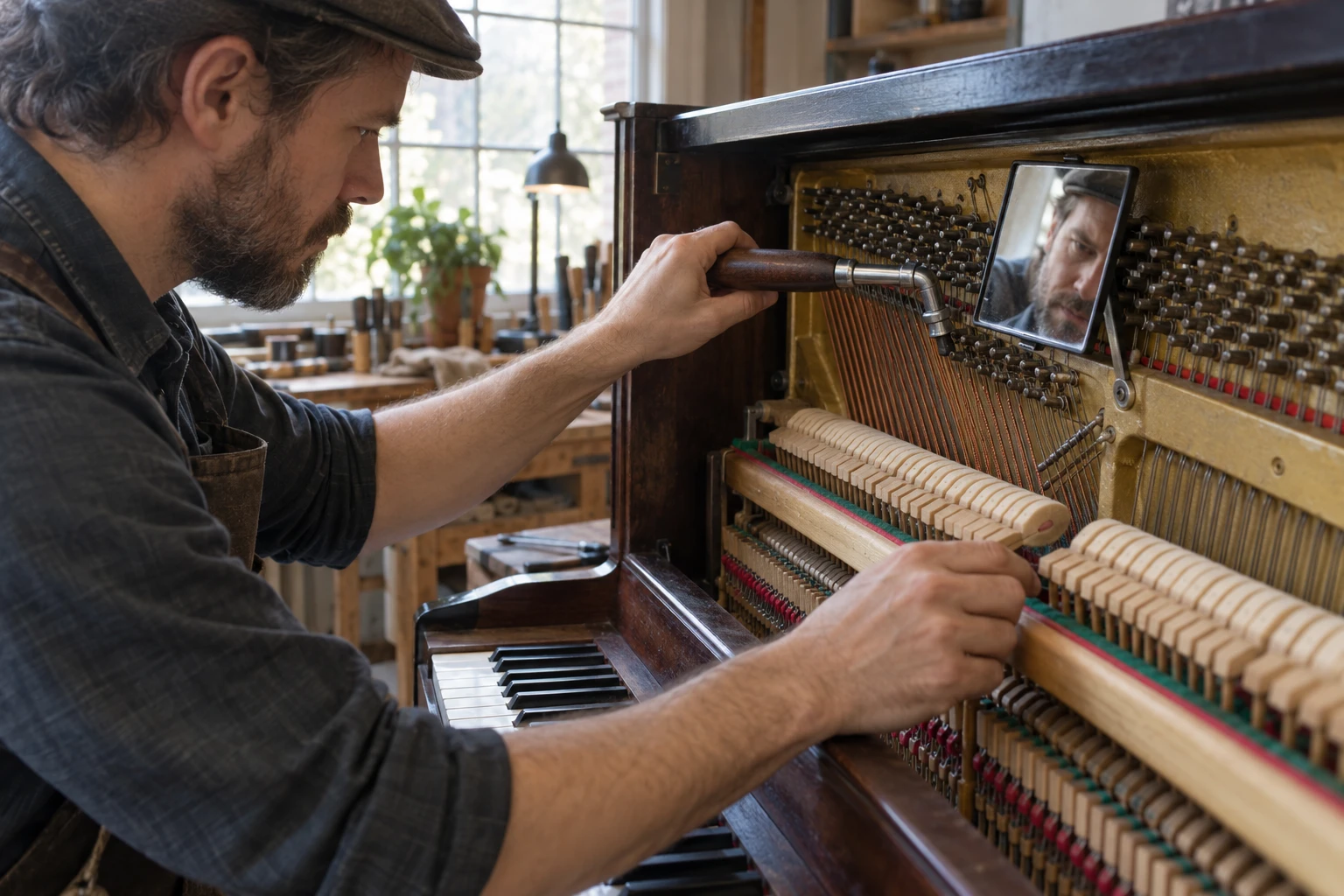
Use a small mirror inside a piano to connect the subject's face and working hands in one photograph.
Remix this referencePiano Tuner · Mirror-Relay Portrait
- Shape & line
- Keep hands, tuning tool, piano mechanism and mirror geometry physically plausible, with one coherent face reflection.
- Color & light
- Use broad side-window light to separate face, hands, keys and exposed strings with believable tones.
- Texture & material
- Preserve modest workshop wear, fine mechanical detail and natural skin with photographic depth of field.
- Composition
- Lead from sharp foreground hands into a small mirror face reflection whose position is spatially consistent, without composite effects.
Priority
Preserve the distinctive construction and medium first, readable spatial hierarchy second, subtle surface details third.
What to avoid & what to check
Avoid extra subjects, inconsistent repeated geometry, hidden key details, crowded overlaps, unwanted text and watermarks.
Check each style rule against the finished image: visible shape construction, color and light, material treatment, and composition. Preserve the exact subject count and scene requirements.
Exact prompt for this example
SUBJECT
Make a realistic environmental portrait of one original piano tuner at work on an upright piano. Frame their hands and tuning tool sharply in the foreground while a small inspection mirror, physically propped inside the open instrument, reflects their concentrated face. Align the reflection so the viewer can understand where the face sits relative to the hands; avoid an impossible or duplicated reflection. Light the scene with a broad side window that gives the face, hands, keys, and exposed strings distinct but believable tones. Preserve the workshop's modest wear and fine mechanical detail without making it busy. Compose as a single photograph with natural depth of field and no composite-looking effects. No lettering, logos, or watermarks.

COMPOSITION
Single realistic portrait at an open upright piano. Hands and tuning tool sharp in foreground; a small physically propped inspection mirror inside the instrument reflects the same tuner’s concentrated face.

STYLE GUIDE
1. Shape & line
Keep hands, tuning tool, piano mechanism and mirror geometry physically plausible, with one coherent face reflection.

2. Color & light
Use broad side-window light to separate face, hands, keys and exposed strings with believable tones.

3. Texture & material
Preserve modest workshop wear, fine mechanical detail and natural skin with photographic depth of field.

4. Composition
Lead from sharp foreground hands into a small mirror face reflection whose position is spatially consistent, without composite effects.

PRIORITY
Preserve the requested identity, count, action, composition and output settings. Apply the style rules within those constraints; a style reference must not replace the subject or layout. Within the style: Preserve the distinctive construction and medium first, readable spatial hierarchy second, subtle surface details third.

AVOID
Avoid extra subjects, inconsistent repeated geometry, hidden key details, crowded overlaps, unwanted text and watermarks.

OUTPUT
One finished landscape image, aspect ratio 3:2. No lettering, captions, dimensions, unrelated logos, watermark, border or interface.

SELF-CHECK
Check each style rule against the finished image: visible shape construction, color and light, material treatment, and composition. Preserve the exact subject count and scene requirements.
Model information comes from image provenance. The same prompt may produce a different result.